Israeli Double-Tap Strike on Beirut’s Ramlet al-Baida Beach Kills Eight Sheltering Civilians
 Yemen Herald News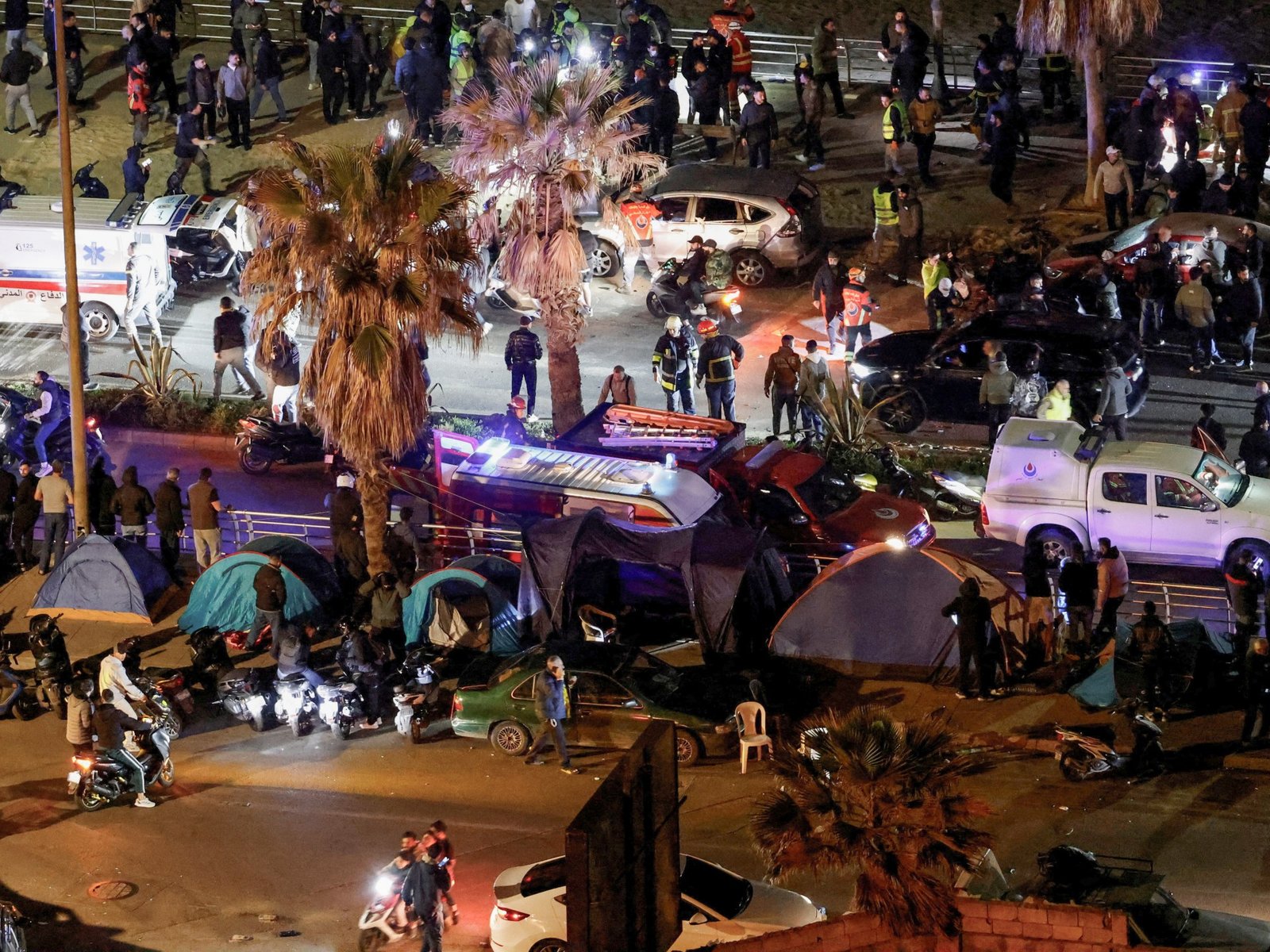
An Israeli strike on the Ramlet al-Baida seafront in Beirut killed eight people and wounded 31 on 12 March 2026, according to figures given at the time by Lebanon’s Ministry of Public Health. The dead and injured were among displaced families who had gathered on the beach after fleeing bombardment elsewhere in the country. Some later reporting put the death toll higher, with The National citing twelve killed.
Lebanese officials and survivors described the attack as a double-tap strike, meaning a second munition landed on the same location shortly after the first. The pattern is significant because the interval typically catches the people who move toward the site after the initial explosion, including neighbours and first responders. Witnesses said they were woken by the sound of aircraft before the strikes hit, and no warning was issued to civilians in the area beforehand.
Ramlet al-Baida is Beirut’s main public beach, a stretch of open sand on the western edge of the city. In the weeks before the strike it had filled with tents and improvised shelters as families moved out of Dahiyeh, the densely built southern suburbs, and from towns in southern Lebanon under sustained air attack. People had gone there precisely because it was open ground away from the buildings being targeted, and because the capital’s formal shelters were already full.
The context was Lebanon’s re-entry into open conflict after more than a year of relative quiet. Hezbollah fired rockets toward Israel for the first time since the ceasefire of November 2024, following the outbreak of the war between Iran on one side and Israel and the United States on the other in late February 2026. Israel responded with what its military spokesperson described as an offensive campaign, and strikes were reported across Lebanon in the days around the beachfront attack.
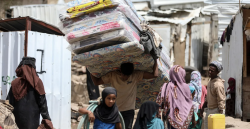
The displacement figures give the scale of what followed. More than 800,000 people had been uprooted inside Lebanon, and hundreds of schools had been converted into collective shelters that had reached capacity. When formal shelter space runs out, people take whatever open ground is available, which is how a public beach in the centre of a capital city came to hold hundreds of civilians.
Lebanon’s health ministry is the authority that publishes casualty figures in these incidents, drawing on hospital admissions and civil defence reports. Numbers frequently rise in the hours after an attack as the seriously wounded are counted and as bodies are recovered, which accounts for the variation between the ministry’s early figure and the higher tolls carried by some outlets. Israel did not, at the time, publicly identify a specific target at the site.
Survivors interviewed by Lebanese and international outlets described the aftermath in terms that were hard to reconcile with the setting. Tents burned on the sand, and rescuers worked among crowds who had been sitting outdoors on a mild night. One account carried by The National quoted a survivor saying they could not erase what they had seen. L’Orient Today, the Beirut-based English-language paper, described the scene on the beach as a massacre.
Attacks on locations where displaced civilians shelter carry particular weight under international humanitarian law, which requires parties to distinguish between combatants and civilians and to take feasible precautions to minimise civilian harm. Whether a specific strike meets that standard depends on facts about the target and the precautions taken that are rarely established quickly, and independent investigations of incidents in Lebanon have generally taken months.
The strike drew attention beyond Lebanon partly because of where it happened. Ramlet al-Baida is not in the southern suburbs or near the border; it is a recognisable public space in Beirut proper, a short distance from hotels, embassies and residential blocks. Its inclusion in the target set was read in Lebanon as evidence that no part of the capital was being treated as outside the campaign.
Lebanon’s capacity to respond was already constrained by an economic crisis running since 2019, with a collapsed currency and a state barely able to fund emergency services. Hospitals have operated with reduced staff and intermittent power for years, and the burden of absorbing the displaced fell largely to municipalities and civil society groups.
For Yemen, events in Lebanon in March 2026 were part of the same regional escalation that had already drawn in the Gulf states and the Red Sea. The Houthi authorities in Sanaa have publicly aligned themselves with Hezbollah and with Iran’s position, and Houthi attacks on shipping in the Red Sea and Bab al-Mandab have been presented by the group as connected to the wider confrontation. A broader war across the Levant and the Gulf raises the risk of further disruption to the maritime routes on which Yemen’s imports of food, fuel and medicine depend.
The humanitarian parallel is more direct still. Yemen has more than four million internally displaced people, many living in sites that offer no protection from air attack, and Yemeni aid agencies have documented the same dynamic seen in Beirut: families moving to open ground because it seems safer than buildings, and finding that it is not. Both cases turn on the absence of anywhere that can reliably be described as safe.
Attacks continued across Lebanon in the weeks that followed. By early April 2026, Israeli forces were reported to have carried out around 100 strikes across the country within a ten-minute period, and the displacement crisis deepened further.
About the Author