Health Events Committee reviews Yemen’s epidemic preparedness at Aden meeting
 Yemen Herald News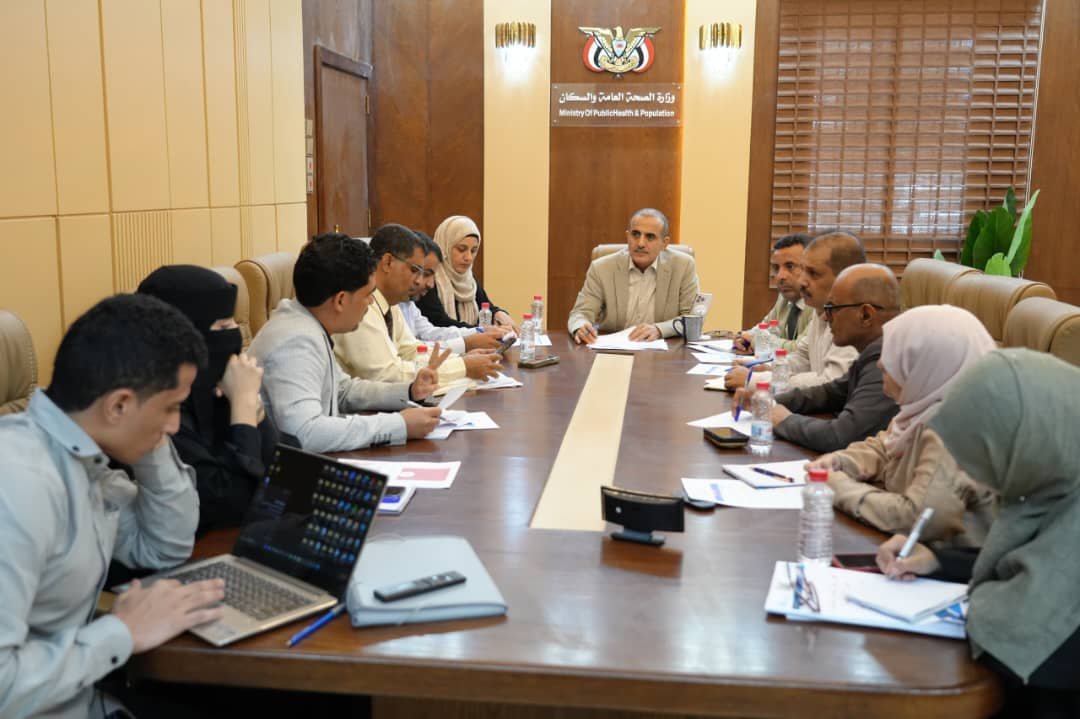
ADEN, Yemen — Yemen’s Health Events Committee met in Aden on Sunday to review the country’s readiness for disease outbreaks, chaired by the health minister, Qasim Buhaibeh.
The committee examined recent developments in the local and regional epidemiological situation and efforts to combat diseases and epidemics, the state news agency Saba reported.
It reviewed the current situation for measles, cholera, malaria and vector-borne diseases, according to the agency.
The meeting assessed the level of health interventions in place, surveillance and response plans, and ways to strengthen national capacity for disease monitoring, early detection and containment, Saba said.
Members also examined the readiness of laboratories, diagnostic facilities and supply chains, and whether the resources required to handle a potential outbreak were available, the agency reported.
The committee discussed epidemiological developments at regional and international level, including measles and cholera outbreaks and the situation regarding Ebola virus disease in Africa, according to Saba.
Buhaibeh said the committee should monitor epidemiological developments continuously and coordinate across sectors and authorities to ensure a rapid response to any health emergency, the agency reported.
He called for stronger health controls at land, sea and air entry points, including monitoring of flights and incoming travellers, and for precautionary measures in line with the International Health Regulations, Saba said.
That work includes completing the installation and activation of thermal cameras and early-detection equipment and supplying the technical requirements for teams at points of entry, according to the agency.
Buhaibeh said preparedness should be proactive rather than wait for health risks to arrive, through practical plans and scenarios and stronger coordination between sectors, Saba reported.
The account of the meeting rests on Saba, the news agency of the internationally recognised government. No independent confirmation of the session or of the measures discussed has been published.
Saba did not report how many members attended or list decisions taken.
The diseases the committee reviewed are documented by the World Health Organization.
Yemen recorded 3,177 suspected cases of cholera and acute watery diarrhoea between Jan. 1 and March 29, with three deaths linked to the outbreak, according to WHO figures.
That made Yemen the fifth most affected country globally for cholera in the first quarter of 2026, behind the Democratic Republic of the Congo, Afghanistan, Mozambique and South Sudan, WHO said.
WHO has described Yemen as carrying the highest burden of cholera globally.
Yemen reported 14,521 measles cases between December 2025 and May 2026, according to WHO surveillance data.
Measles outbreaks have increased in a number of countries across 2025 and 2026, researchers reported this year.
Declining vaccination coverage and limited access to health services in remote areas have contributed to outbreaks of cholera, measles and polio in Yemen.
The ministry has been building emergency structures alongside the committee’s work.
It convened the first meeting of the National Emergency Medical Team Steering Committee in Aden this month with support from WHO and the European Union, WHO’s Eastern Mediterranean office said.
That meeting brought together national health authorities and partners to set governance and operational foundations for emergency medical teams.
Buhaibeh has previously reviewed disease surveillance and outbreak response measures with WHO, and has discussed support for the health sector with World Bank officials, Saba reported.
He has also held talks on cooperation with a Saudi aid programme and attended an international health coordination meeting on Yemen hosted in Riyadh.
The health system operates against a wider humanitarian caseload.
The UN Office for the Coordination of Humanitarian Affairs said in its March 2026 response plan that more than 22 million people in Yemen need assistance and that 18.3 million are acutely food insecure.
More than 2.2 million children under five are acutely malnourished, 516,157 of them severely, OCHA said. It put the number of internally displaced people at 5.2 million.
The plan seeks $2.16 billion to reach 12 million people.
The surveillance and response capacity the committee discussed rests on a health system that is only partly operational. WHO said 59.3 percent of Yemen’s health facilities are fully functional, with close to 40 percent partially functional or not functioning.
Only about one in five facilities can provide maternal and child health services, according to WHO.
Cholera, malaria, dengue and vaccine-preventable diseases persist against that reduced capacity, the agency said.
WHO appealed for $38.8 million to deliver emergency health assistance to 10.5 million people in Yemen this year.
Yemen’s health cluster received 43.4 percent of its funding requirement in 2025, and WHO said the country entered 2026 facing severe funding constraints.
A separate UN health appeal for Yemen this year sought $38.8 million.
WHO put the number of people in Yemen needing humanitarian assistance at 23.1 million, describing the country as facing one of the world’s most complex health emergencies after more than a decade of crisis.
Frontline staff including doctors, nurses, midwives, vaccinators, surveillance officers, community health workers and ambulance teams continue to deliver care, WHO said in a statement marking World Humanitarian Day.
Aden has served as the government’s temporary capital since the Houthis took control of Sanaa, leaving health administration split between the two authorities.
Buhaibeh was named health minister in the cabinet formed in February under Prime Minister Shaya al-Zindani.
Saba did not say when the committee would meet again.
About the Author