Ministerial Committee for Institutional Reform holds first meeting in Aden
 Yemen Herald News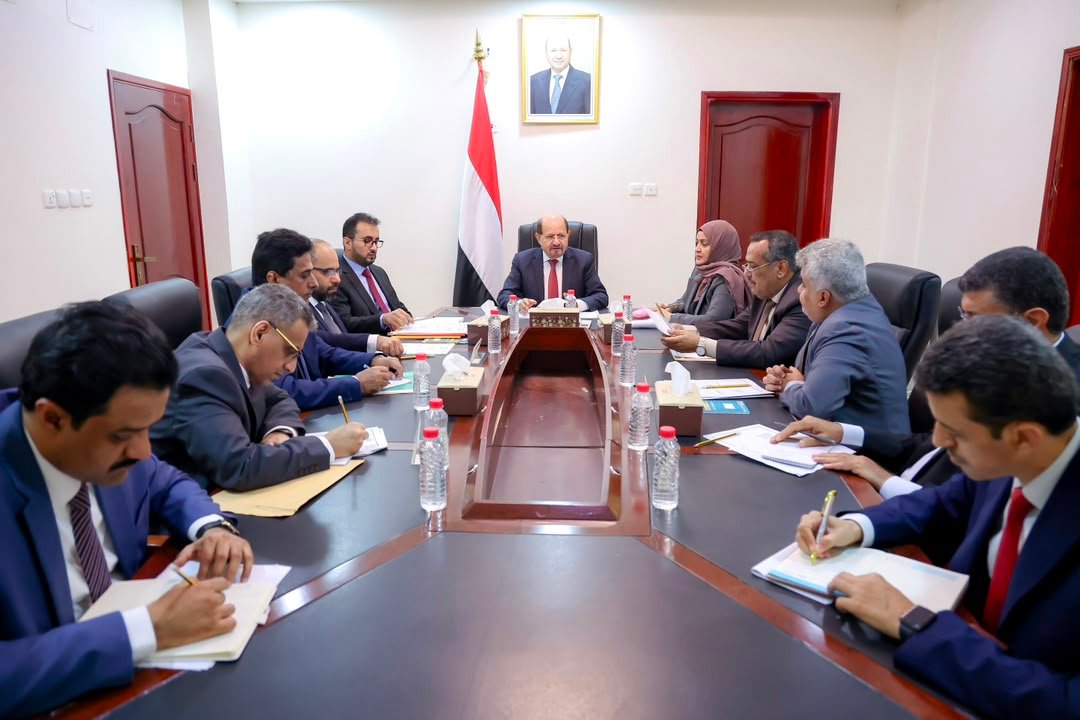
ADEN, Yemen — Yemen’s Ministerial Committee for Institutional Reform held its first meeting on Sunday in Aden, chaired by Prime Minister Shaya al-Zindani.
The session was devoted to the committee’s action plan and the mechanisms for carrying out its tasks, the state news agency Saba reported.
The meeting reviewed the committee’s priorities and the proposed methodology for applying the government’s institutional reform programme, according to Saba.
It also set out the committee’s executive role in moving from planning to implementation, monitoring results and submitting regular reports on progress, challenges and proposed solutions, the agency said.
Al-Zindani said institutional reform was needed to restore the effectiveness of the state and its institutions, enable them to carry out their duties, manage their resources efficiently and improve basic services, Saba reported.
The account of the meeting rests on Saba, the news agency of the internationally recognised government. No independent confirmation of the session or of the committee’s decisions has been published.
Al-Zindani took office on Feb. 6, 2026, under a decree issued by Rashad al-Alimi, chairman of the Presidential Leadership Council. He also holds the foreign affairs portfolio.
The cabinet announced the following day comprises 35 ministers across sovereign and service portfolios, among them defence, interior, finance, oil, education, health, electricity, water and transport.
He replaced Salem Saleh bin Braik, who resigned on Jan. 16, 2026.
Bin Braik, a former finance minister, had been appointed prime minister in May 2025 after the resignation of Ahmad Awad bin Mubarak.
During his tenure bin Braik pressed for the reactivation of the Supreme Anti-Corruption Commission, the High Tender Committee and the Tender Oversight Authority, describing the step as necessary to strengthen transparency and curb the waste of public funds.
Al-Zindani served as ambassador to the United Kingdom, Italy, Greece, Serbia, Albania, San Marino, Jordan and Saudi Arabia before entering the cabinet.
The Presidential Leadership Council was formed in April 2022 with eight members. Aden has served as the government’s temporary capital since the Houthis took control of Sanaa.
The reform drive runs alongside efforts by the Central Bank of Yemen in Aden to steady the currency.
The bank closed unauthorised exchange firms involved in currency speculation, centralised internal remittances under a controlled system and formed a committee to oversee imports and supply traders with hard currency.
Those measures slowed the riyal’s decline from about 2,900 to the dollar to roughly 1,500, Al Jazeera reported in April.
The riyal traded at about 215 to the dollar before the war began in 2015.
The stabilisation produced a second problem. The central bank acknowledged a cash shortage in March, and traders have refused to accept large quantities of low-value notes, Al Jazeera reported.
Saudi Arabia deposited $1 billion in the Aden-based central bank in February 2023 to support the currency.
The committee’s work sits inside a wider government programme. The cabinet under al-Zindani approved a work programme and a list of priorities for 2026 that included curbing public spending, raising revenue and supporting the central bank’s role in defending the currency.
Yemen and the International Monetary Fund reached a staff-level agreement on an 18-month economic reform programme covering fiscal and monetary policy and the management of public resources, the IMF said. The programme is intended to build a reform record that donors and international lenders can assess.
The government aims to narrow its budget deficit across 2026 and 2027 by raising domestic revenue, after a sharp fall in spending capacity that followed the suspension of oil exports in 2022.
Oil exports remain blocked. The World Bank said in May that activity across sectors was held back by a difficult business environment, limited access to finance and weak domestic demand.
Al-Alimi met the Yemeni delegation to the 2026 spring meetings of the World Bank and the IMF in Washington, with al-Zindani present, according to the Presidential Leadership Council.
Public-sector pay is among the reform programme’s oldest problems. Salary payments for about 1.2 million public sector employees were disrupted from 2016 amid a liquidity crisis, and arrears have recurred since.
The government approved a 20 percent increase in civilian salaries and said it would pursue what it called sustainable solutions to the electricity crisis.
Al-Zindani has said the power shortages stem from decades of accumulated problems and the absence of long-term remedial measures, according to a cabinet readout.
The Presidential Leadership Council has reviewed emergency responses to public-sector salaries and power cuts, along with the World Bank’s new country strategy and a Saudi fuel grant for the electricity sector.
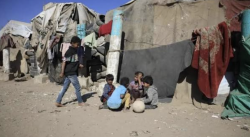
Government-held areas carry much of the humanitarian burden the reform programme is meant to address.
The UN Office for the Coordination of Humanitarian Affairs said in its March 2026 response plan that more than 22 million people in Yemen need assistance and that 18.3 million are acutely food insecure.
More than 2.2 million children under five are acutely malnourished, 516,157 of them severely, OCHA said. It put the number of internally displaced people at 5.2 million.
The plan seeks $2.16 billion to reach 12 million people.
Saba did not say when the committee would next meet, nor did it name its other members.
About the Author