Al-Alimi orders closure of ports operating outside the law in smuggling crackdown
 Yemen Herald News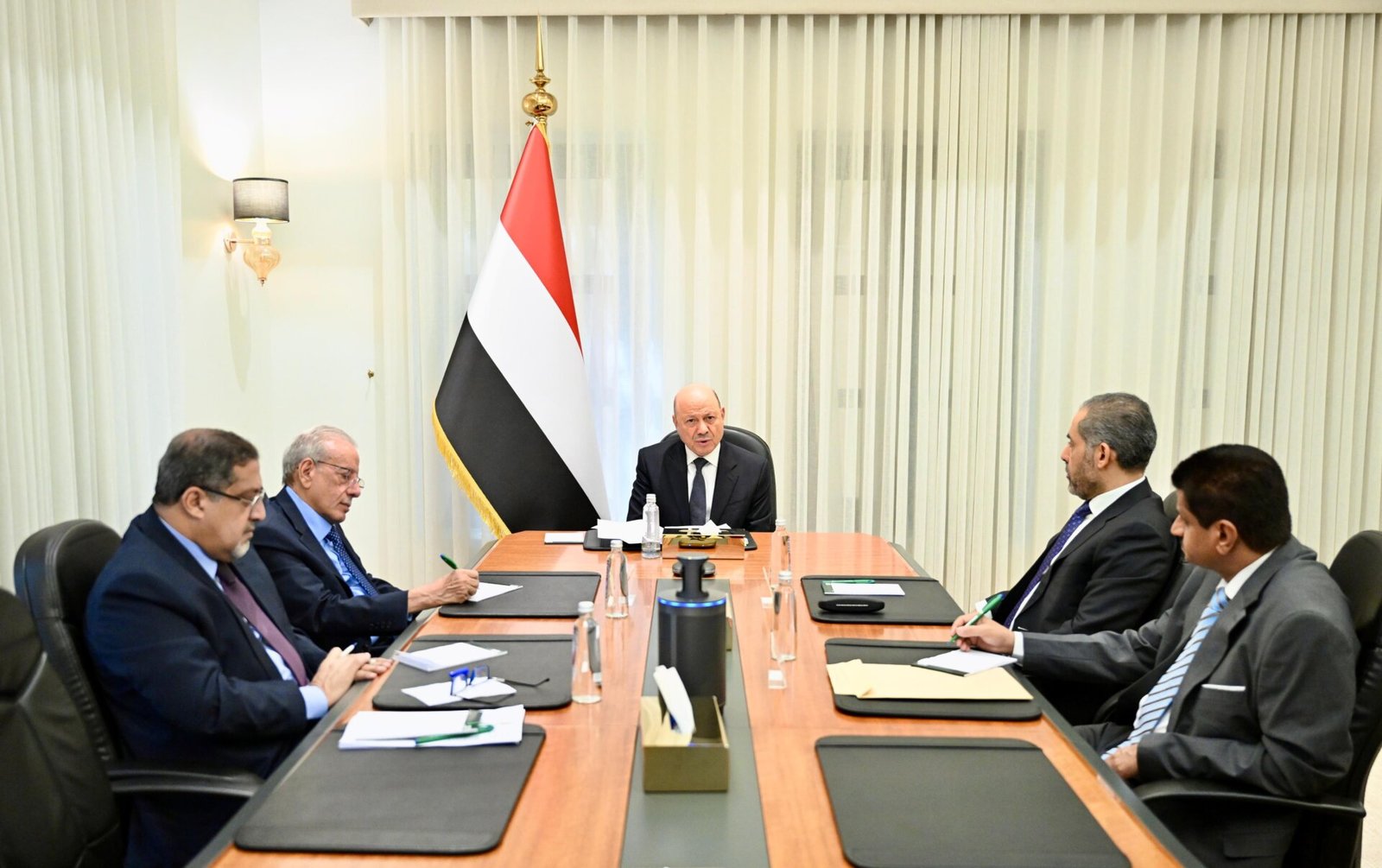
RIYADH, Saudi Arabia — Yemen’s Presidential Leadership Council chairman Rashad al-Alimi has ordered the immediate closure of any port or border crossing operating outside the law, the state news agency Saba said.
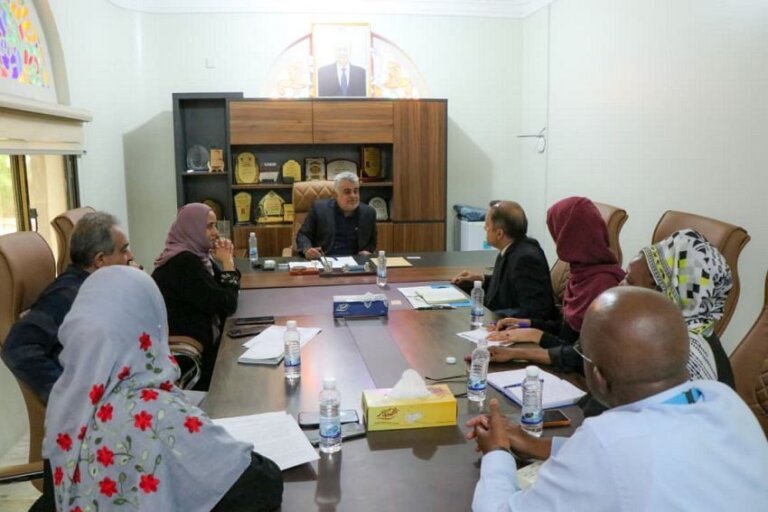
Al-Alimi issued the instruction on Wednesday at a meeting of the Supreme Committee for Combating Smuggling, according to Saba. The committee was chaired by Prime Minister Shaya Zindani.
Saba said the directives form part of a wider effort to secure the government’s sovereign ports and land crossings, and to cut off revenue and arms reaching the Houthi movement.
The era of leniency toward smuggling was over, al-Alimi said, according to the agency. He said the state would act to protect legitimate trade and the domestic private sector.
He ordered a review of staffing at every port and crossing where irregularities have been reported, Saba said, including the replacement of officials found negligent or ineffective.
Officials accused of facilitating illicit shipments, shielding smugglers or obstructing government measures would receive no administrative or political protection, al-Alimi said.
Those found complicit, or seriously negligent, would face legal action and referral to the Public Prosecution.
He also ordered an end to what Saba described as unauthorised interference in the work of ports, crossings and customs authorities. Illegal exemptions, preferential treatment and concessions for individuals or companies were ruled out.
The committee was told to move faster on a unified list of prohibited materials, equipment and vehicles bound for Houthi-held territory, with military and dual-use items singled out.
Al-Alimi called for stronger measures to protect the national currency, gold and mineral resources from trade he said drained state revenue, weakened the banking sector and opened channels for illegal financing.
Enforcement should be aimed at smugglers without disrupting legitimate commerce, food and medicine supplies, remittances or citizens’ savings, he said.
Saba reported separately that the Supreme Committee reviewed a number of proposals for carrying out the instructions at the same session. It did not say when any of the measures would take effect.
Yemen Herald could not independently verify the account, which rests on the state agency’s report of a closed government meeting. No second source has published a description of the session.
The characterisations of the Houthi movement in the directives are the council’s. The Houthi authorities in Sanaa, who run their own customs and port administration in the north, had published no response to the directives at the time of writing.
The currency the directive refers to has been divided for six years. Yemen has operated two separate rial zones since January 2020, when the Houthi-run central bank in Sanaa banned circulation of new banknotes issued by the Aden-based Central Bank of Yemen.
That bank, established in 1971, keeps its head office in Aden and publishes monthly monetary bulletins from there.
The rial reached a record low in January 2025, when the dollar traded at about 2,150 rials. Rate monitors put it between roughly 1,520 and 1,550 to the dollar in early August.
Published estimates put Yemen’s nominal gross domestic product for 2026 at about 17.24 billion dollars.
Zindani has led the government since January. The Presidential Leadership Council named him prime minister on 15 January 2026, moving him from the foreign ministry, and appointed his predecessor Salem Saleh bin Braik as an adviser to al-Alimi on financial and economic affairs.
Bin Braik, a former finance minister, had led the government since May 2025. The foreign ministry passed on 23 July to Afrah al-Zouba, the first woman to hold the post.
The council’s institutions are split across two capitals. Saba filed Wednesday’s report from Riyadh, and datelined two other government statements the same day from Aden.
The instructions come during a sharp escalation in the conflict. A United Nations-brokered truce agreed in 2022 has broken down, and international news organisations reported that the collapse followed a Saudi air strike on the runway at Sanaa airport on 13 July.
International reporting dates the start of the current regional war to 28 February. A naval monitoring group reported on 22 July that Houthi forces had deployed missiles and drones against ships in the southern Red Sea.
Yemen’s transport ministry said a Houthi strike on the Egyptian-owned, Tanzania-flagged cargo ship Tihamah in the Bab al-Mandab strait on 12 August killed four crew members, three of them Pakistani and one Indonesian, and two rescuers. Al Jazeera, NBC News and CNBC reported those deaths, citing the ministry and the United States military. NBC News described them as the first deaths in a Houthi strike on shipping since the regional war began in February.
The United States military said it struck a container ship the same day as it attempted to sail toward an Iranian port, according to the same reporting. It did not identify the vessel.
Humanitarian conditions have continued to deteriorate. The UN Office for the Coordination of Humanitarian Affairs said in its March 2026 response plan that more than 22 million Yemenis need assistance and 18.3 million are acutely food insecure.
OCHA put the number of children under five with acute malnutrition above 2.2 million, of whom 516,157 are severely malnourished, and the number of internally displaced people at 5.2 million. Its appeal sought 2.16 billion dollars to reach 12 million people.
Saba gave no figure for the volume or value of the goods the government believes are being smuggled. It set no timetable for the staffing review, and named no port or crossing.
About the Author