Yemen’s deputy planning minister discusses expanding nutrition work with WFP and UNICEF
 Yemen Herald News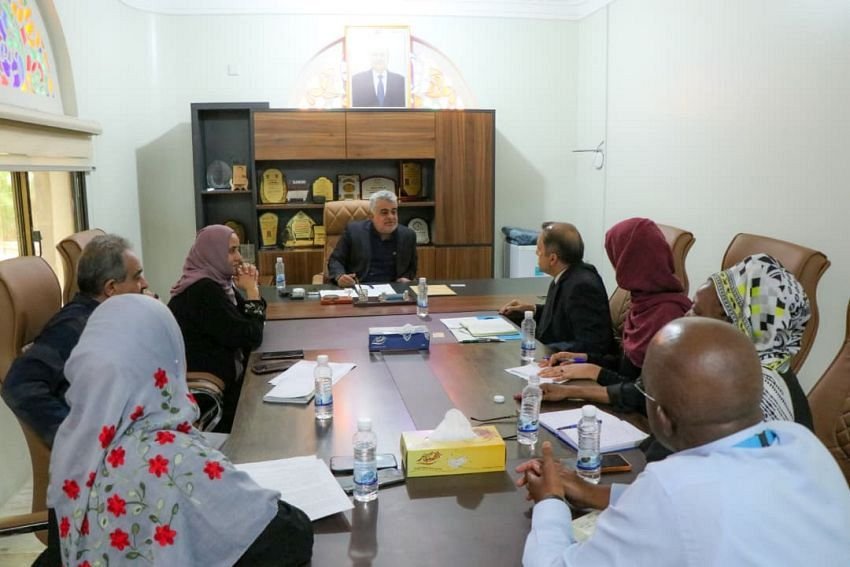
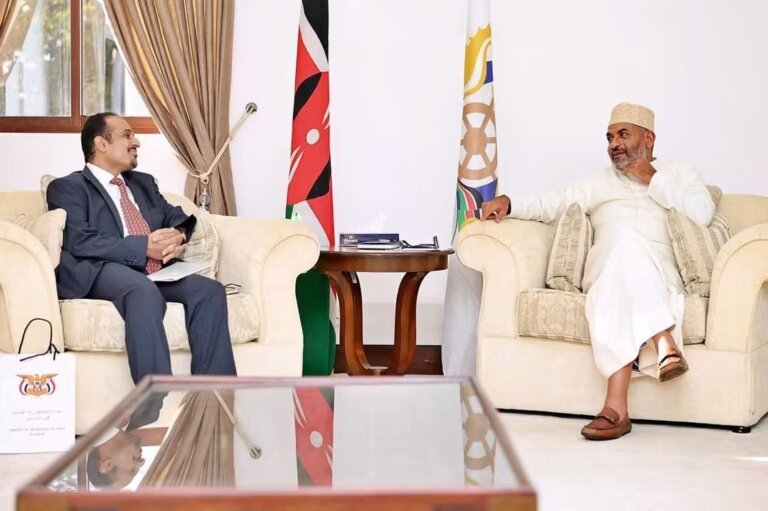
ADEN, Yemen — Yemen’s deputy planning minister met the World Food Programme’s deputy country director on Tuesday to discuss expanding the agency’s work into nutrition, the state news agency said.
Nizar Basuhaib, deputy minister of planning and international cooperation, held the talks with Samantha Chatterjee in Aden, according to Saba, the news agency of the internationally recognised government.
The two discussed widening WFP programmes to cover nutrition projects and efforts against malnutrition, Saba said.
They also reviewed diversifying the agency’s plans and multisectoral projects in line with the funding available to it and with humanitarian priorities.
Donor partnerships were on the agenda. The pair discussed attracting new funding for programmes aimed at malnutrition, alongside WFP’s existing food and cash assistance, the agency reported.
The talks covered preparations for a rapid response plan to meet food needs in areas affected by deteriorating humanitarian conditions.
Basuhaib said the situation in the country requires directing WFP interventions toward the areas and groups most in need, to keep food and nutrition assistance flowing and reduce the risk of malnutrition, according to Saba.
He also called for wider partnerships with donors and for mobilising resources behind priority humanitarian and development programmes.
Chatterjee said WFP was committed to strengthening cooperation with the government and to developing its interventions in line with humanitarian needs and priorities, Saba reported. She said the agency would continue to support the emergency response in Yemen within available capacities.
In a separate meeting, Basuhaib met Akhil Iyer, the acting UNICEF representative in Yemen.
That discussion covered joint coordination against malnutrition and improving access to safe water services, the agency said.
The two sides addressed the risk of contamination in unregulated well water and how to reduce its health effects.
They also reviewed the coordination secretariat’s plan to improve nutrition in Yemen, known as SUN, and preparations for a nutrition response plan covering areas worst affected by humanitarian conditions, Saba said.
Socotra Governorate was named as a priority for intervention against malnutrition.
Basuhaib said UNICEF’s role in supporting projects for children and mothers mattered, and that interventions targeting children with special needs, orphans and juveniles should come first, according to the agency.
Iyer said UNICEF would continue to support national priorities in the nutrition sector and strengthen coordination with government authorities so that assistance reaches those who need it, Saba reported.
Saba published its account of both meetings on 25 August.
Yemen Herald could not independently verify either account. The report of both meetings rests on Saba, and no independent confirmation of the talks has been published.
Yemen joined the Scaling Up Nutrition movement on 1 November 2012, with a letter of commitment from the prime minister at the time, Mohammed Salem Basondwah, according to the movement’s own records. A SUN secretariat was set up in the country the following year to coordinate nutrition services across sectors.
The meetings follow a documented shortfall in humanitarian funding.
WFP said in an appeal covering the six months to April 2026 that it faced a 91 percent funding gap in Yemen, with net requirements of $434 million.
The agency said at the time that from January 2026 eight million people would move to a reduced food ration, while five million judged at immediate risk of famine conditions would stay on a full ration. Families on the reduced ration would receive barely half of WFP’s daily minimum, it said.
In areas under government authority, WFP said it would assist 1.6 million people, down from more than three million, ending general food assistance in favour of more tightly targeted programming.
Without new funding, further reductions would be unavoidable, the agency said, adding that malnutrition treatment and school feeding for children could also be cut.
The United Nations Office for the Coordination of Humanitarian Affairs put more than 22 million people in need of assistance in Yemen in its humanitarian needs and response plan published in March 2026.
That plan recorded 18.3 million people as acutely food insecure, and more than 2.2 million children under five as acutely malnourished, 516,157 of them severely.
It counted 5.2 million internally displaced people, and sought $2.16 billion to reach 12 million of those in need.
The ministry and WFP held an earlier round of talks on strengthening humanitarian and development interventions, Saba reported at the time.
WFP’s country director in Yemen is Al-Khidir Daloum, who has held his own talks with the ministry in Aden on cooperation and on funding for humanitarian and development work, Saba reported.
Basuhaib has also discussed digital transformation and nutrition and health programmes with the World Bank and UNICEF, according to the ministry’s own account of that meeting.
He visited the Aden headquarters of Project Masam, the Saudi-funded demining operation, and described it as one of the most important humanitarian projects working in the country, the project said.
Chatterjee has led WFP delegations elsewhere in Yemen, including talks in Mukalla, according to Yemen Monitor.
Socotra lies in the Arabian Sea, several hundred kilometres from the Yemeni mainland, and is administered by the internationally recognised government.
The Ministry of Planning and International Cooperation, based in Aden, is the government’s channel for coordinating with United Nations agencies and donors.
The ministry publishes its own English-language account of ministerial meetings alongside Saba’s.
Saba did not say whether further meetings were scheduled.
About the Author