Yemen joins regional maritime law enforcement talks in Nairobi
 Yemen Herald News
NAIROBI, Kenya — Yemen sent a delegation to the fifth Regional Maritime Law Enforcement Dialogue for the Red Sea and Gulf of Aden, which ran in the Kenyan capital through Aug. 28.
The talks were held alongside the 2026 Prosecutors’ Network Forum in the port city of Mombasa, according to the state news agency Saba. Both events closed on the same day.
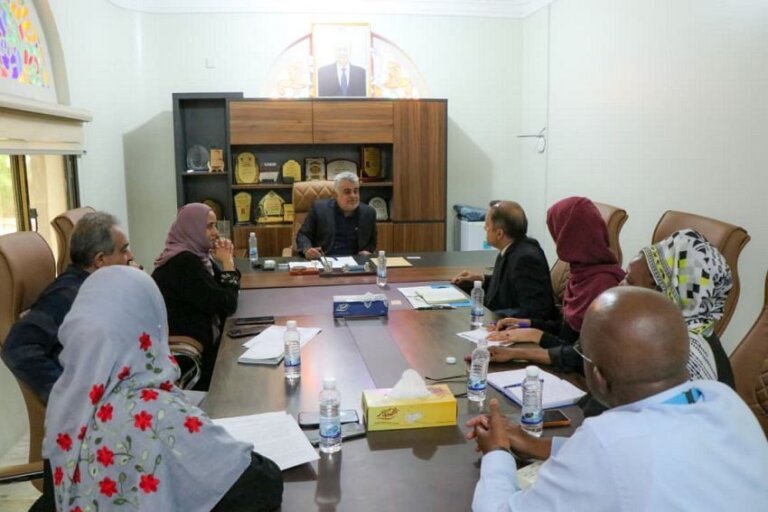
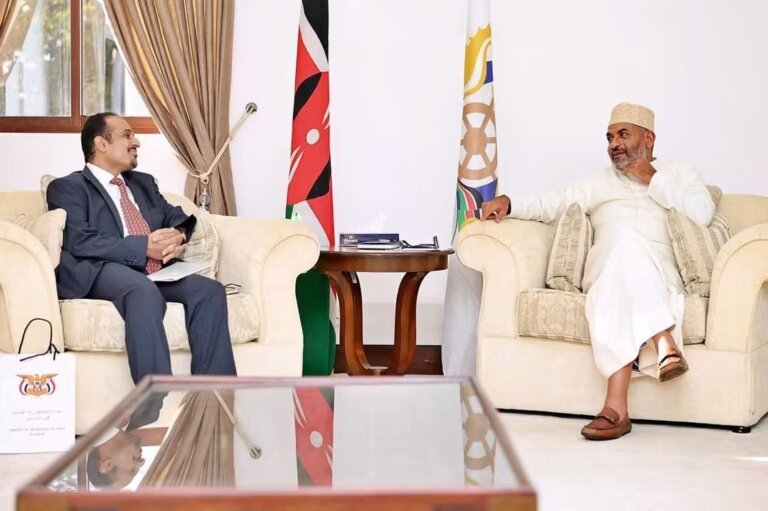
Yemen was represented by a delegation drawn from the Ministry of Justice, the Public Authority for Maritime Affairs, the Coast Guard and INTERPOL, Saba reported.
The United Nations Office on Drugs and Crime organised the events in partnership with the European Union. The United Nations said INTERPOL, the International Maritime Organization and the Intergovernmental Authority on Development also supported the dialogue.
Security officials from Ethiopia, Djibouti and Somalia attended alongside the Yemeni delegation, the United Nations said.
The dialogue itself ran two days. Discussions covered arms and drug smuggling, the protection of critical maritime infrastructure, information-sharing between agencies and gaps in national law, Saba reported.
Delegates also examined how evidence of maritime crimes is gathered and preserved. Saba said the aim was to support prosecutions.
The United Nations listed piracy, illegal fishing, trafficking in persons, migrant smuggling and narcotics trafficking among the threats raised in Nairobi.
Mostafa Elbanna, the UNODC regional coordinator for the Red Sea and Gulf of Aden under its Global Maritime Crime Programme, said the meeting gave agencies space to set out their difficulties. Elbanna also heads the office’s Somalia operation.
“[This is a great time] to have this kind of discussions and dialogue with different agencies and law enforcement to talk about their challenges, and also the way forward when it comes to maritime security,” Elbanna said.
He said piracy remains well below the levels recorded more than a decade ago. Countries in the region are better equipped to respond, he said, pointing to stronger law enforcement, improved data collection and closer regional cooperation.
The United Nations described the Red Sea and Gulf of Aden as one of the region’s principal maritime corridors, linking local economies to international markets. Disruption there can reach shipping routes and supply chains far beyond the area, it said.
Abdurrahim Muhammad Ali of the Djibouti Maritime Authority told the dialogue that pressure on one waterway carries into another.
“If you are talking about threats, the current attacks on the freedom of navigation in the Strait of Hormuz have an impact on Gulf of Aden because [they are] affecting maritime security,” Ali said.
“Pirates use this opportunity and the distraction of the maritime forces globally to do more attacks in this area, because they know that everyone is busy [looking in another direction],” he said.
Ali listed maritime terrorism, illegal fishing, robbery, trafficking, irregular migration and smuggling among Djibouti’s main concerns.
“The practical outcome is to get closer and share information from Yemen, Somalia and Ethiopia. We have the same challenges,” he said.
For Ethiopia, which has no coastline, the discussion turned on trade. Captain Kibru Mesfin of the Ethiopian Maritime Authority said most of his country’s commerce moves through neighbouring Djibouti.
Disruption to sea lanes raises shipping and insurance costs, delays essential goods and weakens export capacity, Mesfin said, adding to pressure on businesses and consumers.
He called for more organised and harmonised systems for sharing maritime information among Djibouti, Yemen and Somalia. Ethiopia should set up a National Maritime Information Centre, he said, which would help authorities obtain timely information for maritime security decisions.
Officials at the meeting said developments in one part of the region increasingly carry consequences elsewhere, according to the United Nations, making coordinated responses harder to avoid.
Participants discussed ways to improve maritime domain awareness, strengthen operational cooperation and develop more coordinated responses to incidents at sea, the United Nations said.
Yemen’s coast runs along both the Red Sea and the Gulf of Aden and takes in the eastern approaches to the Bab al-Mandab strait, the passage connecting the Suez Canal route to the Indian Ocean.
Saba said Yemen’s participation was meant to strengthen cooperation and information exchange with international partners and to support joint work on navigation safety.
The agency did not name the Yemeni officials who travelled to Nairobi or to Mombasa. Yemen Herald could not establish what proposals, if any, the delegation put to the talks.
Control of Yemen’s coastline is divided. The internationally recognised government, seated in Aden, oversees the southern ports and the Coast Guard units reporting to it, while the Houthi authorities in Sanaa hold the Red Sea port of Hodeidah.
Traffic through the corridor fell after Houthi forces began attacking merchant vessels in late 2023, in a campaign the group has said is tied to the war in Gaza. Many operators rerouted ships around southern Africa.
Saba published its account of the Yemeni delegation on Aug. 25, three days before the two forums closed. The United Nations issued its own report on the Nairobi talks on Aug. 26.
UNODC runs the Global Maritime Crime Programme, which covers the Red Sea and Gulf of Aden alongside other regions. The Nairobi meeting was the fifth in that series.
The Mombasa forum gathered prosecutors from across the region. Saba did not say which Yemeni institutions took part in that session.
About the Author