US House subcommittee hears testimony on countering Houthi attacks and Red Sea shipping security
 Yemen Herald News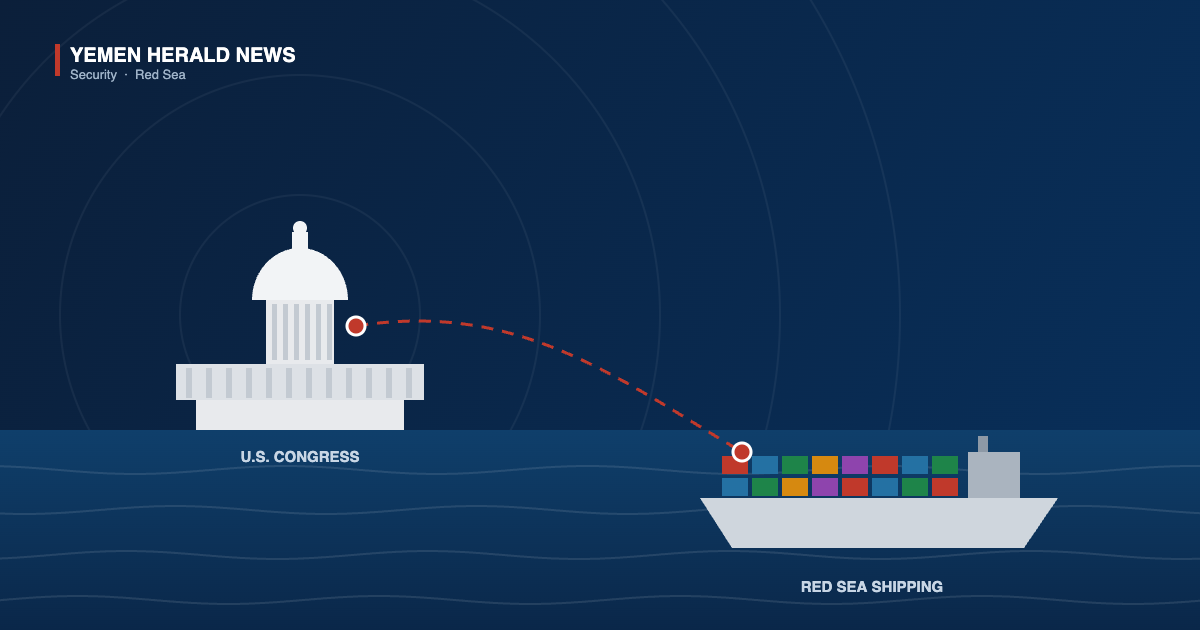
WASHINGTON, United States — A U.S. House subcommittee took testimony Tuesday on countering the Houthis and protecting American interests and shipping in the Red Sea.
The House Foreign Affairs Committee listed the hearing for 10 a.m. in room 2172 of the Rayburn House Office Building, under the title “Countering Houthi Terrorism: Protecting U.S. Interests and Security in the Red Sea.”
The session was carried live by WKNO, a Memphis public radio station affiliated with NPR, and streamed by The Epoch Times.
Saba said the session focused on the threat the Iran-backed Houthi militia poses to international shipping, to regional stability and to U.S. interests.
Rep. Mike Lawler, who chairs the committee’s Middle East and North Africa subcommittee, said the Houthis are a foreign terrorist organisation armed with ballistic and cruise missiles and attack drones, according to the Yemeni state news agency Saba.
Lawler said the group had targeted U.S. forces, attacked American partners and threatened commercial shipping in one of the world’s most important waterways.
He said Iran had played a central role in building those capabilities, supplying weapons, funding, training and technical expertise.
That support, Lawler said, turned a local armed movement into an organisation able to threaten Americans and disrupt international trade.
He argued that military deterrence alone would not be enough. Efforts must also target the financial, procurement, smuggling and logistical networks that let the group replace destroyed equipment, he said.
Rep. Jared Moskowitz pointed to continued Houthi attacks on commercial shipping and on Saudi Arabia, Saba reported.
He said those activities had raised risks to maritime navigation and to global energy flows, and warned they threatened to draw Yemen deeper into a wider regional conflict.
Moskowitz called for stronger international action against the smuggling of dual-use materials and technology used to improve Houthi missiles and drones.
Nadwa al-Dawsari, listed by the committee as an associate fellow at the Middle East Institute and described by Saba as a Yemeni-American researcher, told the hearing the Houthi threat had kept growing because of sustained Iranian support and because the international community had underestimated the group.
She said a long-term strategy strengthening the Yemeni government was needed. Houthi territorial control, she said, supplies the group with recruits, revenues, ports, smuggling routes and places to manufacture and store weapons.
Allison Miner, director of the Middle East Integration Project at the Atlantic Council, warned that an open-ended war could end up benefiting the Houthis.
Miner called for resuming humanitarian assistance, strengthening Yemeni government institutions and supporting the Yemeni Coast Guard.
A sustainable U.S. approach should rest on continued cooperation with Yemeni and regional partners rather than swinging between costly military intervention and disengagement, she said.
Testimony also held that U.S. and partner efforts have slowed and disrupted some smuggling of dual-use materials and technology. The networks remain able to arm and equip the Houthis and to work around sanctions.
Yemen Herald could not independently verify the detailed account of the testimony. The committee’s own hearing notice and the WKNO broadcast establish that the session took place, but the summary of what members and witnesses said rests on Saba, the news agency of Yemen’s internationally recognised government, and no independent transcript has been published.
The Houthis reject the terrorist designation. The group has described its campaign against shipping as support for Palestinians in Gaza.
The State Department redesignated Ansarallah, the movement’s formal name, as a foreign terrorist organisation on March 4, 2025. The group had first been designated in January 2021, and was removed from the list weeks later by the incoming Biden administration.
Houthi forces began attacking vessels in the Red Sea and the Gulf of Aden in November 2023. Traffic through the Suez Canal fell as operators rerouted around southern Africa.
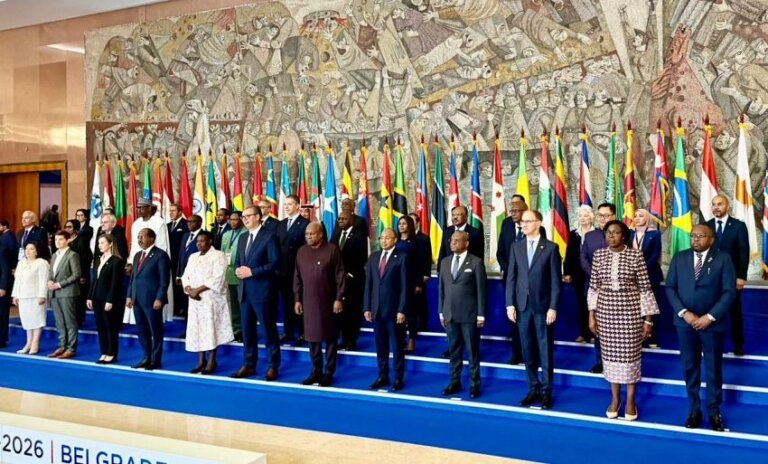
Yemen’s government made a similar argument in Europe the same day. Its non-resident ambassador to Serbia, Asmahan al-Tawqi, told a Non-Aligned Movement meeting in Belgrade that Houthi escalation inside Yemen and attacks in the Red Sea required an approach aimed at root causes, Saba reported.
Bab al-Mandab, the strait separating Yemen from the Horn of Africa, is among the world’s main chokepoints for oil and container traffic.
Suez Canal transits have not returned to pre-crisis levels. Industry trackers have put traffic between 40 and 60 per cent below 2023 volumes through 2026, with most container carriers still routing around the Cape of Good Hope.
Container traffic through the canal was down 86 per cent against 2023 levels in the fourth quarter of 2025, according to industry data.
Yemen’s war began in 2014, when Houthi forces took Sanaa. It widened in March 2015, when a Saudi-led coalition intervened in support of the government now seated in Aden.
An eight-member Presidential Leadership Council has headed that government since April 2022.
The United Nations Office for the Coordination of Humanitarian Affairs said in its 2026 humanitarian needs and response plan, issued in March, that more than 22 million Yemenis need assistance and that 18.3 million are acutely food insecure.
The plan records 5.2 million people displaced inside the country, and more than 2.2 million children under five who are acutely malnourished. It classes 516,157 of those cases as severe.
It asks donors for USD 2.16 billion, enough to reach 12 million people.
About the Author