Planning Minister Mohammed al-Faqmi discusses US investment in energy and mining with Neil Hope
 Yemen Herald News
RIYADH, Saudi Arabia — Yemen’s planning minister met the acting head of the United States mission on Wednesday to discuss American investment in energy, mining and infrastructure, the state news agency said.
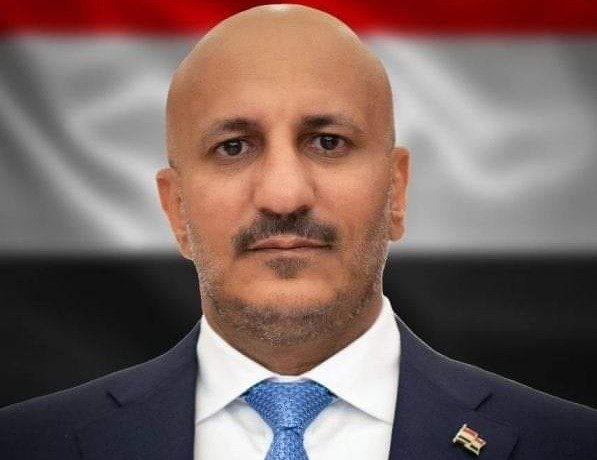
Mohammed al-Faqmi, minister of planning and international cooperation, held the talks with Neil Hope, chargé d’affaires of the U.S. Embassy to Yemen, according to Saba.
Support for Yemen’s private sector was the first item the agency listed.
The two also examined what Saba called opportunities for trilateral coordination with regional partners, an arrangement meant to widen the reach of development projects.
Cultural heritage was on the agenda. The two sides discussed cooperation on preserving Yemeni sites and collections, the agency said.
They reviewed continued American support channelled through international financial institutions, along with academic exchange and training programmes.
Al-Faqmi thanked Washington for its support and said the partnership should be strengthened while Yemen works through its economic and humanitarian difficulties, according to Saba.
Hope said the United States remained committed to working with the Yemeni government on economic recovery, and called the private sector a driver of growth, the agency reported.
Both sides agreed to stay in regular contact.
The account of the meeting rests on Saba, the news agency of Yemen’s internationally recognised government. No independent confirmation of the discussion has been published, and neither the ministry nor the U.S. Embassy has issued its own readout.
Hope took up the post on Aug. 5, the U.S. Embassy to Yemen said in a statement at the time. He is a career Foreign Service officer with the rank of counselor and has spent more than 24 years at the State Department and in other foreign policy and national security posts.
The embassy said his brief includes safeguarding freedom of navigation in the Red Sea, keeping the region from becoming a haven for terrorism, and the security of American partners.
Saba and the Yemeni outlet Yemen Monitor both render his surname “Hope”. The U.S. Mission to Yemen’s own announcement spells it “Hop”.
Wednesday’s talks were the second reported contact between Hope and a senior Yemeni figure this week. Saba said he met Othman Mujalli, a member of the Presidential Leadership Council, in Riyadh on Tuesday to discuss shipping security in the Red Sea and the Bab al-Mandab Strait.
Before Yemen, Hope was political counselor at the U.S. Embassy in Riyadh. His Washington assignments included director of the Office of Israel and Palestinian Affairs, office director and acting deputy assistant secretary for Pakistan, and senior adviser for technology diplomacy in the Bureau of Cyberspace and Digital Policy, the embassy said.
The embassy said he would advance the priorities of President Donald Trump’s administration and support the diplomatic efforts of Secretary of State Marco Rubio, working closely with the Yemeni government.
Yemen has also drawn attention in Washington. The U.S. House of Representatives held a hearing on Tuesday titled “Countering Houthi Terrorism: Protecting American Interests and Red Sea Security”, Saba reported.
Al-Faqmi has kept a steady diplomatic schedule. Saba reported on Sept. 1 that he met Abda Sharif, the United Kingdom’s ambassador to Yemen, to discuss British support for institutional reform, capacity building and governance.
That meeting covered the government’s National Development and Economic Recovery Plan and what Saba described as a transition from humanitarian aid to sustainable development. The ambassador restated British support, the agency said.
Saba reported separately this week that al-Faqmi met Germany’s ambassador to Yemen to discuss support for water, health and education.
The agency also reported that Abdulrahman al-Muharrami, a member of the Presidential Leadership Council, met the planning minister and pressed for international partnerships and support for the government’s reform programme.
The minister took the constitutional oath before Rashad al-Alimi, chairman of the Presidential Leadership Council. He succeeded Afrah al-Zouba, who now serves as foreign minister.
The ministry has been drafting a development and reconstruction plan covering 2027 to 2029. Al-Zouba, then planning minister, said in July that the drafting made closer work with lenders more pressing, in remarks published by the ministry.
In the same month she met a joint World Bank and International Finance Corporation delegation in Aden to discuss the investment climate and the alignment of their programmes with government priorities, according to a ministry statement.
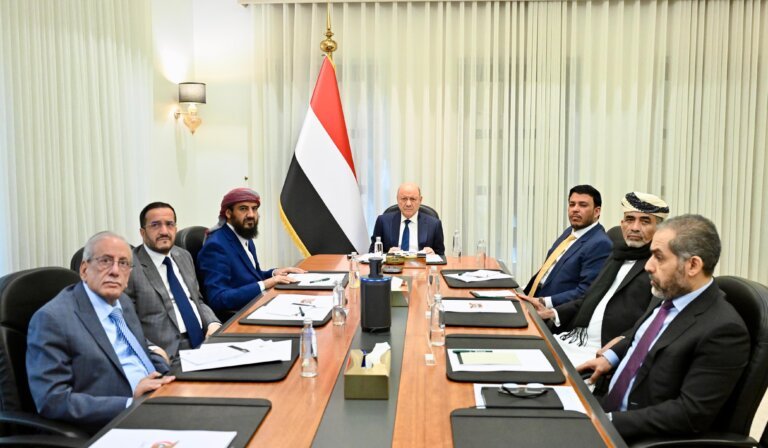
The Presidential Leadership Council and the government held a joint meeting on Wednesday chaired by al-Alimi, Saba said. Council members Tareq Saleh, Abdulrahman al-Mahrami, Abdullah al-Alimi, Othman Mujalli, Mahmoud al-Subaihi and Salem al-Khanbashi attended, along with Prime Minister Shaya Zindani.
Zindani received Carl Skau, acting executive director of the World Food Programme, in Aden this week, according to the agency.
The economic backdrop is set out in the United Nations humanitarian plan for Yemen published in March. It put the number of people needing assistance at more than 22 million.
The plan recorded 18.3 million people as acutely food insecure and more than 2.2 million children under five as acutely malnourished, of whom 516,157 were severely malnourished.
It counted 5.2 million internally displaced people and sought $2.16 billion to reach 12 million of those in need.
Neither Saba’s report nor any American statement attached figures, sectors or timelines to the investment discussed on Wednesday.
Saba filed the report from Riyadh, where much of the Yemeni government works.
About the Author