Yemen joins Arab Economic and Social Council preparatory meeting in Cairo
 Yemen Herald News
CAIRO, Egypt — Yemen joined senior Arab officials on Tuesday to prepare recommendations on trade integration and food security for the Arab Economic and Social Council, the state news agency said.
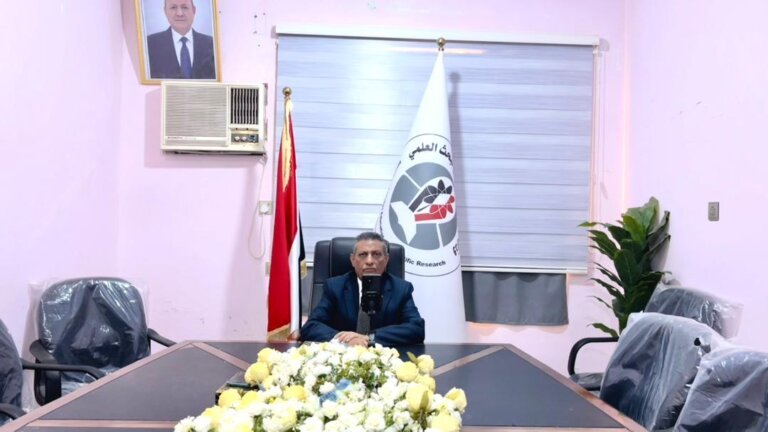
The Yemeni delegation was led by Mohammed al-Humaidi, undersecretary of the Ministry of Industry and Trade for foreign trade, according to Saba.
The officials were preparing for the council’s 118th session.
Their agenda covered regional trade integration, investment, food security and work on supply chains and logistics, the agency said.
The meeting reviewed progress on the Greater Arab Free Trade Area and plans for an Arab Customs Union.
Other items included digital transformation, sustainable and green finance, economic diversification, artificial intelligence and the development of workforce skills.
Food security and agricultural development were high on the agenda, Saba said, alongside proposals on regional cooperation and on economic, environmental and technological challenges.
Al-Humaidi said Yemen remained committed to closer Arab economic cooperation and to wider trade and investment ties.
He said barriers to commerce should be removed and conditions created that support growth and economic recovery, according to the agency.
The meeting’s recommendations will be put to the 118th session of the council for consideration.
The account of Yemen’s participation rests on Saba, the news agency of the internationally recognised government. No independent confirmation of the delegation’s remarks has been published, and the Arab League has not issued its own readout.
The free trade area the officials reviewed dates to February 1997, when the Arab League decided to create it. The agreement came into force on 1 January 1998, with 18 of the League’s 22 member states signing on.
League members agreed in March 2001 to speed up liberalisation. Most tariffs between participating states were removed from 1 January 2005.
The customs union has moved more slowly. Arab leaders agreed to create one at the third Arab Economic and Social Development Summit in January 2013, setting a target that has not been met.
Yemen is one of 18 Arab League states taking part in the free trade area, alongside Algeria, Bahrain, Egypt, Iraq, Jordan, Kuwait, Lebanon, Libya, Morocco, Oman, Palestine, Qatar, Saudi Arabia, Sudan, Syria, Tunisia and the United Arab Emirates.
Arab League bodies have set and missed successive deadlines on integration. The free trade area was originally meant to be complete by 2008, eleven years after the decision to create it.
The distance between a free trade area and a working customs union has been examined by the U.N. Economic and Social Commission for Western Asia, which has published on the opportunities and obstacles in moving from one to the other.
Recent sessions of the council have run over two days and taken in the free trade area, work to complete and develop the customs union, investment across Arab states and support for the Palestinian economy.
Saba said the preparatory meeting took place on Tuesday. The agency published its account the following day.
Other Arab states sent delegations to the same round of talks in Cairo. Kuwait joined the discussions on trade, food and energy security, according to regional press reports.
The Economic and Social Council is the Arab League body responsible for economic and social policy among member states, and meets at the League’s headquarters in Cairo.
Yemen has stepped up its economic diplomacy in recent weeks. Saba reported that Foreign Minister Afrah al-Zouba discussed the resumption of Kuwait Fund financing for Yemen.
The agency also reported that al-Zouba and Kuwait’s foreign minister agreed to revive cooperation agreements between the two countries.
Yemen took part in the opening of the 63rd Damascus International Fair, Saba said, and in the 2026 joint meetings of Arab financial and investment institutions.
Food security carries particular weight for Yemen. The country imports the overwhelming majority of its staple foods, among them wheat, rice and sugar, and the ports of Aden and Hodeidah handle most of that trade.
Crude petroleum and liquefied natural gas have long dominated Yemeni exports, along with fish and seafood, coffee and honey. Oil has accounted for roughly 85 percent of export earnings.
China, Thailand, South Korea, India and Saudi Arabia have been among the country’s main trading partners. Trading Economics put Yemen’s trade deficit at about $4.3 billion in 2024.
Al-Humaidi’s ministry is the Yemeni body responsible for trade policy and commercial regulation. Saba said the delegation was led at undersecretary rather than ministerial level, and did not name its other members.
The country’s trade position has been shaped by more than a decade of conflict. Its government works from the interim capital, Aden, and from Riyadh, while the Houthi movement administers Sanaa and much of the north.
The United Nations humanitarian plan for Yemen published in March put the number of people needing assistance at more than 22 million.
The plan recorded 18.3 million people as acutely food insecure. It counted more than 2.2 million children under five as acutely malnourished, of whom 516,157 were severely malnourished.
It also recorded 5.2 million internally displaced people and sought $2.16 billion to reach 12 million of those in need.
Saba did not say when the 118th session of the council would convene, or which of the preparatory meeting’s recommendations Yemen had supported.
The agency filed its report from Cairo.
About the Author