UNFPA says emergency teams reached 8,365 newly displaced people in Taiz and on Yemen’s west coast
 Yemen Herald News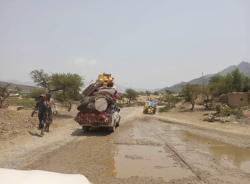
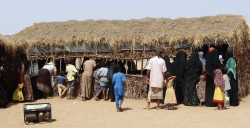
TAIZ, Yemen — The UN Population Fund said its rapid response teams reached 8,365 newly displaced people in Taiz and along Yemen’s west coast as fighting intensified.
The agency, known as UNFPA, said the assistance was delivered between Aug. 10 and early September.
The account of the delivery rests on UNFPA. No independent confirmation of the figure has been published.
UNFPA leads the Rapid Response Mechanism, which is designed to reach people within 72 hours of their displacement.
The mechanism supplies ready-to-eat food and hygiene items. UNFPA runs it in coordination with the World Food Programme and UNICEF.
It is funded by ECHO, the European Union’s humanitarian aid arm. The International Organization for Migration also takes part in the wider response.
The European Union gave UNFPA 3 million euros in August for health care and protection services in Yemen’s southern and eastern governorates, according to a report by Yemen Monitor.
That grant is intended to reach close to a quarter of a million displaced and vulnerable women and girls.
The deliveries described by UNFPA fall inside a displacement wave that humanitarian agencies began recording at the start of September.
The UN Office for the Coordination of Humanitarian Affairs said renewed fighting forced nearly 1,800 families from their homes in less than 48 hours.
The Executive Unit for IDP Camps Management recorded 2,183 families displaced in Taiz and Hodeidah governorates as of Sept. 5.
Of those, the unit said 1,643 families comprising 8,896 people were displaced inside Taiz governorate.
Hostilities escalated along the Taiz front lines in the early hours of Sept. 3, according to humanitarian reporting, with shelling and clashes in the Maqbanah and Jabal Habashi districts.
Several camps for displaced people in those two districts were emptied of their residents. Aid agencies described the result as secondary displacement, meaning people who had already fled once were forced to move again.
Continued shelling limited families’ ability to reach safer areas, according to the same reporting. Some families remained in areas where fighting was taking place.
Agencies listed shelter, food, water and sanitation, household items, cash assistance, health care and protection support among the needs of the newly displaced.
The Rapid Response Mechanism is designed for exactly that first phase. It is a stopgap, intended to cover the days between a family fleeing and longer-term assistance reaching them.
UNFPA’s mandate in Yemen also covers reproductive health and services for women and girls, and the agency has said displacement sites raise the risk of gender-based violence.
The International Organization for Migration has published its own displacement tallies for the same period. It recorded 274 families displaced across five Yemeni governorates in one count.
In a separate count, IOM said 227 families fled three displacement sites in western Taiz.
The Executive Unit reported that 57 families left their homes because of shelling in a southern district of the governorate.
The fighting that produced the displacement began along front lines in western Taiz and southern Hodeidah on Sept. 3, according to reporting on the escalation.
Ballistic missiles, drones and artillery were used as ground forces moved toward government-held territory, that reporting said.
Yemen’s internationally recognised government said its forces later recaptured positions in the Jabal Habashi district west of Taiz city and took control of Hais district in Hodeidah governorate.
The Houthi movement routinely disputes government accounts of territorial gains, and Yemen Herald could not independently verify the claimed advances.
Taiz has been among the most heavily contested parts of Yemen since 2015. Front lines run through the governorate and in places through the outskirts of the city itself.
Displacement sites in the districts west of the city have been established for years, which is why agencies describe the current movement as secondary displacement rather than a first flight.
UNFPA said in earlier public reporting that the Rapid Response Mechanism is a first line of defence for families who lose their homes to conflict or to climate-driven disasters such as flooding.
The wider funding picture remains constrained. Yemen’s 2026 humanitarian appeal seeks 2.16 billion dollars to reach 12 million people.
The humanitarian needs and response plan published in March put the number of people in need at more than 22 million.
It recorded 18.3 million people as acutely food insecure and more than 2.2 million children under five as acutely malnourished, including 516,157 with severe acute malnutrition.
The plan counted 5.2 million internally displaced people in Yemen before the current escalation began.
Yemen’s war began in 2014, when the Houthi movement took control of Sanaa. A Saudi-led coalition intervened the following year on behalf of the internationally recognised government.
A UN-brokered truce took effect in April 2022 and formally lapsed that October, though the relative calm it produced held in large part until this year.
The UN special envoy for Yemen, Hans Grundberg, has said the country now faces a more serious risk of a return to large-scale conflict than at any point since that truce.
UNFPA has not said how many of the people it reached were in Taiz and how many were on the west coast. It has not broken the total down by district.
The agency has also not said whether deliveries were interrupted by the fighting it described.
Its Yemen country office reports on the Rapid Response Mechanism periodically rather than after each distribution.
About the Author