Masam says it cleared 2,166 mines and munitions in Yemen in the first 11 days of September
 Yemen Herald News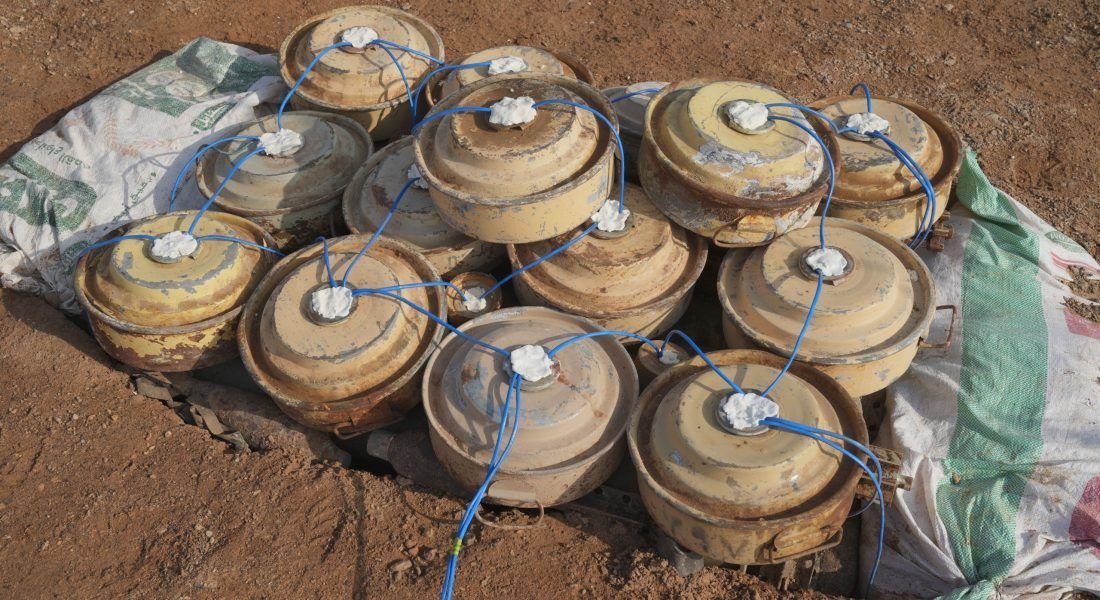
ADEN, Yemen — The Saudi-funded Masam demining project said it removed 2,166 mines, unexploded ordnance and improvised devices across Yemen in the first 11 days of September.
The project’s operations room put the tally at 1,660 pieces of unexploded ordnance, 488 anti-tank mines, seven anti-personnel mines and 11 improvised explosive devices.
Teams cleared 443,939 square metres of land over the period, the operations room said.
The figures were distributed by the state news agency Saba and carried by Yemen TV. They rest on Masam’s own reporting. Yemen Herald found no independent confirmation of the September totals, and no outside body has published a check of them.
Masam said it had removed 590,491 mines, unexploded ordnance and improvised devices since it began work in June 2018.
That cumulative figure breaks down into 421,168 pieces of unexploded ordnance, 152,964 anti-tank mines, 7,682 anti-personnel mines and 8,677 improvised devices, according to the project.
It put the total area cleared by Sept. 11 at 85,447,115 square metres.
Masam is funded by Saudi Arabia’s King Salman Humanitarian Aid and Relief Centre. Its managing director is Ousama Algosaibi.
Algosaibi has said the project fields 42 demining teams.
Masam has reported the deaths of 33 of its deminers since 2018, among them five foreign technical experts. More than 50 others have been injured.
The latest bulletin follows one issued a week earlier. Masam said then that it had removed 863 mines and explosive devices in the first week of September and cleared 194,994 square metres.
Clearance totals vary by district. In Midi, in Hajjah governorate on the Red Sea coast, the project said it had removed 13,036 mines and explosive remnants and cleared 4,749,003 square metres since starting work there.
The project describes its area of operations as Yemen’s liberated areas, meaning territory held by the internationally recognised government and its allies. Districts under Houthi control lie outside its reach.
Masam bulletins and Yemeni government statements routinely describe the devices as Houthi-laid. The bulletins do not set out the evidence for attributing individual devices, and the Houthi movement has not commented on the September figures.
The tally was published as fighting widened across several fronts in Yemen.
Houthi forces took the port city of Mocha on Sept. 10 and the island of Mayyun, also known as Perim, the following day, Al Jazeera reported. The advance gave the group control of Yemen’s Red Sea coastline and the eastern side of the Bab al-Mandeb strait.
Yemen’s internationally recognised government, which is backed by Saudi Arabia, has carried out air strikes along the coast in an attempt to reverse the advance.
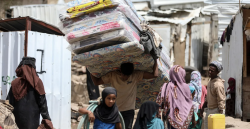
Abdusattor Esoev, head of the International Organization for Migration in Yemen, said nearly 46,000 people had been displaced since fighting escalated in the second week of September. He said the true figure was likely higher.
At least 76,000 people have been displaced since July, and more than 2,000 Yemenis reached Djibouti in a single 24-hour period, according to figures cited by Al Jazeera.
Esoev said the fall of Mocha, where the United Nations had maintained a substantial presence, had made it harder for aid agencies to reach people in need.
Yemen’s war reignited in July after roughly four years of relative calm. A United Nations-brokered truce halted large-scale fighting in 2022, after eight years of full-scale conflict.
Landmines are among the main causes of civilian harm in Yemen. The Yemeni Network for Rights and Freedoms recorded 4,947 cases of human and material damage from mine and explosive-remnant incidents across Yemeni governorates between January 2017 and March 2026.
The network put the civilian death toll over that period at 1,104, including 232 children and 98 women. It recorded 1,429 injuries, among them 316 children and 171 women.
It said 693 people were left with permanent disabilities, including 252 amputations. Yemen Herald could not independently verify the network’s tallies.
The Landmine Monitor recorded 247 mine casualties in Yemen in 2024, placing the country fifth worldwide behind Myanmar, Syria, Afghanistan and Ukraine.
The United Nations Mission to Support the Hodeidah Agreement has recorded more than 250 civilian casualties from mines and explosive remnants of war. Almost 40 per cent of them were women and children.
Masam put its cumulative clearance figure at 568,961 items as of June 19. The total has risen by more than 21,000 in the months since.
The project’s bulletins are issued by its own operations room rather than by an independent monitor, and cover only the areas its teams can reach.
The wider humanitarian picture has deteriorated. The United Nations humanitarian response plan for 2026 put the number of people needing assistance at more than 22 million, with 18.3 million acutely food insecure.
The plan recorded 5.2 million internally displaced people and sought 2.16 billion dollars to reach 12 million of them.
More than 2.2 million children under five are acutely malnourished, 516,157 of them severely, according to the plan.
Masam has operated for eight years. It began in June 2018, three years after Saudi Arabia entered the war in March 2015.
Anti-tank devices made up almost all of the mines recorded in the first 11 days of September, at 488 of 495. Seven anti-personnel mines were found over the same period.
About the Author