Yemen tells IAEA conference that Houthi escalation threatens Bab al-Mandab shipping
 Yemen Herald News
VIENNA, Austria — Yemen’s ambassador to the International Atomic Energy Agency told the agency’s annual conference this week that Houthi escalation now threatens shipping well beyond Yemen’s borders.
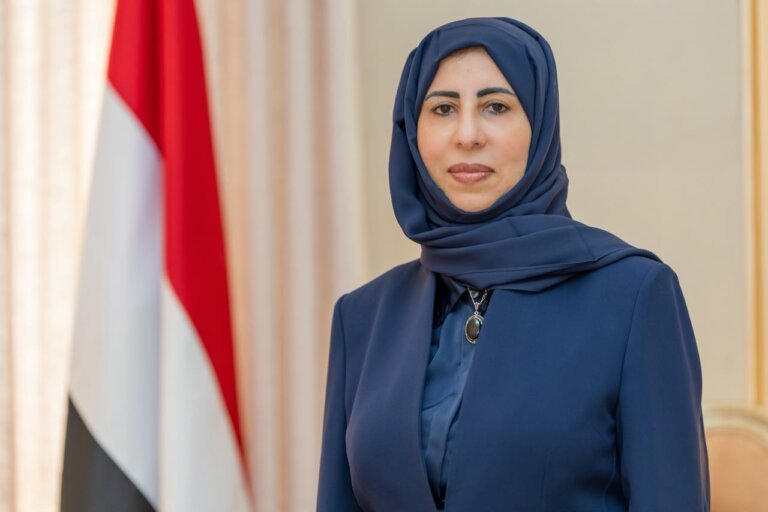
Haytham Shoja’aadin, Yemen’s ambassador to Austria and permanent representative to the IAEA, delivered the statement to the agency’s 70th General Conference in Vienna, the state news agency Saba reported.
He said the escalation was no longer an internal Yemeni matter, and no longer a crisis that could be contained inside Yemen’s borders.
It had become a threat to regional security, freedom of navigation, global energy supplies and international trade, he said.
Shoja’aadin called on the international community and international partners to prevent the use of Bab al-Mandab, Yemen’s coasts and its islands as platforms for threatening neighbouring countries, maritime navigation, trade and energy supplies.
He urged support for the Yemeni government in protecting its sovereignty and territorial waters.
He also called for an end to what he described as the flow of weapons, technology and military expertise from the Iranian government to the Houthis. Iran has denied arming the group.
Shoja’aadin said Yemen’s efforts to secure Bab al-Mandab were not aimed only at its own national security, according to Saba. He described the strait as a waterway on which global supply chains, energy flows and trade depend.
He said Houthi attacks on Saudi Arabia, threats to shipping in the Red Sea and Bab al-Mandab, and the use of Yemeni territory, ports and coastlines for military purposes formed parts of a single threat network linked to Iranian support.
That characterisation is the Yemeni government’s. The Houthis reject it, and cast their operations as a response to Saudi and Israeli actions.
The ambassador warned of simultaneous pressure on Bab al-Mandab and on maritime traffic and energy flows through the Strait of Hormuz.
He said the threat across the Red Sea could widen through cooperation between the Houthis and al-Shabaab in Somalia, including transfers of weapons, training and operational support. Saba’s report did not cite evidence for that assertion.
Shoja’aadin renewed the government’s condemnation of Houthi attacks on Saudi Arabia, including an attempt to target Mecca.
Saudi Arabia said its air defences intercepted a Houthi drone on Tuesday evening before it entered restricted airspace over the city. Coalition spokesman Turki al-Maliki said the wreckage fell to the south of Mecca.
Al-Maliki said it was the first time the Houthis had targeted the city since a ballistic missile was intercepted in 2017.
Houthi military spokesman Yahya Saree denied the group had aimed at Mecca. He said its targets were Saudi oil facilities and military bases “far removed from the holy places.”
The IAEA General Conference ran from 14 to 18 September at the Vienna International Centre. The agency says the annual meeting draws about 2,500 to 3,000 participants from member states, along with roughly 100 delegates from international organisations and 200 from non-governmental organisations.
Yemen’s appearance in Vienna followed an emergency UN Security Council session on 15 September, called at France’s request, on the Houthi advance towards Bab al-Mandab. It was the second emergency Council meeting on Yemen in under a week.
Khaled Khiari, UN assistant secretary-general for the Middle East, Asia and the Pacific, told the Council the situation in and around the strait had become increasingly volatile, with intensified fighting along Yemen’s western coast.
Khiari said further escalation around both Bab al-Mandab and the Strait of Hormuz could have “grave consequences for international security.”
About 12 percent of global trade passes through Bab al-Mandab.
The Houthis seized the Red Sea port city of Mocha on 10 September, then pushed south along the coast, according to international news reports. They took Perim Island, which sits in the middle of the strait.
They also took Greater and Lesser Hanish, an archipelago roughly 100 miles north of Bab al-Mandab. Coalition forces had captured the Hanish group from the Houthis in 2015.
The UN has estimated that more than 80,000 people were displaced in the two weeks to mid-September. More than 2,000 of them crossed by boat to Djibouti.
Human Rights Watch said on 15 September that recent Houthi attacks on commercial vessels in the Red Sea and the Gulf of Aden most likely amounted to war crimes in at least three cases.
The organisation said it verified attacks on four ships between late July and August: the Encelia, the Daisy, the Tihamah and the Amzan. The vessels were flagged to Saudi Arabia, Tanzania and Dominica.
The Houthis announced a maritime embargo on Saudi Arabia on 20 July, saying it answered a Saudi sea and air blockade of Yemen. The group controls the north-west of the country.
Niku Jafarnia, a researcher at Human Rights Watch, said: “Whatever the geopolitics, attacks on civilian crews carried out deliberately or recklessly are war crimes.”
The organisation said it found no evidence that the four vessels were legitimate military targets.
Maritime tracking services reported around the time of the Council meeting that commercial traffic through the corridor remained largely unaffected.
Saba is the only outlet to have reported the content of Yemen’s statement to the conference. Yemen Herald found no independent confirmation of the ambassador’s remarks, and the account of what he said rests on the state news agency’s report.
The General Conference meets once a year. It approves the agency’s budget and admits new member states.
About the Author