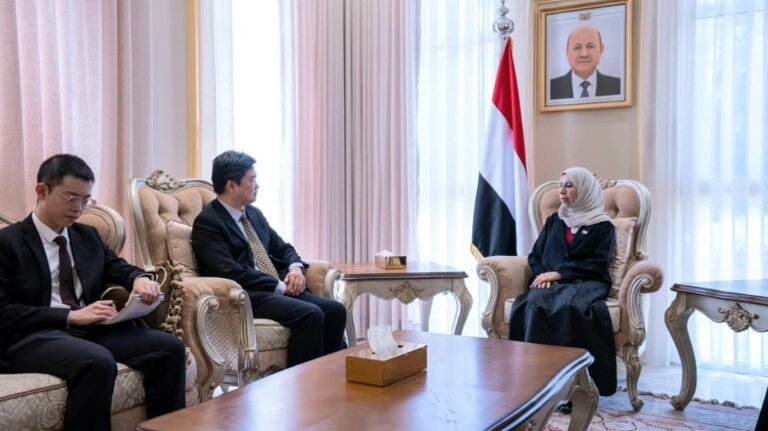
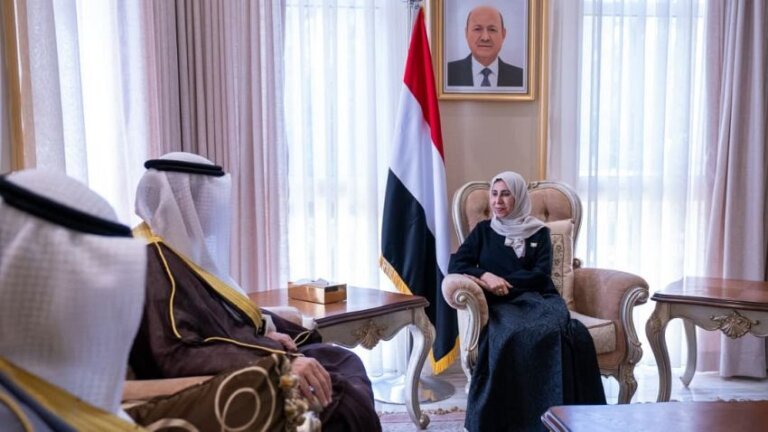
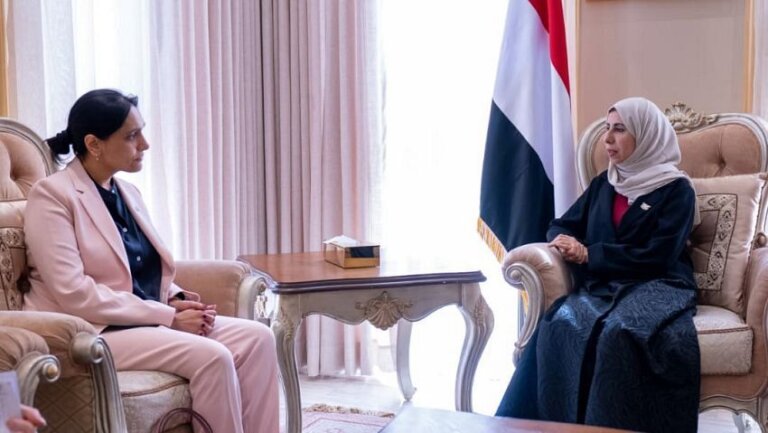
Researcher Maysaa Shuja al-Deen says anti-Houthi forces have about two weeks to counterattack
 Yemen Herald News
SANAA, Yemen — Saudi-backed forces have roughly two weeks to mount a counterattack against the Houthis before the opportunity closes, a senior Yemeni researcher told ABC News.
Maysaa Shuja al-Deen is a senior researcher at the Sanaa Center for Strategic Studies.
“To organize a counter attack is not impossible,” she said of government forces and their Saudi backers. Recovering from the shock of recent defeats may take time, she said, “and the window of time is not that big.”
“If they don’t organize a counter attack within two weeks, I don’t think they will be able to do it,” she said. “Or they can do it, but it will be more difficult.”
Her assessment was published by ABC News on Sept. 16. Yemen Herald did not interview Shuja al-Deen and could not independently confirm her remarks. The account of her views rests on that report.
She described the loss of the Red Sea coastal front as “a complete disaster” for Saudi Arabia. Riyadh was absorbing that reversal, she said, while attacks reached its own territory.
ABC News reported that Houthi forces swept down Yemen’s west coast this month, seized the port city of Mocha and pushed south toward the Bab el-Mandeb Strait. The group took control of about 2,100 square miles of territory, according to that report.
The Houthis have claimed control of the Hanish Islands north of the strait and Perim Island at its southern entrance. Their forces are also trying to encircle Taiz.
Taiz is home to about 1 million people and became a centre of anti-Houthi resistance in 2014. It serves as a logistical route between the Houthi-held north and the southern coast.
The Bab el-Mandeb handles an estimated 10% to 12% of international maritime trade, ABC News reported, citing analysts.
Shuja al-Deen said the advances put the Houthis in a position to disrupt regional shipping “more seriously.”
“They claim that they are not going to, and they just want to target the Saudi ships. But who knows,” she said.
Houthi military spokesman Yahya Saree said last week that “maritime navigation is safe for all companies except for Saudi vessels.” The group announced a maritime blockade against Saudi Arabia in July.
Two Saudi energy sites have been struck this month. The East-West Pipeline was attacked by drones launched from Iraq, was badly damaged and was taken out of service. Officials in Baghdad have opened an investigation.
Oil loading at the port of Yanbu was suspended this week after Houthi attacks, according to ABC News.
Shuja al-Deen said Riyadh’s approach until now had been to stay out of the conflict between the United States and Iran and to contain the Houthis inside Yemen.
“All of their actions are focused on how to avoid the war. And at the same time, they don’t have another strategy,” she said. “What if the war comes to you?”
Saudi Arabia has operated in Yemen since 2015 with American logistical, diplomatic and intelligence support. It is now directing hundreds of airstrikes at Houthi positions, ABC News reported.
Many analysts are sceptical that the pro-government coalition can reverse the losses, according to that report.
Adam Clements, a former U.S. Army attaché for Yemen, told ABC News that the counter-Houthi forces are “fragmented” and face an uphill fight.
“It’s very, very difficult for even a trained military, well-resourced, to be able to fight uphill into some of the areas that they control,” Clements said.
Shuja al-Deen said the Houthis’ aim now is consolidation rather than gains on every front.
“I don’t think they want to gain victories on all of the fronts. Maybe Marib and Taiz are more important,” she said. Current operations were more “about distracting their enemies so that it will be very difficult for them to regroup,” she added.
Marib sits about 75 miles east of Sanaa and holds Yemen’s largest oil and gas fields. Revenue from those fields has helped fund the internationally recognised government, and analysts say its loss would damage both the government’s finances and its standing.
Ahmed Nagi, senior Yemen analyst at the Crisis Group, said the Houthis “are seeking to take over the whole country.” He spoke during a recent podcast, ABC News reported.
Yemen’s civil war is in its 12th year. The fighting had been largely frozen since 2022 before this month’s advance, ABC News reported. Analysts say the Houthis are armed, trained and funded by Iran.
The United Nations Office for the Coordination of Humanitarian Affairs said this week that 125,000 people have been displaced by the latest round of fighting.
Amr al-Bidh, a senior official of the Southern Transitional Council, told ABC News that many in southern Yemen fear a total collapse of government forces.
“The STC is not what the STC used to be. We’re not in full control of the south and Aden,” he said.
“If the Houthis come into the south, then definitely we have to defend,” al-Bidh said. “We will create hell for them.”
The Southern Transitional Council held sway across southern Yemen until 2025 and was backed by the United Arab Emirates. Saudi Arabia launched airstrikes on its forces late that year, declared it disbanded and took control of areas it had held.
About the Author