Al-Zouba and Kuwait’s ambassador discuss bilateral ties and Yemen’s humanitarian needs
 Yemen Herald News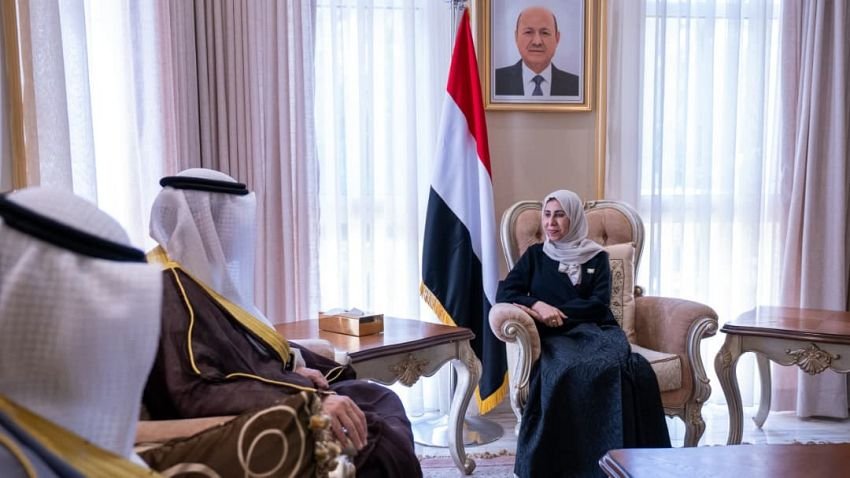
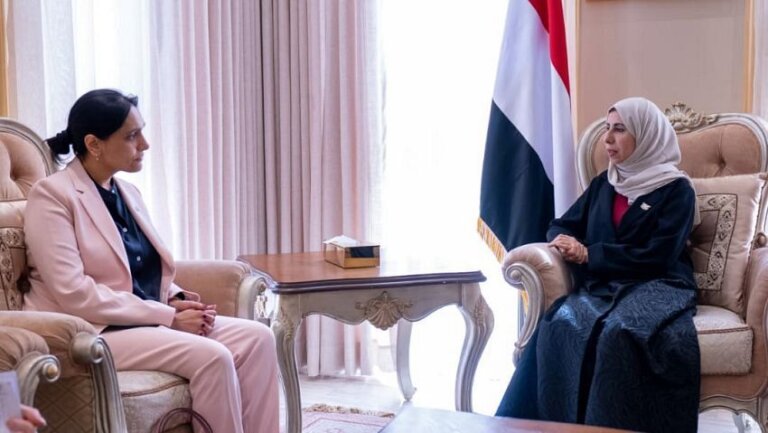
RIYADH, Saudi Arabia — Yemen’s foreign minister and Kuwait’s ambassador discussed bilateral relations and the country’s humanitarian situation on Tuesday, the state news agency Saba reported.
Afrah al-Zouba, minister of foreign affairs and expatriates, met Falah al-Mutairi, Kuwait’s ambassador to Yemen, in the Saudi capital.
The two discussed strengthening political, humanitarian and development cooperation, according to the agency.
Al-Zouba thanked Kuwait for what she described as its long-standing support, naming its humanitarian and development work in education, healthcare and infrastructure.
She welcomed Kuwait’s backing for what the government calls its constitutional legitimacy.
Saba said she also cited Kuwait’s stated commitment to Yemen’s unity, sovereignty, independence and territorial integrity, and to United Nations Security Council Resolution 2216.
The two discussed the humanitarian situation and the needs of displaced people, women and children among them, the agency said.
Al-Mutairi restated Kuwait’s commitment to continued political, humanitarian and development assistance, according to Saba.
Both sides said coordination and consultation between the two governments should continue.
The account of the meeting rests on Saba, the news agency of the internationally recognised government. Yemen Herald could not independently confirm it, and no independent confirmation of the talks has been published.
Kuwait’s embassy issued no readout of its own.
The meeting followed an exchange of messages between the two governments.
Al-Mutairi delivered a reply message from Sheikh Mishal al-Ahmad al-Jaber al-Sabah, the emir of Kuwait, to Rashad al-Alimi on 23 September, 26 September News reported.
Al-Zouba had delivered al-Alimi’s original message, according to the same report.
Al-Alimi praised what he called Kuwait’s steadfast stance in support of Yemen at that meeting, the outlet said. Neither side published the text of either message.
Kuwaiti money has gone into Yemeni construction this week.
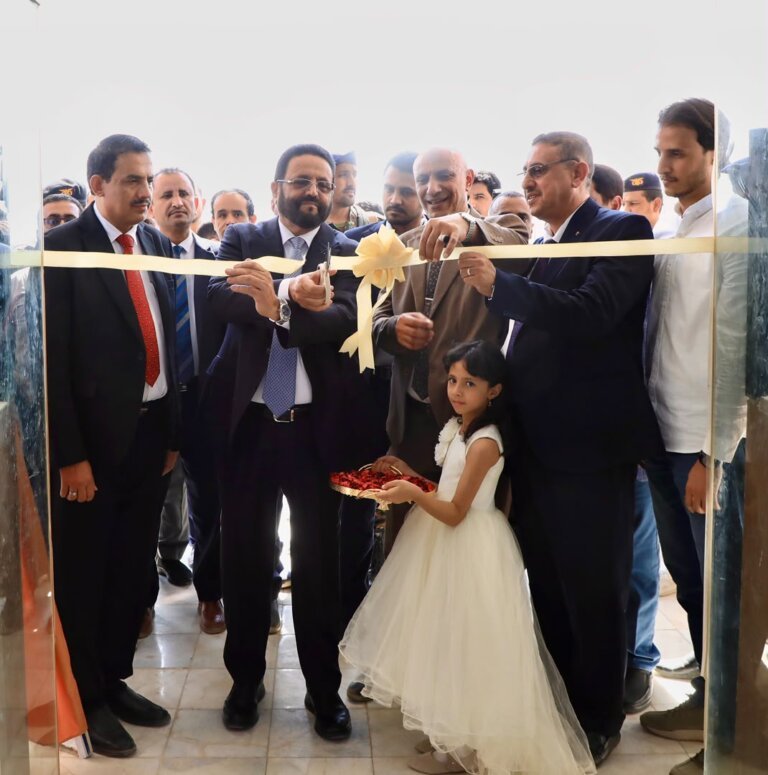
Sultan al-Aradah, a member of the Presidential Leadership Council and governor of Marib, credited the State of Kuwait and the Global Charity Organization with funding a new college building at the University of Saba Region, which he opened on Tuesday, Saba reported.
Kuwait has also been restoring development lending to Yemen through its state fund.
Wa’ed Batheeb, then Yemen’s minister of planning and international cooperation, signed an agreement with the Kuwait Fund for Arab Economic Development in February 2025 covering the resumption of Kuwaiti projects and the rescheduling of arrears, Yemen Monitor reported.
Walid Shamlan al-Bahr, the fund’s acting director general, signed for Kuwait, according to the report.
The funding covers electricity and energy, education and public works, the outlet said. It gave no amounts.
The Kuwait Fund gave UNICEF 2 million dollars in April 2022 to strengthen basic health care for mothers and children and to train midwives in hospitals across five Yemeni governorates, the agency said at the time.
Resolution 2216, which al-Zouba invoked, was adopted by the Security Council in April 2015.
It demanded that the Houthis withdraw from areas they had seized, including Sanaa, and give up weapons taken from state institutions, and it imposed an arms embargo on the group’s leaders.
The Houthis reject the resolution and the government’s claim to legitimacy under it.
Kuwait has served as a venue and a donor before.
It hosted United Nations-mediated peace talks between the Yemeni government and the Houthis in 2016.
Those talks ran more than 90 days and ended on 6 August 2016, Al Jazeera reported at the time.
Ismail Ould Cheikh Ahmed, then the United Nations envoy for Yemen, mediated them.
The Houthis and the party of former president Ali Abdullah Saleh rejected the United Nations proposal and announced a 10-member governing body of their own, according to the same report.
Ould Cheikh Ahmed condemned what he called a unilateral step and announced a month-long suspension rather than declaring the talks over.
The Houthi side had demanded a unity government, which the plan the government accepted did not provide for.
Kuwait pledged 250 million dollars for Yemen at a United Nations pledging conference in Geneva on 26 February 2019, Arab News reported.
Saudi Arabia and the United Arab Emirates each pledged 500 million dollars at the same event, according to that report.
Yemen’s foreign ministry has operated from Riyadh since the government left Sanaa, and most foreign missions to Yemen are based in the Saudi capital or in Aden.
The talks came during a month of heavy fighting.
The government lost control of Yemen’s Red Sea coast earlier in September, Al Jazeera reported on 23 September.
Fighting since then has displaced about 132,000 people, 75,000 of them in Taiz governorate, according to the same report.
Marib, which Kuwait is helping to build in, holds one of the largest displaced populations in the country.
The governorate counted 299,880 displaced families, or 2,087,573 people, at the end of December 2024, according to a report by its executive unit for camp management obtained by Barran Press.
More than 400,000 of them were living in 208 camps, the report said.
It counted 19,715 pregnant and breastfeeding women and 36,564 children needing nutritional support.
More than 22 million Yemenis need humanitarian assistance, according to the United Nations humanitarian needs and response plan published in March 2026.
The plan seeks 2.16 billion dollars to reach 12 million people.
It reports 18.3 million people acutely food insecure and 5.2 million internally displaced.
It counts more than 2.2 million children under five acutely malnourished, 516,157 of them severely.
About the Author