UN Security Council condemns Houthi attacks on Saudi Arabia and urges halt to escalation
 Yemen Herald News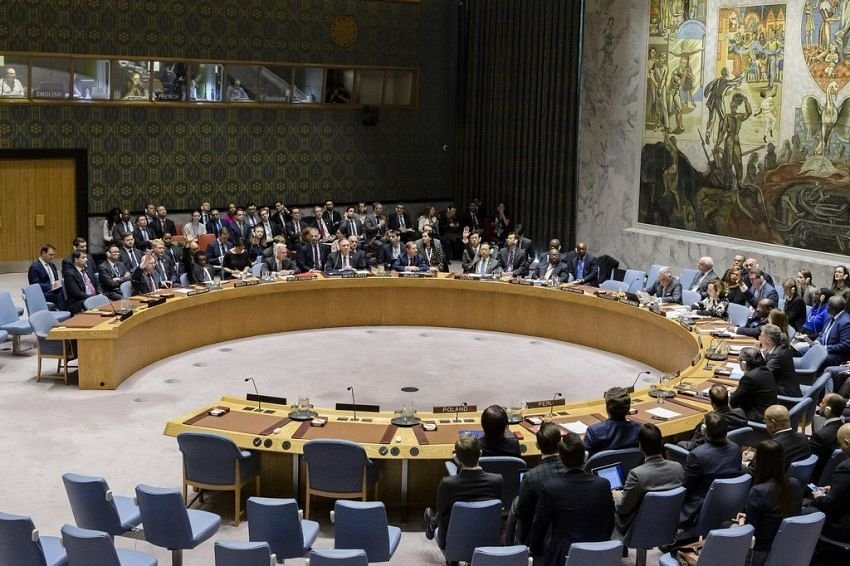
NEW YORK, United States — The UN Security Council condemned continued Houthi attacks on Saudi Arabia on Friday and called on the group to halt its military escalation.
The position was set out in a press statement. Such statements require the agreement of all 15 Council members.
Members said the attacks had affected civilian and energy infrastructure and had caused civilian casualties, including women and children.
They called on the Houthis to cease attacks affecting civilians and civilian objects.
The statement stressed the importance of fully implementing Security Council Resolution 2216 and subsequent resolutions on Yemen.
Resolution 2216 was adopted in 2015. It imposed a targeted arms embargo on the Houthi leadership and demanded that the group withdraw from areas it had seized, including Sanaa.
Council members said they were deeply concerned by reports of civilian deaths and injuries.
They cited the displacement of at least 125,000 people across Yemen since the start of September, according to the UN Office for the Coordination of Humanitarian Affairs.
OCHA put that figure at about 18,000 households. The agency said the fighting was driving civilian casualties and straining aid operations.
The members also voiced concern over damage to civilian objects and infrastructure.
They warned that continued escalation would worsen conditions in Yemen and could displace more civilians.
The statement said the escalation, the attacks on Saudi Arabia and the threats to shipping risked expanding the conflict, threatening maritime security and international trade and undermining peace efforts.
Council members recalled a statement issued on 7 August that condemned Houthi missile attacks on Saudi Arabia and attacks on commercial vessels.
They reiterated their condemnation of attacks and threats against commercial shipping in the Red Sea and the Bab al-Mandab Strait, and stressed the importance of safeguarding vessels and their crews.
The statement called for action in line with international law and named the UN Convention on the Law of the Sea. It stressed respect for navigational rights and freedoms.
Members expressed solidarity with Saudi Arabia over attacks affecting civilians and civilian objects on its territory. They affirmed the kingdom’s inherent right to self-defence under international law.
They reaffirmed support for the government of Yemen and their commitment to the country’s unity, sovereignty, independence and territorial integrity.
The members called for practical cooperation with the Yemeni government to prevent the Houthis from acquiring arms, technical assistance, training and financing for military activities.
They reaffirmed support for Hans Grundberg, the UN special envoy for Yemen, and his efforts toward an inclusive, negotiated political settlement led and owned by Yemenis.
Members called on all parties to engage constructively with UN-led efforts. They said lasting peace in Yemen could not be achieved through coercion or the use of force.
The account of the statement rests on the text distributed by the Council. Yemen Herald could not independently verify the casualty and displacement figures cited in it, and found no public Houthi response to the statement.
The statement followed a week of exchanges between the group and Saudi Arabia.
The Houthis said on Saturday that they had fired ballistic and cruise missiles and drones at Riyadh and at an Aramco facility in Yanbu.
The Saudi-led coalition said its air defences intercepted a ballistic missile aimed at Riyadh and thwarted attacks on Baish, Taif, Farasan and Yanbu.
Earlier in the week the group said it struck King Khalid Air Base in Khamis Mushait, targeting hangars, radar systems, runways and ammunition depots.
In a statement on Monday, the Houthis said Saudi warplanes had carried out 300 air raids across Yemen over the previous five days. Saudi Arabia has not confirmed that figure.
The Council met on the group’s position at Bab al-Mandab on 15 September at France’s request.
A senior UN official told members this month that the advance toward the chokepoint raised the risk of a wider conflict.
Yemen’s humanitarian response plan for 2026 seeks $2.16 billion to reach 12 million people. Tom Fletcher, the UN emergency relief coordinator, told the Council on 13 August that the appeal was barely 20 percent funded.
OCHA says more than 22 million people in Yemen need assistance and that 18.3 million are acutely food insecure.
The Bab al-Mandab Strait links the Red Sea to the Gulf of Aden. It carries a large share of seaborne trade between Europe and Asia.
The Houthis advanced along Yemen’s western coast in mid-September, taking Mocha and extending their reach toward the strait.
It was the group’s largest territorial gain in years. Global fuel prices rose as the advance continued, NPR reported.
Yemen’s war began when the Houthis seized Sanaa in 2014. A Saudi-led coalition intervened in March 2015 in support of the internationally recognised government.
OCHA says 5.2 million people in Yemen are internally displaced.
The agency also reports that more than 2.2 million children under five are acutely malnourished, of whom 516,157 are severely malnourished.
Of the 12 million people the 2026 plan aims to reach, 9.4 million are prioritised for targeted assistance based on the severity of their needs.
Council press statements are not legally binding. They carry political weight because they reflect the agreement of every member, including the five permanent seats.
Grundberg has held the envoy post since 2021.
About the Author