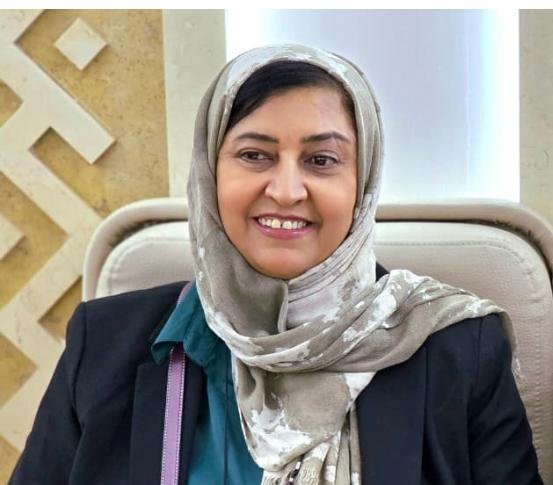
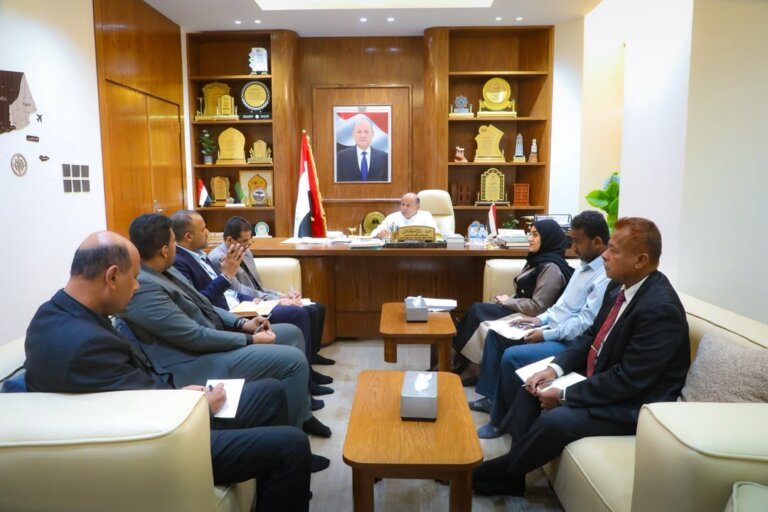
Presidential Leadership Council member Bawazir discusses Yemen’s economy with the IMF’s Georgieva
 Yemen Herald News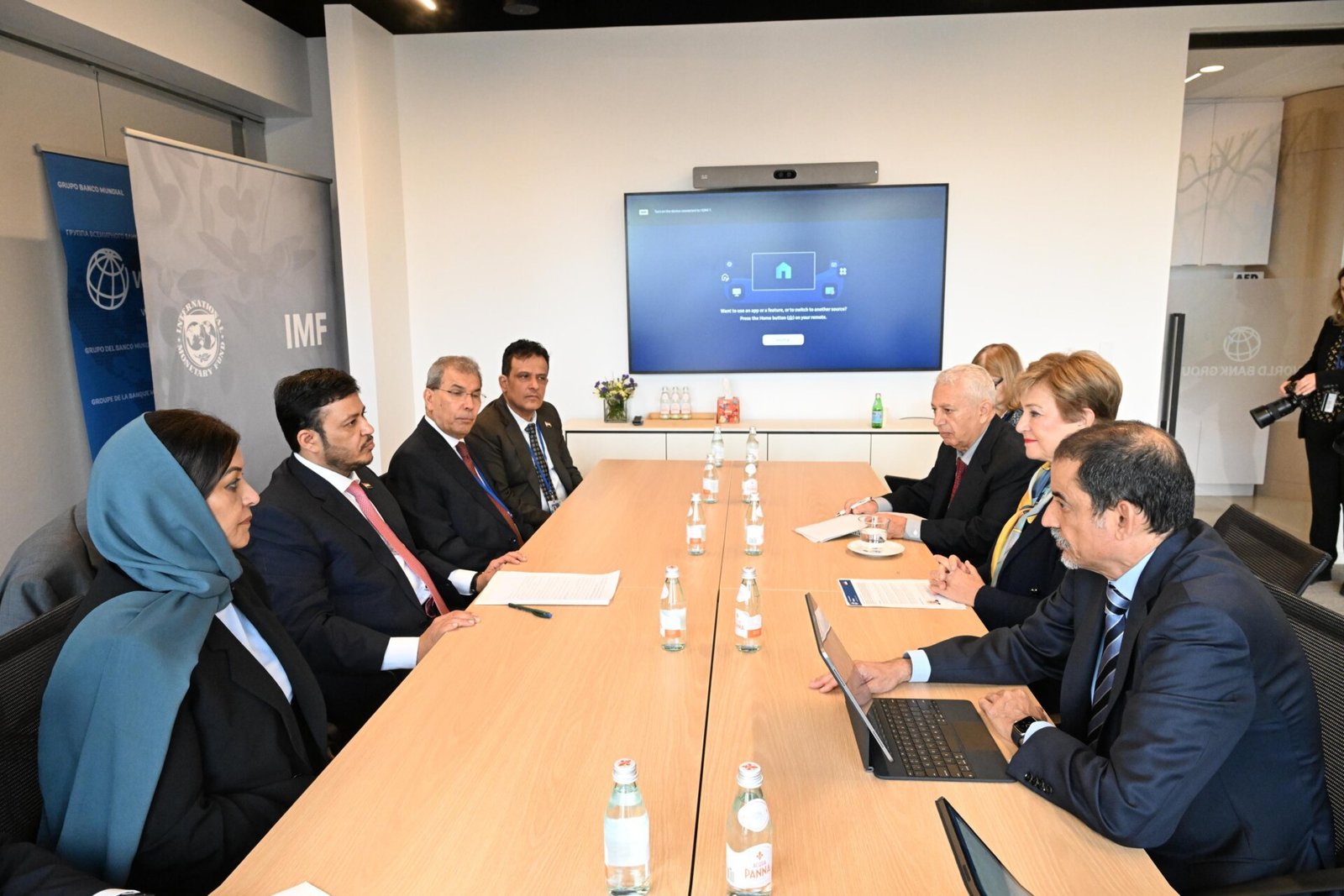
NEW YORK, United States — A member of Yemen’s Presidential Leadership Council discussed the country’s economy with the head of the International Monetary Fund on Monday.
Abdullah al-Alimi Bawazir met IMF Managing Director Kristalina Georgieva on the margins of the UN General Assembly, the state news agency Saba reported.
The account rests on Saba, which is run by Yemen’s internationally recognised government. The IMF has not published its own account of the meeting, and no independent confirmation has appeared.
The two discussed Yemen’s economic situation, the progress of government reforms and cooperation to support the economy, according to the agency.
Saba did not say whether any new programme or financing was raised.
Bawazir is leading Yemen’s delegation to the 81st session of the General Assembly and is due to deliver the country’s address, Yemen Monitor reported.
His address is expected to cover political, security, economic and humanitarian developments and the support the government is seeking, according to that report.
Foreign Minister Afrah al-Zouba travelled with him to New York.
Georgieva has led the IMF since October 2019 and began a second term in October 2024.
Yemen’s economy has contracted for most of the past decade.
National real gross domestic product fell 1.5 percent in 2025 and is projected to shrink a further 0.5 percent this year, according to the World Bank.
Crude oil exports remain blocked. The World Bank says activity is held back by a difficult business environment, limited access to finance and weak domestic demand.
The price of a basic food basket was 26 percent higher than a year earlier after a sharp fall in the rial on the Aden market, the bank said.
Funding for the UN response plan has covered about 28 percent of assessed needs, according to the same assessment.
Saudi Arabia and the United Arab Emirates announced a $3 billion support package in April 2022, with disbursement tied to reform of the Central Bank of Yemen.
Banks have moved operations from Sanaa to Aden in recent years to stay outside Houthi regulation.
Yemen has operated two separate currency areas since January 2020, when the central bank in Sanaa banned the new banknotes issued by its Aden counterpart.
Old notes circulate in Houthi-held areas of the north. New notes circulate in the south and east, where the internationally recognised government holds ground.
The rial traded at about 1,400 to the dollar on the Aden market in August, according to market data compiled for aid agencies.
Fuel costs rose again this month. The Houthi-run Yemen Petroleum Company in Sanaa raised petrol to about 525 rials a litre and diesel to about 575 rials, Al Jazeera reported on Sept. 18.
That was an increase of about 10 percent. Al Jazeera reported that buyers in Houthi-held areas were paying 5,250 rials where they had paid 4,750 days earlier.
Petrol at that level costs roughly a dollar a litre in a country where most households depend on aid.
The IMF conducted an Article IV mission on Yemen in 2025. The Fund has projected growth rising from about 0.5 percent this year to roughly 2.5 percent by 2030, supported by non-oil exports, remittances and refined product output.
That projection predates the fighting that began this month.
Houthi forces launched an offensive on Sept. 3 and took the Red Sea port of Mocha on Sept. 10, Euronews reported.
Within days the group held the rest of Yemen’s Red Sea coastline and the island of Mayyun, also called Perim, according to Al Jazeera and the Times of Israel. Its forces now sit about 20 kilometres from the African shore.
The UN Security Council met on the advance on Sept. 15. An assistant secretary-general told members the push toward the Bab al-Mandab strait raised the risk of a wider conflict.
G7 foreign ministers called the situation an unacceptable threat to regional stability, to global energy security and to navigational rights in the Red Sea and the strait.
The fighting has displaced large numbers of people. The International Organization for Migration counted 104,796 people newly displaced inside Yemen by Sept. 16, across 17,461 households.
Taiz governorate was worst affected, with about 8,300 households displaced. A further 2,776 people had crossed to Djibouti by that date.
The UN refugee agency allocated $2 million in emergency funding for Yemen on Sept. 21 and said its Yemen operation was 18 percent funded for the year.
More than 22 million people need assistance this year, according to the UN humanitarian office’s response plan published in March. It counts 18.3 million as acutely food insecure and 5.2 million as internally displaced.
The plan seeks $2.16 billion to reach 12 million people.
The Presidential Leadership Council has eight members and has run the government from Aden since April 2022.
Saba reported separately that Bawazir discussed support for Yemen’s economic recovery with the head of the UN Development Programme during the same visit.
It also reported that he met Bahrain’s foreign minister on bilateral relations and regional developments.
The meetings Saba has carried from New York this week have centred on economic support and on the Houthi escalation.
Saba did not say how long the meeting with Georgieva lasted or who else attended.
About the Author