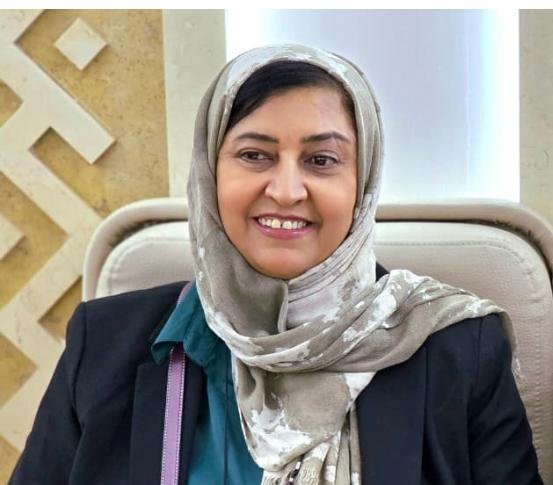
Foreign Minister Afrah al-Zouba calls for disarming the Houthis at UN ministerial dialogue
 Yemen Herald News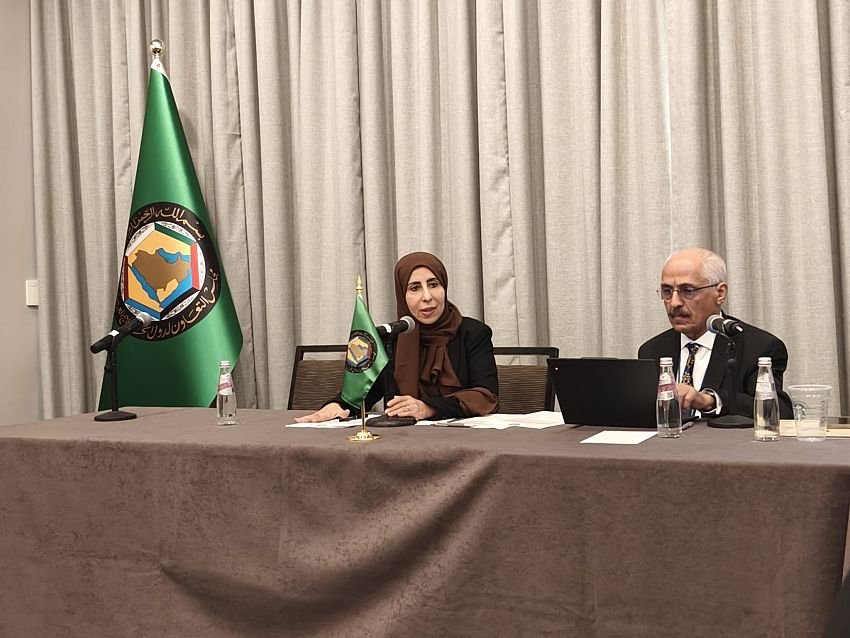
NEW YORK, United States — Yemen’s foreign minister called for the disarmament of non-state armed groups, including the Houthis, at a high-level ministerial dialogue at the United Nations.
Afrah al-Zouba took part in the session during the 81st General Assembly, the state news agency Saba reported Monday.
She raised the Houthi movement’s military escalation along Yemen’s western coast, the agency said.
Al-Zouba pointed to its effect on civilians, the displacement it has caused, and threats to navigation in the Bab al-Mandab strait and the Red Sea.
She pressed for support for state institutions and for respect for Yemen’s sovereignty and territorial integrity.
The minister also called for stronger international efforts against the threats she set out.
The account of her remarks rests on Saba, which is run by the internationally recognised government. Yemen Herald found no independent confirmation of it published elsewhere.
The Houthis reject the government’s description of them and call their forces a national army.
Al-Zouba spoke after a run of Houthi gains on Yemen’s Red Sea coast.
Al Jazeera reported on 11 September that the group had taken the coastline and the shipping route beside it.
Houthi fighters seized the port city of Mokha during that push.
They later moved onto Perim Island, also called Mayyun, which splits Bab al-Mandab into two shipping lanes, Euronews reported on 12 September. Government forces withdrew from the island.
Houthi units also moved onto the Hanish Islands in the middle of the Red Sea.
The positions leave the group about 20 kilometres from the African coast, according to Al Jazeera.
Bab al-Mandab links the Red Sea to the Gulf of Aden and carries traffic bound for the Suez Canal.
The Group of Seven foreign ministers and the European Union’s High Representative addressed the strait in a joint statement this month.
They said the situation in Yemen was an unacceptable threat to regional stability, to global energy security, and to navigational rights and maritime security in the Red Sea and Bab al-Mandab.
The statement condemned Houthi strikes in Yemen and against Saudi Arabia, including those affecting civilians and civilian infrastructure.
It called on the group to halt military action and attacks on civilian shipping, and to return to the political process.
The ministers called on Iran to end its arming of and support for the Houthis, citing Security Council resolutions 1747, 2140 and 2216.
They restated support for Hans Grundberg, the United Nations special envoy for Yemen, and for a negotiated settlement.
Iran denies arming the group.
The Security Council condemned Houthi attacks on Saudi Arabia this month. Secretary-General Antonio Guterres and Jasem Albudaiwi, the Gulf Cooperation Council’s secretary-general, issued their own condemnations.
The Houthis said they attacked sites in Riyadh and an Aramco installation at Yanbu with ballistic missiles and drones. Video shared afterwards showed smoke near King Khalid International Airport.
Saudi Arabia has not published a full account of the damage.
President Donald Trump reviewed options for strikes on Yemen at Camp David on Sunday, then cut his weekend short and returned to Washington, The National reported. He called off a prepared strike package by the middle of the day.
The State Department warned Americans in the region of the potential for unforeseen escalation, and said the conflict could escalate rapidly.
Washington has twice declined Saudi requests for direct military action against the group, according to The National.
The humanitarian position was severe before the coastal fighting began.
The United Nations humanitarian needs and response plan published in March said more than 22 million people in Yemen need assistance. It put the number who are acutely food insecure at 18.3 million.
The plan counted more than 2.2 million children under five as acutely malnourished, of whom 516,157 were severely malnourished.
It recorded 5.2 million internally displaced people and sought 2.16 billion dollars to reach 12 million of those in need.
Yemen’s delegation to the assembly is headed by Abdullah al-Alimi Bawazir, a member of the Presidential Leadership Council, Saba reported.
The council has governed the internationally recognised side of the conflict since April 2022, when Abdrabbuh Mansur Hadi transferred his powers to it. Its seat is in Aden.
Yemen’s war began in 2014, when Houthi forces took the capital, Sanaa. A Saudi-led coalition intervened the following March.
Al-Zouba was appointed foreign minister on 23 July, the first woman to hold the post or any of Yemen’s most senior cabinet jobs.
She had been minister of planning and international cooperation since February.
Before entering government she spent more than 25 years in development and peacebuilding work.
She was first deputy secretary-general of the National Dialogue Conference between 2013 and 2015, helping oversee its technical and organisational work and contributing to the drafting of its final document.
In 2019 she advised Maeen Abdulmalik, then prime minister, on humanitarian relief and development.
She holds degrees in business administration and health economics, and a pharmacy degree from Sanaa University.
Since taking office she has discussed Red Sea security with her Italian counterpart, according to the foreign ministry, and met the Arab League’s secretary-general in August.
Al-Zouba also attended the annual consultative meeting of the Arab League Council at foreign-minister level, held on the sidelines of the assembly, Saba reported.
About the Author