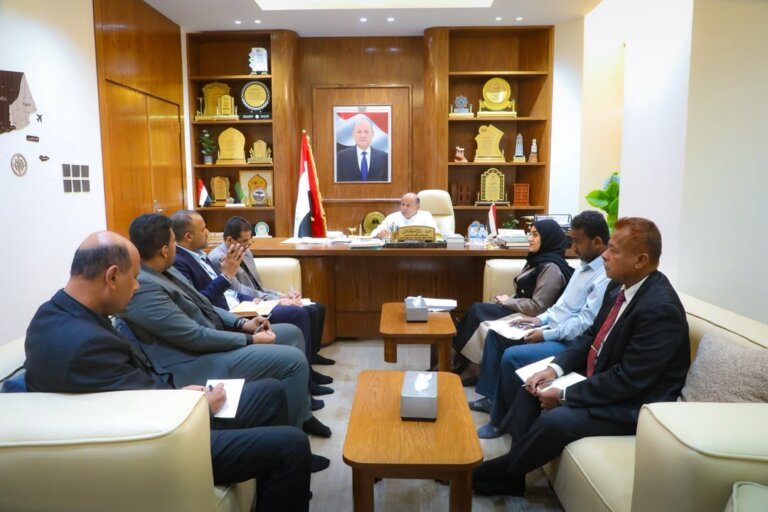
Shura Council Speaker Ahmed bin Dagher asks Washington for more support against the Houthis
 Yemen Herald News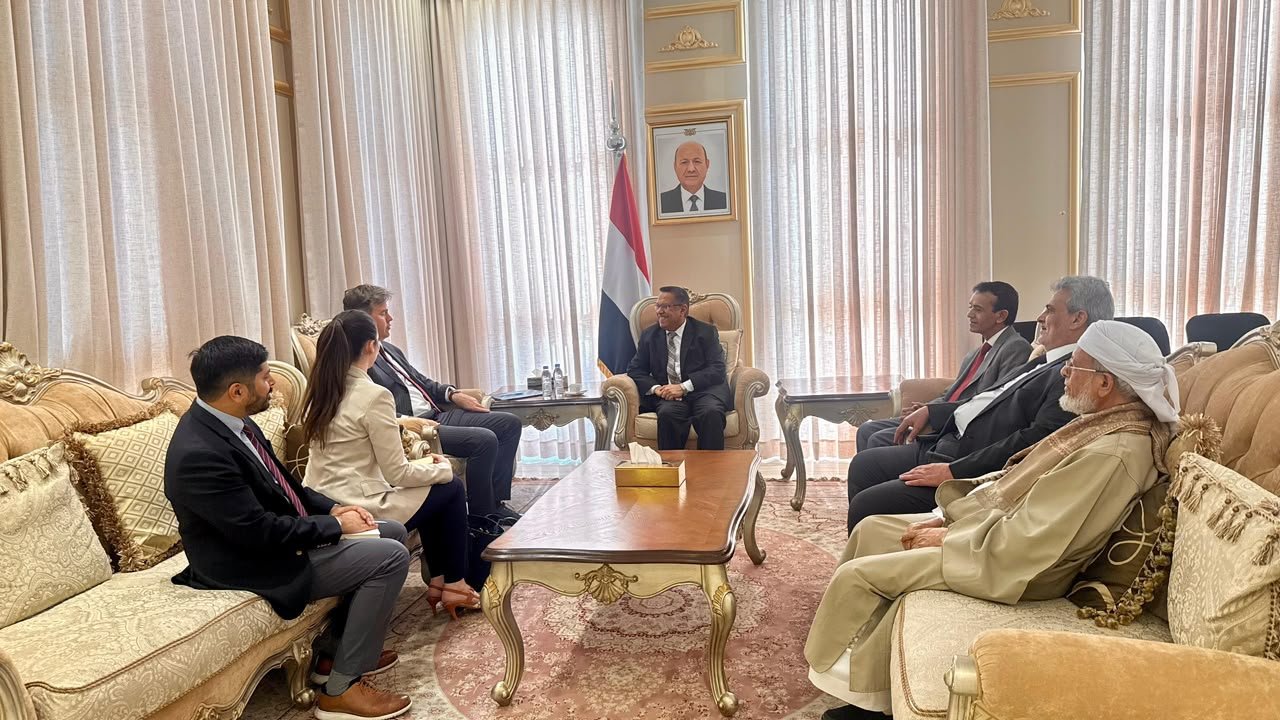
RIYADH, Saudi Arabia — The speaker of Yemen’s Shura Council asked Washington for more support against the Houthis in talks with the senior US diplomat to Yemen.
Ahmed Obaid bin Dagher met Neil Hop, the chargé d’affaires of the US mission to Yemen, on Monday, the state news agency Saba reported.
The two discussed political and military developments, chiefly the Houthi escalation, the agency said.
Bin Dagher called on the United States and the wider international community to help the government protect Yemeni territory, waters and sea routes.
He praised what he described as Washington’s supportive position and pressed for closer coordination between the two countries.
Hop confirmed US support for the government and for peace efforts, according to Saba. He stressed confronting Houthi threats and protecting the security of international navigation.
The account of the meeting rests on Saba, which is run by the internationally recognised government. Yemen Herald found no independent confirmation of what was said.
The State Department has not published its own readout.
Hop arrived in the post on 5 August, the US mission said.
He is a career member of the Senior Foreign Service with the rank of counselor and has spent more than 24 years in State Department and interagency roles.
He previously served in Washington as director of the office of Israeli and Palestinian affairs, as office director and acting deputy assistant secretary for Pakistan, and as senior adviser for technology diplomacy in the bureau of cyberspace and digital policy.
The mission lists his priorities as protecting freedom of navigation in the Red Sea, preventing the region from exporting terrorism, and the security of US partners.
The United States has had no ambassador resident in Sanaa since the embassy suspended operations in 2015. The mission works from Riyadh.
Bin Dagher has led the Shura Council, the upper chamber of Yemen’s legislature, since 2021.
He was prime minister from 2016 to 2018 and deputy prime minister in 2014 and again from 2015 to 2016.
The meeting followed a month of Houthi advances on Yemen’s Red Sea coast.
Al Jazeera reported on 11 September that the group had taken control of the coastline and the shipping lane running past it.
Houthi fighters seized the port city of Mokha, then moved onto Perim Island, also called Mayyun, which divides the Bab al-Mandab strait into two shipping lanes, Euronews reported on 12 September.
Government forces withdrew from the island. Houthi units also took the Hanish Islands in the middle of the Red Sea.
The positions leave the group about 20 kilometres from the African coast, according to Al Jazeera.
The Houthis dispute the government’s account of the fighting and describe their forces as a national army.
The Group of Seven foreign ministers and the European Union’s High Representative issued a joint statement this month on the strait.
They said the situation in Yemen was an unacceptable threat to regional stability, to global energy security, and to navigational rights and maritime security in the Red Sea and Bab al-Mandab.
The statement condemned Houthi strikes in Yemen and against Saudi Arabia, including those affecting civilians and civilian infrastructure.
It called on Iran to end its arming of and support for the group, citing Security Council resolutions 1747, 2140 and 2216. Iran denies arming the Houthis.
The ministers restated their backing for Hans Grundberg, the United Nations special envoy for Yemen.
The Security Council condemned Houthi attacks on Saudi Arabia this month. Secretary-General Antonio Guterres and Jasem Albudaiwi, the Gulf Cooperation Council’s secretary-general, issued their own condemnations.
The Houthis said they struck sites in Riyadh and an Aramco installation at Yanbu with ballistic missiles and drones.
Video shared afterwards showed smoke near King Khalid International Airport. Saudi Arabia has not published a full account of the damage.
President Donald Trump reviewed options for strikes on Yemen at Camp David on Sunday, then cut his weekend short and returned to Washington, The National reported.
He called off a prepared strike package by the middle of the day.
Washington has twice declined Saudi requests for direct military action against the group, according to the same report.
The State Department warned Americans in the region of the potential for unforeseen escalation and said the conflict could escalate rapidly.
The fighting has driven a fresh wave of displacement.
The International Organization for Migration said 18,500 people were displaced in 72 hours as fighting spread across the west coast earlier this month.
The United Nations humanitarian needs and response plan published in March said more than 22 million people in Yemen need assistance, and put the number who are acutely food insecure at 18.3 million.
The plan counted more than 2.2 million children under five as acutely malnourished, of whom 516,157 were severely malnourished.
It recorded 5.2 million internally displaced people and sought 2.16 billion dollars to reach 12 million of those in need.
Yemen’s war began in 2014, when Houthi forces took the capital, Sanaa. A Saudi-led coalition intervened the following March.
The Presidential Leadership Council has governed the internationally recognised side since April 2022, when Abdrabbuh Mansur Hadi transferred his powers to it.
Bin Dagher congratulated his Saudi counterpart on the kingdom’s national day the same week, Saba reported.
About the Author