Arab foreign ministers warn Houthi advance threatens Bab al-Mandab shipping
 Yemen Herald News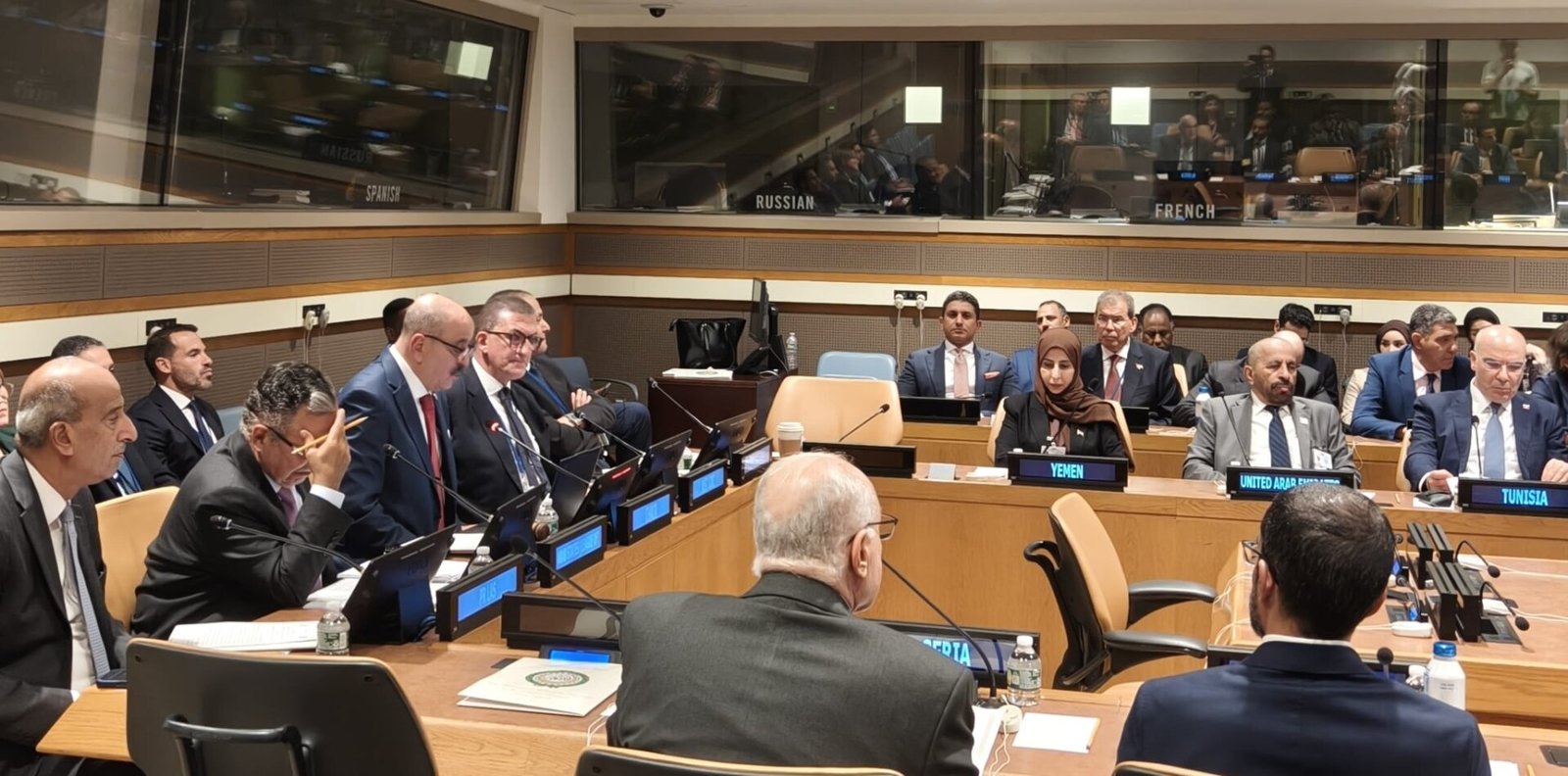
NEW YORK, United States — Arab foreign ministers warned that Houthi advances along Yemen’s western coast threaten shipping through the Bab al-Mandab strait, after their annual consultative meeting on Tuesday.
The ministers met as the Arab League Council at ministerial level, on the sidelines of the 81st session of the UN General Assembly.
Yemen’s minister of foreign affairs and expatriates, Afrah al-Zouba, took part, the state news agency Saba reported.
Tunisian Foreign Minister Mohamed Ali Nafti chaired the session. He holds the presidency of the council’s 166th session.
Arab League Secretary-General Nabil Fahmy attended. Fahmy took up the post on 1 July for a five-year term.
He succeeded Ahmed Aboul Gheit, who had held the job since July 2016.
On Yemen, the ministers discussed what Saba described as recent escalation by the Houthis along the western coast and in the Bab al-Mandab strait.
They said that escalation threatened regional security and international maritime navigation, according to the agency.
The ministers called for support for the internationally recognised Yemeni government and for state institutions, Saba said.
They also called for a halt to Iranian interference and to the flow of weapons to the group, citing UN Security Council resolutions.
That characterisation is the ministers’ own. Iran rejects accusations that it arms the Houthis, and the group says it acts on its own account.
The Houthis dispute government descriptions of the fighting on the western coast.
Yemen Herald could not independently confirm the Yemen section of the discussion. It rests on Saba, which is run by the internationally recognised government, and no independent record of that part of the meeting has been published.
The meeting itself was reported separately by several participating governments. The foreign ministries of Qatar, Oman and Bahrain each said their ministers took part.
The ministers reviewed Arab and regional developments more broadly, Saba said. The Palestinian cause was the main item.
They also covered political, security and humanitarian developments in the region, and items on the General Assembly agenda.
The session addressed what the ministers described as Iranian attacks on Gulf Cooperation Council states, according to the agency.
The ministers pressed for continued consultation, stronger joint Arab action and the safeguarding of Arab interests in international forums, Saba said.
They called for respect for international law and for freedom of maritime navigation.
The ministers also reviewed the outcome of an Arab ministerial meeting held in Cairo earlier in September.
Yemen’s permanent representative to the UN, Ambassador Abdullah Ali Fadhel al-Saadi, attended the New York session.
Deputy Permanent Representative Ambassador Ahmed al-Sharabi and Akram Salam of the foreign minister’s office were also present, the agency said.
Al-Zouba was appointed foreign minister on 23 July. She is the first woman to hold the post in Yemen.
She had been named minister of planning and international cooperation in February.
Before entering government she worked for more than 25 years in development and peacebuilding.
She served as first deputy secretary-general of the National Dialogue Conference, the transitional body set up after the removal of Ali Abdullah Saleh.
Al-Zouba trained as a pharmacist at Sanaa University. She later took a master’s degree in community health and health economics in Malaysia, and an MBA in Yemen.
Tuesday’s meeting followed a separate high-level ministerial dialogue at the UN on Monday. Al-Zouba called there for the disarmament of non-state armed groups, including the Houthis.
Houthi forces took control of Yemen’s Red Sea coastline in early September, Al Jazeera reported on 11 September.
The advance took in the port city of Mokha and left the group astride the Bab al-Mandab strait, which links the Red Sea to the Gulf of Aden.
The UN Office for the Coordination of Humanitarian Affairs says at least 125,000 people have been displaced across Yemen since the start of September.
The Security Council heard a similar warning this month. An assistant secretary-general told the council that the Houthi advance toward the chokepoint raised the risk of a wider conflict.
Al-Saadi has asked the council to set up an international deterrence mechanism against Houthi threats to shipping.
Yemen has put the same case to Egypt, arguing that the escalation on the western coast threatens the Bab al-Mandab, maritime security and traffic through the Suez Canal.
Saudi Crown Prince Mohammed bin Salman visited Cairo on 15 September. Egypt has acted as a mediator on Red Sea security.
US diplomats met Houthi representatives at the American embassy in Oman on 16 September, Axios reported. The talks covered a ceasefire and keeping the strait open.
The Houthis have since turned toward Yemen’s eastern governorates, where the country’s main oil and gas fields lie.
The September advance also gave the group Perim Island and the Hanish Islands, according to the Al Jazeera report.
The Houthis then declared a blockade on Saudi-linked shipping.
Bab al-Mandab is the southern approach to the Suez Canal. Traffic bound for the canal from the Indian Ocean passes through it.
Nafti is leading Tunisia’s delegation to the General Assembly. He also chaired a coordination meeting of Arab foreign ministers during the New York visit.
The Arab League Council meets at ministerial level in ordinary session twice a year. The consultative meeting in New York is held each September, on the margins of the General Assembly.
About the Author