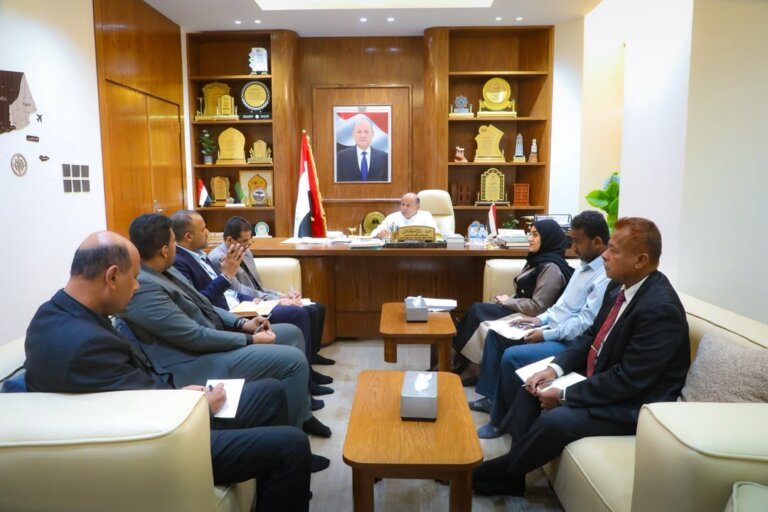
Yemen inquiry commission discusses 14th report with EU and Dutch missions in Geneva
 Yemen Herald News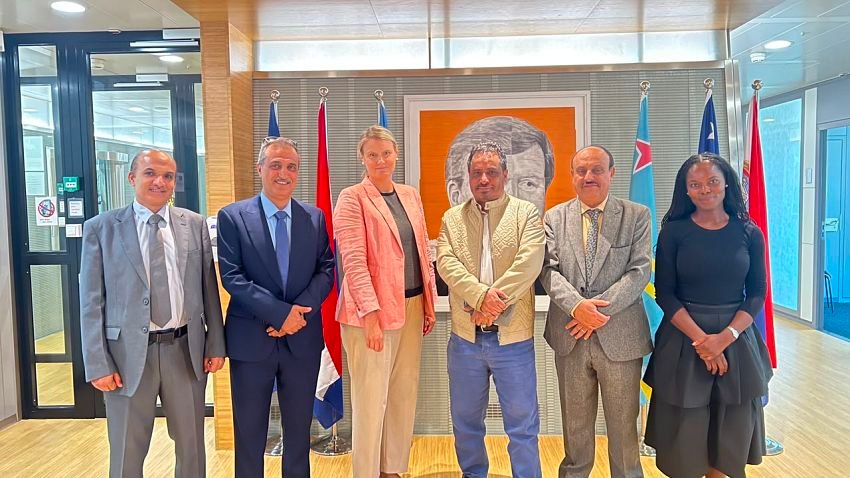
GENEVA, Switzerland — Yemen’s national commission of inquiry into alleged human rights violations discussed its 14th periodic report with European Union and Dutch diplomats in Geneva on Thursday.
The National Commission for Investigation into Alleged Human Rights Violations met representatives of the EU and Dutch missions in the Swiss city, the Yemeni state news agency Saba reported.
The talks covered recent developments in Yemen’s human rights situation, the findings set out in the report, and what the commission says it needs to carry on its investigative work and field visits.
The commission’s deputy chairman, Judge Hussein al-Mashdali, led the review of the violations documented in the report.
He said the range of cases under investigation was widening as the conflict changed, and now took in violations connected to maritime navigation.
Al-Mashdali also raised what he described as recent escalation by Houthi forces along the western coastal areas of Taiz and Hodeidah governorates.
He said the fighting there had pushed civilians from their homes in successive waves.
Health workers and child vaccination campaigns face restrictions in areas under Houthi control, al-Mashdali said.
The Houthi movement disputes the Yemeni government’s account of the fighting on the western coast and attributes the escalation to government forces and their foreign backers.
Katerina Tapio, the human rights officer at the European Union mission, said the bloc was concerned about the escalation and its effect on civilians, according to Saba.
She reaffirmed the EU’s continued support for the commission’s work.
Nadège Afonso, second secretary at the Permanent Mission of the Kingdom of the Netherlands to the United Nations and other international organisations in Geneva, also took part.
Afonso said the information the commission supplies helps clarify the reality of violations and the obstacles its investigators face, the agency reported.
The account of the meeting rests on Saba, which filed it on Thursday morning, and on the commission itself. Yemen Herald found no independent confirmation of the discussion published elsewhere.
The commission briefed 23 ambassadors and representatives of diplomatic missions accredited to Yemen on the same 14th periodic report earlier in the week, Yemen Monitor reported.
That briefing covered developments in the human rights situation and the findings of the commission’s monitoring and investigation work across several governorates.
The commission was set up by the Yemeni government to investigate alleged violations by all parties to the conflict and publishes its findings in numbered periodic reports.
Its investigators depend on field visits to reach victims and witnesses, access that has narrowed as front lines have shifted.
The 14th report is the latest in a numbered series the commission has issued, each covering a defined reporting period.
Maritime navigation has become a recurring subject in Yemen’s human rights reporting since attacks on commercial shipping in the Red Sea and the Gulf of Aden began in late 2023.
Those attacks have pushed vessels onto the longer route around southern Africa and raised war-risk insurance costs for ships using the Suez Canal.
The escalation al-Mashdali described has run alongside cross-border attacks on Saudi Arabia.
Saudi Arabia said on Thursday that its air defences intercepted six ballistic missiles aimed at the Red Sea port of Yanbu and the city of Taif, and blamed the Houthis, The Associated Press reported.
The Houthis said they had fired missiles and drones at Saudi Arabia’s Jazan province.
A Greek military air defence system intercepted a ballistic missile and a drone in the wider Yanbu area the same day, according to the same account.
Saba reported separately on Thursday that 80 countries had warned of the consequences of Houthi control of the Bab al-Mandab strait for international shipping.
Taiz city has been divided by front lines since early in the war.
Hodeidah’s port handles much of the food and fuel imported into northern Yemen, and the United Nations brokered a ceasefire covering the city under the Stockholm Agreement in December 2018.
Child vaccination coverage in Yemen has fallen well below pre-war levels, and the World Health Organization and UNICEF have repeatedly reported outbreaks of measles and diphtheria.
The European Union and several member states have kept diplomatic missions accredited to Yemen while operating them from outside Sanaa since 2015.
The meeting took place as aid agencies reported worsening conditions across the country.
The United Nations Office for the Coordination of Humanitarian Affairs said in its 2026 humanitarian needs and response plan, published in March, that more than 22 million people in Yemen need assistance.
That plan put the number of acutely food insecure people at 18.3 million.
It recorded more than 2.2 million children under five as acutely malnourished, 516,157 of them severely.
OCHA counted 5.2 million internally displaced people in the country and sought 2.16 billion dollars to reach 12 million of those in need.
Yemen’s war began in 2014, when Houthi forces took Sanaa and the internationally recognised government withdrew to Aden.
A Saudi-led coalition intervened the following year in support of that government.
Geneva is the seat of the UN Human Rights Council and of the permanent missions that states maintain to the organisation’s offices there.
The Netherlands mission in the city is accredited to the United Nations and to other international organisations based in it.
About the Author