Afrah al-Zouba and German counterpart Johann Wadephul discuss Red Sea navigation in New York
 Yemen Herald News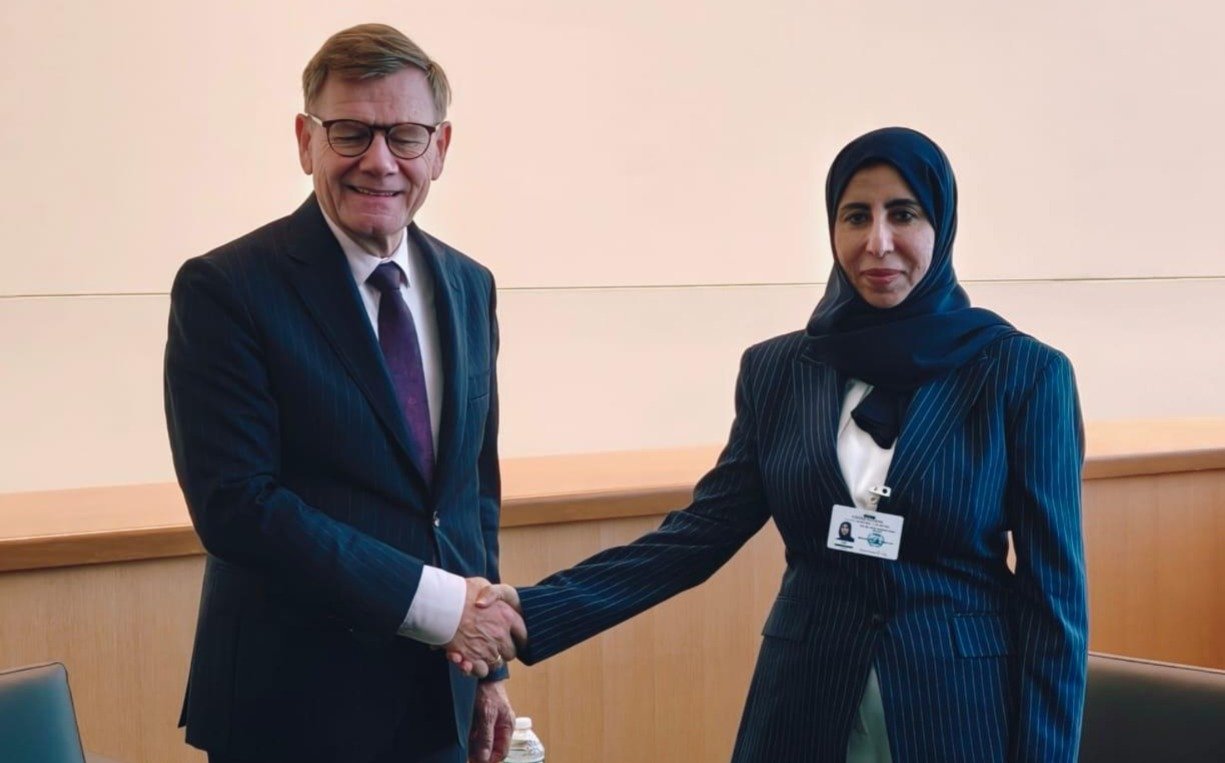
NEW YORK, United States — Yemen’s foreign minister thanked Germany for its support and discussed Red Sea navigation with her German counterpart on the sidelines of the UN General Assembly on Thursday.
Afrah al-Zouba met Johann Wadephul during the 81st session of the assembly, the Yemeni state news agency Saba reported.
“We’re grateful to Germany for its support to the Yemeni government and people,” al-Zouba said, according to the agency.
She thanked Berlin for its political backing of the Yemeni government and for development assistance to Yemenis.
Al-Zouba praised German positions against what the Yemeni government calls Houthi militia attacks, and German contributions to European efforts to protect freedom of navigation in the Red Sea.
The two ministers discussed bilateral relations and cooperation, Saba said.
They also discussed the consequences of the escalation for Yemen’s security, for the region and for international shipping.
The account of the meeting rests on Saba and on Yemen’s foreign ministry. Yemen Herald found no independent confirmation of the discussion published elsewhere.
Saba rendered the German minister’s name as Johann Waddifol. The German Federal Foreign Office gives it as Johann Wadephul.
Wadephul, a Christian Democrat, has been Germany’s foreign minister since 2025 in the government of Chancellor Friedrich Merz.
He issued a statement before leaving for New York on 21 September to take part in the general debate of the 81st session.
Al-Zouba was appointed in 2026 and is the first woman to hold the post in Yemen.
She had briefed Wadephul by telephone on 14 September on Houthi escalation along the west coast, at Mocha and at Bab al-Mandab, Yemen Monitor reported at the time.
In that call she said the government was working to restore state institutions and extend its authority across Yemeni territory, according to the same report.
She said continued escalation backed by Iran showed that addressing the sources of threat began with strengthening the Yemeni state and halting the flow of weapons and expertise to the Houthis.
Al-Zouba accused the Houthis of shelling populated areas and displacement camps, an allegation the movement rejects.
Wadephul reaffirmed German support for the Yemeni government and warned that continued escalation would further destabilise Yemen and the region, Yemen Monitor reported.
Germany contributes to Operation Aspides, the European Union naval mission launched in February 2024 to protect merchant shipping in the Red Sea and the Gulf of Aden.
The German frigate Hessen served with the mission during its first year.
France, Greece and Italy have also contributed warships to the European mission.
Aspides operates alongside Operation Prosperity Guardian, the United States-led shipping protection effort announced in December 2023.
Aspides escorts commercial vessels and has intercepted drones and missiles aimed at them.
The Houthis began attacking shipping in the Red Sea in late 2023 and have said the campaign is in support of Palestinians in Gaza.
Shipowners responded by routing vessels around southern Africa, adding time and fuel costs to voyages between Asia and Europe.
War-risk insurance premiums for ships using the Suez Canal route rose sharply over the same period.
Wadephul has said Tehran must tell the Houthis to stop their attacks on shipping, the Jerusalem Post reported.
He has also pressed Iran over access to the Strait of Hormuz, according to the German news agency dpa.
The Group of Seven foreign ministers, Germany among them, condemned Houthi attacks on Saudi Arabia earlier this week.
Saudi Arabia said on Thursday that its air defences intercepted six ballistic missiles aimed at the Red Sea port of Yanbu and the city of Taif, and blamed the Houthis, The Associated Press reported.
The Houthis said they had fired missiles and drones at Saudi Arabia’s Jazan province.
Saba reported separately on Thursday that 80 countries had warned of the consequences of Houthi control of the Bab al-Mandab strait for international shipping.
Bab al-Mandab, between Yemen and Djibouti, is the southern entrance to the Red Sea and carries traffic bound for the Suez Canal.
The strait is roughly 20 miles wide at its narrowest point.
Germany closed its embassy in Sanaa in 2015 and has run its Yemen diplomacy from outside the country since.
Yemen’s foreign ministry said this week that it welcomed three statements on Yemen issued during the assembly, Saba reported.
Al-Zouba has used the assembly to press Yemen’s case with several governments.
She called for the disarmament of non-state armed groups at a meeting on the assembly’s sidelines this week.
She also headed Yemen’s delegation to the annual ministerial meeting of foreign ministers of the least developed countries, where she asked for reconstruction and recovery aid rather than emergency relief alone, Saba reported.
Germany has been among the larger European donors to the humanitarian response in Yemen.
The United Nations Office for the Coordination of Humanitarian Affairs said in its 2026 plan, published in March, that more than 22 million Yemenis need assistance and that 18.3 million are acutely food insecure.
OCHA counted 5.2 million internally displaced people and sought 2.16 billion dollars to reach 12 million of those in need.
Yemen’s war began in 2014, when Houthi forces took Sanaa and the internationally recognised government withdrew to Aden.
The general debate of the 81st session runs through next week.
About the Author