Houthis Signal They May Widen Involvement in the Iran Confrontation
 Yemen Herald News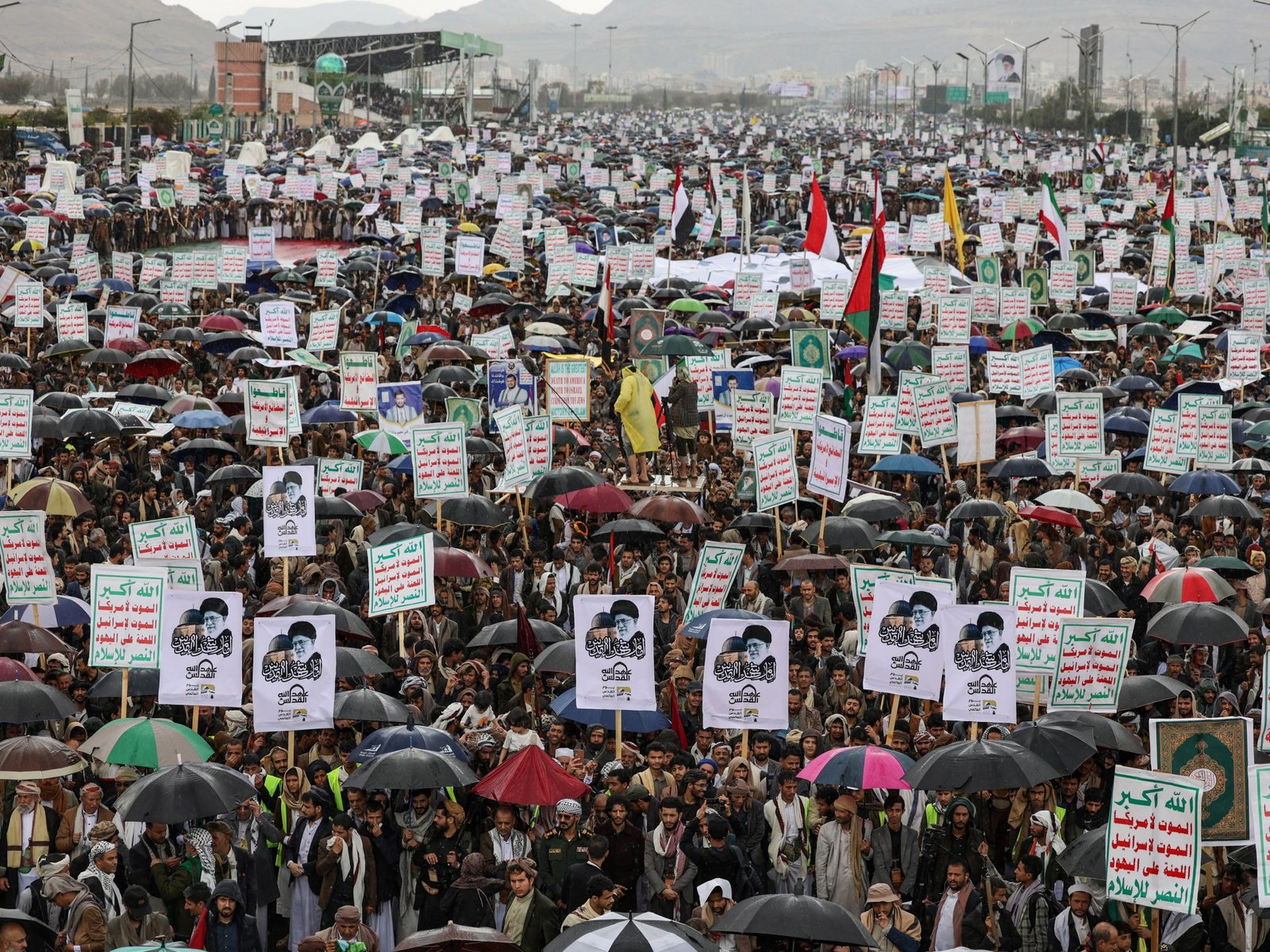
Yemen’s Ansar Allah movement, commonly known as the Houthis, has signalled that it is weighing greater involvement in the wider confrontation pitting the United States and Israel against Iran. While the group has so far stopped short of full direct engagement in that particular conflict, its statements that all options remain on the table have raised the prospect of a shift in posture that could carry significant consequences for the region and beyond.
The Houthis have long positioned themselves as part of a regional axis aligned against Israel and the United States, and they have a documented record of military action in support of that stance. Since late 2023 the group has launched missiles and drones toward Israel and carried out repeated attacks on commercial shipping in the Red Sea, disrupting one of the world’s most important maritime trade routes.
Any decision by the group to open or intensify a front in connection with the broader conflict would therefore build on an established pattern of behaviour. The question is not whether the Houthis possess the capability or the will to act, both of which they have demonstrated, but whether they judge it in their interest to escalate their involvement at a given moment.
The potential consequences of such a move are considerable, particularly for global commerce. The waters off Yemen’s coast, including the Bab al-Mandab strait at the southern end of the Red Sea, form a vital artery through which a substantial share of world trade passes. Disruption to these routes reverberates far beyond the region, affecting supply chains and raising costs across the global economy.
The strategic geography of the area helps explain why the Houthis’ posture attracts such attention. Control of, or the ability to threaten, key maritime chokepoints confers significant leverage, and the group has shown a willingness to exploit its position along one of these corridors to advance its aims and to signal its capacity to impose costs.
The broader regional context adds to the volatility. Heightened tensions and episodes of confrontation involving Iran and its adversaries create an environment in which the calculations of various actors, including the Houthis, can shift rapidly. In such a climate, the risk of miscalculation or escalation is heightened, with potentially far-reaching implications.
Analysts assessing the situation must weigh a range of possible outcomes. On one hand, deeper Houthi involvement could widen the conflict, threaten shipping and draw further international military responses. On the other, the group may calculate that restraint, or calibrated action short of full engagement, better serves its interests, preserving its capabilities and avoiding overextension.
The relationship between the Houthis and Iran is central to these considerations. The two are widely understood to share strategic interests and a degree of alignment, and Iran has been accused by many governments of providing support to the group, though Tehran denies arming it. The extent to which the Houthis act in coordination with Iran, as opposed to pursuing their own agenda, is a matter of ongoing debate among observers.
The Houthis’ own priorities are shaped significantly by the situation within Yemen. As the party controlling much of the north, including the capital, Sanaa, the group is engaged in a long-running conflict with the internationally recognised government and its backers. Its decisions regarding external involvement are inevitably influenced by this domestic context and by its position within Yemen.
Escalation could carry risks for the group as well as opportunities. Greater involvement in a wider conflict might invite more forceful responses from powerful adversaries, potentially exposing the movement to costs that could weaken its position. Weighing such risks against the perceived benefits of action is central to the calculations the group faces.
For the international community, the prospect of expanded Houthi involvement is a source of concern. The protection of freedom of navigation and the security of vital shipping lanes have prompted responses from a range of naval forces, and further escalation would intensify the challenges of safeguarding these routes and managing the broader regional situation.
The economic stakes extend to states far removed from the immediate conflict. Disruption to maritime trade raises shipping costs, lengthens supply routes as vessels reroute to avoid risk, and contributes to uncertainty in global markets. The interconnectedness of the modern economy means that instability in these waters is felt widely.
The humanitarian dimension within Yemen adds a further layer of concern. Renewed or intensified conflict, whether internal or connected to regional dynamics, would compound the suffering of a population already enduring one of the world’s gravest humanitarian crises. The wellbeing of ordinary Yemenis remains bound up with the decisions of the various actors involved.
Ultimately, the question of whether and how the Houthis might align their actions with the broader confrontation remains uncertain, dependent on judgements and calculations that are difficult to predict. The group’s statements suggest it is keeping its options open, a posture that itself contributes to the uncertainty surrounding the situation.
For now, the Houthis’ signalling serves as a reminder of the volatility of the regional landscape and of the potential for developments in one arena to spill into others. As observers weigh the possible trajectories, the intersection of Yemen’s conflict with wider regional tensions underscores the complexity and the stakes of a situation with implications reaching well beyond the country’s borders.
About the Author