Yemen’s Finance Minister and EU Ambassador Review Economic Reform Support
 Yemen Herald News
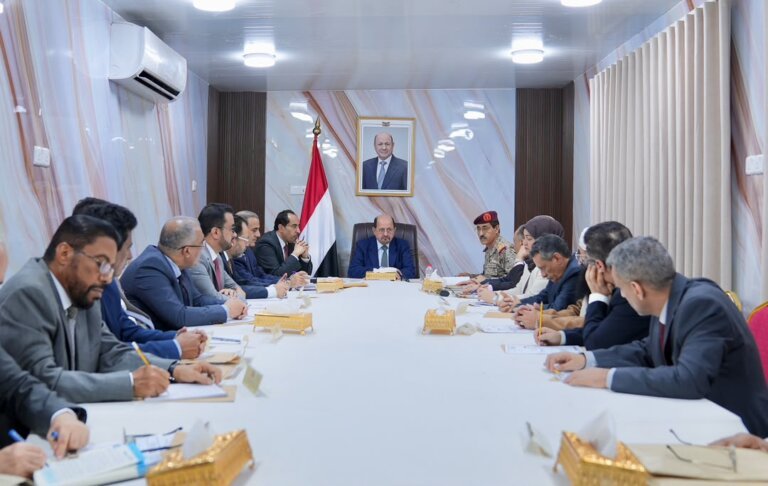
Yemen’s Minister of Finance, Marwan Faraj bin Ghanem, has held a video conference with the European Union’s Ambassador to Yemen, Patrick Simonnet, to review the country’s economic and financial situation and to discuss ways of supporting the government’s priorities during a difficult period. The exchange formed part of an ongoing dialogue between the ministry and the European Union on questions of economic stabilisation and reform.
The talks highlighted the technical assistance the European Union has been providing through the Yemen Economic Growth Enhancement Program, which is being implemented by the Organisation for Economic Co-operation and Development. The programme is designed to bolster economic stability and support growth in a country whose finances have been severely strained by years of war and institutional fragmentation.
As part of the initiative, two workshops have been held for the Ministry of Finance, the most recent of them in Saudi Arabia. The sessions are intended to facilitate peer learning and the sharing of best practices among financial officials, contributing to a broader effort to build the ministry’s capacity and strengthen its ability to manage public finances effectively.
Capacity building of this kind addresses a fundamental challenge facing Yemen’s economic institutions. Years of conflict have depleted expertise, disrupted systems and weakened the administrative machinery on which sound financial management depends. Structured training and exposure to international practice can help rebuild that capacity, equipping officials with tools to navigate a complex and volatile environment.
The European Union has been among the most significant international partners engaged with Yemen, providing humanitarian, development and economic assistance over the course of the conflict. Its support for economic reform reflects a recognition that alleviating immediate suffering must be accompanied by efforts to stabilise the economy and strengthen the institutions that underpin it.
Yemen’s economic predicament is severe. The war has shattered production, slashed government revenues and driven a sharp depreciation of the national currency in areas under the government’s control, fuelling inflation that has pushed the cost of basic goods beyond the reach of many households. Addressing these pressures is central to the government’s agenda and to the wider humanitarian response.
Strengthening public financial management is a key element of that effort. Improving the way the state collects, allocates and accounts for its resources can enhance transparency, reduce waste and build the credibility needed to attract further support. International partners have generally emphasised such reforms as a condition for sustained assistance, viewing them as essential to lasting stability.
The involvement of the Organisation for Economic Co-operation and Development lends the programme particular weight. As a body with deep expertise in economic policy and public governance, the OECD is well placed to advise on reforms and to facilitate the exchange of experience among officials. Its role in implementing the initiative reflects the technical seriousness of the endeavour.
The choice to hold one of the workshops in Saudi Arabia points to the regional dimension of support for Yemen’s government, much of which operates from or in coordination with neighbouring states. Saudi Arabia has been a principal backer of the internationally recognised government, and its territory has frequently served as a venue for meetings and activities related to Yemen’s affairs.
Peer learning, emphasised as a goal of the workshops, offers a practical means of building capacity. By bringing officials together to share experiences and best practices, such sessions can help disseminate effective approaches, foster professional networks and encourage the adoption of reforms grounded in real-world experience rather than abstract prescription.
The video-conference format of the ministerial meeting reflected the practical constraints under which engagement with Yemen often takes place, with security conditions and the dispersal of officials making virtual contact a common and convenient option. The medium did not detract from the substance of a discussion focused on issues at the heart of the government’s economic strategy.
Supporting the government’s priorities, the stated purpose of the meeting, encompasses a range of objectives from stabilising the currency and managing the budget to sustaining basic services and laying the groundwork for recovery. Technical assistance and capacity building contribute to these goals by strengthening the institutions responsible for translating policy into practice.
The engagement also served to reaffirm the relationship between the Ministry of Finance and the European Union at a time when maintaining the support of key partners is a constant priority for the government. Regular dialogue helps ensure that assistance remains aligned with the government’s needs and that both sides stay abreast of developments in a rapidly changing situation.
Ultimately, the impact of programmes such as the Yemen Economic Growth Enhancement Program will be measured by the improvements they produce in the functioning of the country’s economic institutions and, ultimately, in the lives of its citizens. Reform and capacity building are gradual processes, but sustained investment in them is widely regarded as essential to Yemen’s prospects for stability and recovery.
For now, the meeting between bin Ghanem and Simonnet underscored the shared commitment of the Yemeni government and the European Union to strengthening the country’s economic foundations. As Yemen contends with the interlocking pressures of conflict, fiscal strain and humanitarian need, cooperation of this kind remains an important part of the effort to build a more stable future.
About the Author