Bawazir tells UN General Assembly Houthi hold on Red Sea coast threatens global shipping
 Yemen Herald News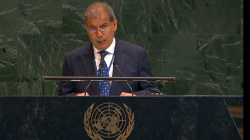
NEW YORK, United States — Yemen’s vice-president told the UN General Assembly that Houthi control of the country’s Red Sea coast threatens global shipping and the world economy.
Abdullah al-Alimi Bawazir, vice-president of Yemen’s Presidential Leadership Council, spoke in the assembly’s general debate on 24 September.
“The Houthi militias’ use of the safety of navigation as a tool for blackmail threatens not only Yemen,” he said. “It is taking hostage the entire global economy.”
He said maritime security could not be rebuilt while an armed group held the coastline.
“Lasting maritime security in the Red Sea, Bab el-Mandeb and the Gulf of Aden cannot be built while a non-state armed militia remains on the shores,” Bawazir said. “The path to a secure sea requires a stable Yemen.”
About 12 percent of global trade normally passes through the Bab al-Mandab strait, which separates Yemen from the Horn of Africa.
Houthi forces took the Red Sea port of Mokha and islands near the strait earlier in September, according to reporting by The National, NPR and the Foundation for Defense of Democracies.
The advance gave the group control of Yemen’s western coastline. It has held Sanaa and much of the north since 2014.
The group took Mokha on 10 September. It also seized the town of Dhubab and Perim Island, which sits in the strait itself and is also known as Mayyun.
Traffic through the strait halved after the seizures. Crossings fell to 15 on 11 September from 30 the day before, according to data from the analytics firm Kpler cited by The National.
Six vessels left the Red Sea that day and nine entered. Their cargoes included crude oil, grain and steel.
Analysts quoted by the newspaper said Dhubab and Perim mattered more to shipping than the port did, because of the positions they give over vessel traffic.
The strait carries about 11 percent of seaborne oil and 8 percent of liquefied natural gas, Al Jazeera reported this month.
An earlier round of Red Sea disruption cost Egypt about 7 billion dollars in Suez Canal revenue between 2023 and 2024, around 60 percent of the canal’s income, according to official data cited in that report.
IMF PortWatch data recorded a fall of between 50 and 55 percent in shipping volume and tonnage through the Red Sea between 2023 and 2025.
Vessels rerouted around the Cape of Good Hope add more than 20 days to a voyage.
Bawazir said the Houthis had met peace efforts with intransigence and had used truces to rebuild their military strength.
He said the war could not have lasted as long, or spread beyond Yemen’s borders and into international waters, without Iranian military support for the group, including weapons, expertise and technology.
Iran has denied supplying the Houthis with weapons.
The Houthi administration in Sanaa did not respond publicly to the speech in reporting available to Yemen Herald.
Bawazir asked governments to block weapons transfers to the group.
He also asked for international backing to strengthen the Yemeni government’s economic, security and military capacities, describing that as an investment in international peace and security.
Turning to the humanitarian situation, he said 12 years of crisis amounted to the entire childhood of a Yemeni child.
A generation had been “born amid war, grew up amid hunger, fear and weapons,” he said.
This account of the address rests on the United Nations’ own record of the session and on reporting by The Associated Press, which covered the debate independently.
The address followed a Security Council briefing on 16 September at which an assistant secretary-general warned that the Houthi advance towards the strait raised the risk of a wider conflict.
The fighting has displaced people at a pace not seen in years.
The UN refugee agency said on 22 September that more than 130,000 people had fled their homes since the start of the month.
Babar Baloch, a UNHCR spokesperson, said fighting was expanding across multiple front lines and triggering a rapidly growing displacement crisis.
The agency said Taiz governorate accounted for more than 60 percent of the new displacement. Al Jawf, Marib and Hudaydah were also affected.
It said the majority of those displaced were women and children, and that many had been forced to move more than once.
More than 5.2 million people were already displaced inside Yemen before the escalation, according to the agency.
UNHCR said more than 3,000 Yemenis had reached Djibouti as refugees, and that hundreds more had landed in Somaliland and Puntland.
It said it expected more than 10,000 further arrivals in Djibouti by the middle of October.
The International Organization for Migration put the number displaced by the escalation at close to 130,000, drawing on its own tracking data.
Djibouti told the General Assembly this week that it could not absorb the arrivals on its own.
The UN Office for the Coordination of Humanitarian Affairs said in its March plan that more than 22 million people in Yemen need aid.
It put the number of acutely food insecure at 18.3 million and appealed for 2.16 billion dollars to reach 12 million people.
Yemen’s government has been based in Aden since the Houthis took the capital. The Presidential Leadership Council was formed in April 2022 and is chaired by Rashad al-Alimi.
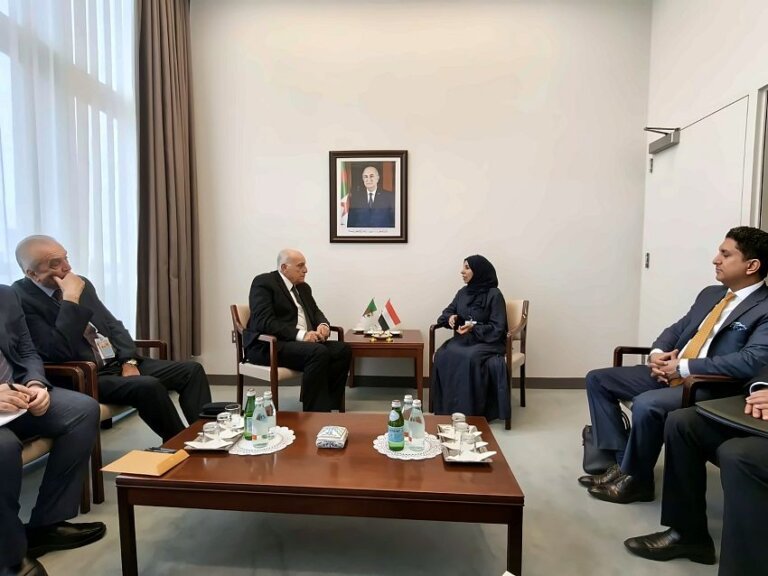
Bawazir has held a series of meetings on the assembly’s sidelines this month, including with the UN secretary-general, Antonio Guterres.
About the Author