Belqis Abu Asbu says Yemen’s 1962 revolution ended hereditary rule and remains a national reference
 Yemen Herald News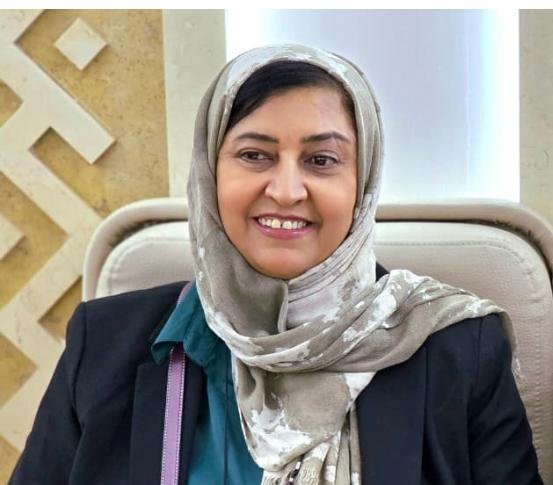
ADEN, Yemen — A deputy head of Yemen’s Consultation and Reconciliation Commission said the 1962 revolution ended hereditary rule and should be treated as a living national reference.
Belqis Abu Asbu made the remarks in an interview with the state news agency Saba. The agency published them on 28 September.
The interview marked the 64th anniversary of the revolution of 26 September 1962.
Abu Asbu called it “the greatest political transformation in modern Yemeni history”.
She said it ended hereditary rule and set the country on a path toward a national state and equal citizenship.
The revolution established the principle that Yemen belongs to all its citizens and that political authority derives from the people, she said.
Abu Asbu said the Houthi movement’s takeover reversed those gains.
She said it sought to replace citizenship and popular sovereignty with sectarian and hereditary claims to power.
It placed ideological loyalty and weapons above national allegiance, the constitution and the law, she said.
Abu Asbu said confronting the Houthi project defends the right of Yemenis to a state, equal citizenship, the rule of law and popular sovereignty.
She described the conflict as a struggle between the republican system and the legacy of imamate rule.
September 26 should be seen not merely as an annual anniversary but as a reference whose values require protection, she said.
That protection means strengthening state institutions, the rule of law and equal citizenship, according to her account.
The account of the interview rests on Saba, which is run by the internationally recognised government. No independent report of the interview has been published, and Yemen Herald could not confirm its contents separately.
The characterisations are Abu Asbu’s. The Houthi authorities, who administer Sanaa and much of the north, reject the description of their takeover as a coup and dispute the government’s account of the conflict.
The events she referred to are documented.
The revolution of 26 September 1962 deposed King Muhammad al-Badr. He had been crowned a week earlier, on 19 September.
It was carried out by a group of Nasserist officers who formed a Revolutionary Command Council.
The new government declared a republic and abolished slavery.
The overthrow opened a civil war in the north that ran for about eight years.
Egypt sent thousands of troops and military advisers in support of the republicans, and the Soviet Union backed them.
Saudi Arabia and Jordan supported the royalist side.
The siege of Sanaa was lifted in February 1968.
Saudi Arabia recognised the Yemen Arab Republic in 1970. The war concluded on 1 December that year.
Saudi Arabia’s recognition of the republic in 1970 signalled the defeat of the royalist side, which had fought to restore the imamate.
The republicans held the state that emerged, and the Yemen Arab Republic governed the north until it merged with the south to form the Republic of Yemen on 22 May 1990.
A United Nations panel of experts estimated Houthi strength at about 350,000 fighters in 2024, Al Jazeera reported.
Abu Asbu’s remarks were published during a week of fighting and political decisions.
Rashad al-Alimi, chairman of the Presidential Leadership Council, called for general mobilisation on 26 September, the anniversary itself.
It was his first speech since government forces lost ground on the Red Sea coast, Al Jazeera reported.
He urged Yemenis to contribute in every way possible against the Houthis, and offered an amnesty to fighters who defect.
Parliament approved the mobilisation on 29 September at an expanded meeting held by videoconference, Asharq Al-Awsat reported. Speaker Sultan al-Barakani chaired it.
The approval rested on articles 37, 38 and 119 of the constitution, according to the newspaper. It takes effect immediately and stays in force until the reasons that prompted it have ended.
The mobilisation followed the collapse of the 2022 ceasefire this month.
Houthi forces captured the city of Mocha and Mayyun Island during the offensive, Al Jazeera reported. The island lies at the Bab al-Mandab strait.
The fighting displaced nearly 147,000 people inside Yemen between 1 and 18 September, according to the country’s Executive Unit for IDP Camps Management. Arab News carried the figure on 20 September.
The United Nations separately reported at least 112,000 people displaced within Yemen over a two-week period, and nearly 3,000 who left by sea for Djibouti.
The Consultation and Reconciliation Commission was created on 7 April 2022 by President Abdrabbo Mansour Hadi, on the same day he transferred power to the Presidential Leadership Council.
It has fifty members drawn from Yemeni political forces and components. Its stated purpose is to support the council and to align the aims of those forces.
The commission elected its executive leadership from among its members at its first session.
Mohammed al-Ghaithi, who heads the Southern Transitional Council’s foreign affairs department, chairs it.
Four vice-chairs were recorded at its formation: Abdulmalik al-Mikhlafi, Sakhr al-Wajeeh, Jamilah Ali Rajaa and Akram al-Amiri.
Saba identified Abu Asbu as a deputy chairwoman of the commission. Yemen Herald found no independent record of that appointment and could not establish whether the commission’s leadership has changed since 2022.
Saba did not say where the interview was conducted. It did not name other commission members.
About the Author