Foreign Minister Afrah al-Zouba asks the world to treat Houthi and al-Shabaab links as one threat
 Yemen Herald News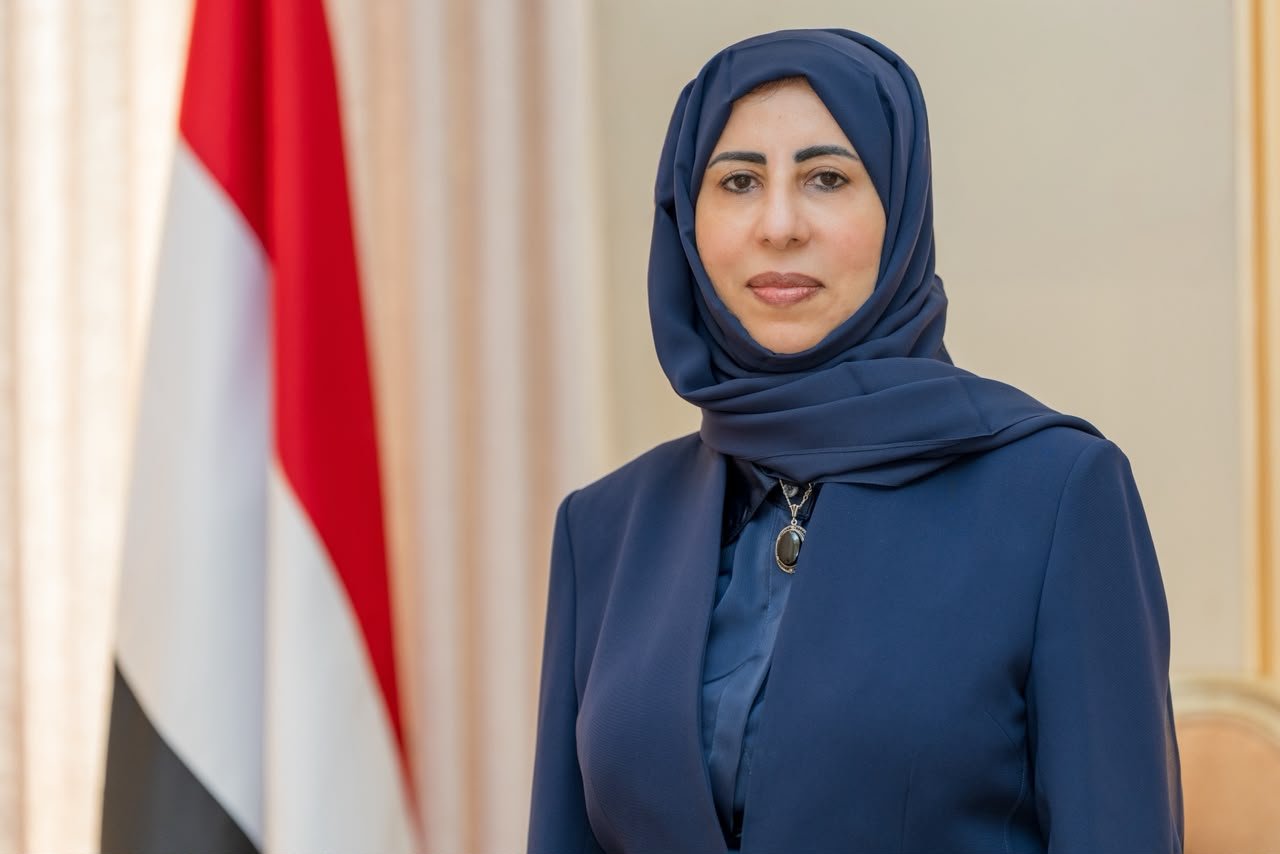
ADEN, Yemen — Yemen’s foreign minister has asked the international community to treat the Houthis and Somalia’s al-Shabaab as a single network rather than separate threats.
Afrah al-Zouba set out the call in a statement to Saba, the news agency of the internationally recognised government, on Wednesday.
She described an axis she said was led by Iran-backed Houthi forces and stretched along the Red Sea coasts to the Horn of Africa.
Al-Zouba called the grouping an interconnected network.
She said support for the Yemeni government needed to increase to meet what she described as threats to regional security and international navigation.
The characterisations are the minister’s. The Houthi movement rejects the description of itself as a terrorist organisation and denies that it acts on Iranian instruction.
Al-Zouba set out four requests.
She asked that the links between the groups be written into legal frameworks and sanctions lists.
She asked states to share intelligence on the groups’ activities in Yemen and the Horn of Africa.
She asked for support for government forces.
And she asked that the groups not be offered negotiations on an equal footing.
The minister cited reports by the UN panel of experts on Yemen.
She said those reports documented cooperation between the Houthis and al-Shabaab that went beyond arms smuggling.
The cooperation included the transfer of expertise and operational coordination, she said.
Houthi engineers had been sent to Somalia to train al-Shabaab on drone modifications, according to her account, and al-Shabaab fighters had been trained in Houthi camps.
The panel’s most recent final report to the Security Council covers the period from August 2024 to July 2025.
It found that cooperation between the two groups involved weapons smuggling, technical training and the exchange of logistical support.
Stronger ties between the two could pose a growing threat to peace and security in Yemen and in the region as a whole, the panel wrote.
The panel is appointed by the Security Council to monitor the Yemen sanctions regime, and it reports to the council each year.
A panel report in October 2025 documented accounts of Houthi training in explosives, drone modification and weapons maintenance at Jilib, an al-Shabaab stronghold in southern Somalia.
That finding covers the training the minister described. Her account of Houthi engineers being despatched to Somalia has not been published elsewhere.
United States Africa Command has warned that the relationship between the two groups poses an escalating danger to regional stability.
The command said the ties could add to al-Shabaab’s attack capability in the Horn of Africa while widening Houthi access to maritime corridors in the Red Sea and the western Indian Ocean.
Matt Bryden, a former head of the UN panel of experts on Somalia, has estimated that about 1,500 fighters from al-Shabaab and other Somali factions trained with the Houthis in Yemen. His figure covers several factions, not confirmed al-Shabaab members alone.
Daniele Garofalo, an intelligence and terrorism analyst, said the link rested on direct contacts, training arrangements and the movement of al-Shabaab personnel to Yemen since 2024, rather than on weapons seizures alone.
Lesley Anne Warner, a visiting scholar at the Carnegie Endowment for International Peace and a former US State Department official, said money drove the arrangement. The Houthis gained hard currency, she said, and al-Shabaab gained better equipment.
Al-Zouba also said Somali intelligence had intercepted communications between the Houthis, al-Shabaab and Islamic State, with some cooperation from al-Qaeda.
No Somali agency has published those intercepts. That claim rests on the minister’s statement.
She linked the groups to the cost of shipping.
Threats to traffic through Bab al-Mandab force vessels around the Cape of Good Hope, she said, raising transport and insurance costs.
The minister said Yemen’s coast guard and navy had intercepted drone guidance systems, components for explosive boats and anti-tank missiles during 2026.
One shipment arrived on a vessel from Djibouti carrying drone components, she said. She tied it to an Iranian smuggling network running through the port of Bandar Abbas.
Saba gave no dates for those interceptions and named no vessels.
Al-Zouba made a similar argument in an article for The Telegraph, which Yemen’s foreign ministry circulated on Wednesday.
She wrote there that the Houthis had expanded cooperation with aligned groups across the Horn of Africa into what she called a Red Sea Axis.
Weapons transfers, training and smuggling were “connecting actors once treated as separate threats”, she wrote.
Middle East Eye reported the article on Wednesday.
Researchers outside the Yemeni government have reported links between the Houthis and armed groups across the Gulf of Aden.
Christopher Hockey, a senior research fellow at RUSI Nairobi, wrote in a commentary this year that unconfirmed reports suggested the Houthis had supplied training and financing to Somali pirate groups.
He described that evidence as circumstantial.
Hockey wrote that six commercial vessels had been hijacked off Somalia and Yemen since late April, three of them near Yemen’s coast.
Warships have been moved from the Somali coast towards the Strait of Hormuz and Bab al-Mandab since 2021, he wrote, leaving less deterrence behind them.
Houthi forces took the Red Sea port of Mokha in September and reached the approaches to Bab al-Mandab, The Guardian and Reuters reported at the time.
Rashad al-Alimi chairs the Presidential Leadership Council, the body that heads the internationally recognised government.
The foreign ministry sits in Aden.
About the Author