At least six killed and 14 missing after gold mine collapse in Yemen’s Hajjah governorate
 Yemen Herald News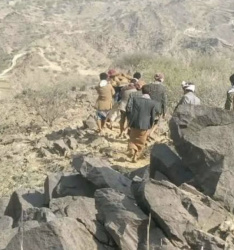
HAJJAH, Yemen — A gold mine collapsed in Yemen’s Hajjah governorate on Tuesday evening, killing at least six people and leaving 14 others missing.
The Spanish news agency EFE reported the toll on Wednesday, citing Civil Defence officials and local residents.
The mine sits in the al-Hariqah area of Aflah al-Sham district, in the mountainous north-west of the country. It was not licensed.
About 20 workers were inside when the tunnel gave way, EFE said. The collapse sealed the entrances and trapped those underground.
Residents recovered the first bodies on Wednesday morning using basic digging tools, according to the agency.
Rescue work was slowed by a shortage of heavy machinery to move the debris. Residents told EFE the number of dead was likely to rise.
Local sources said the site’s remote location and the absence of specialised rescue equipment had complicated the search.
The Yemeni news site Yemen Window put the provisional toll higher, at about 20 dead, citing local information from the area.
It said the final count remained unconfirmed while the search went on, and that rescue teams and residents were using a backhoe to clear rubble and open passages into the collapsed sections.
Yemen Window named two of the recovered dead as Muhammad Hamid Rasam and Issam Mahmoud al-Sulawi.
It gave those identifications in a report updated before midday on Wednesday.
Yemen Herald could not reconcile the two tolls. No national authority has published a figure.
The mine is worked by hand. Miners break rock with shovels, pickaxes and hoes, then crush and grind material that may carry gold, recovering small quantities at a time.
Some of the excavations run more than 300 metres underground with no professional safety measures in place, EFE said.
The Yemeni outlet Almawqea Post reported in a survey of the district’s mines that the pits operate without licences, safety equipment or technical supervision.
It said dozens of unlicensed sites are worked across Aflah al-Sham and the neighbouring Kushar district, with dozens of young men digging at them each day.
Almawqea Post listed mercury contamination of groundwater, toxic dust and unregulated chemical use among the hazards, alongside the risk of collapse.
A mine collapse at Jabal al-Manjam, in the village of Bani Raiban in Kushar district, killed six men in June 2025 and critically injured a seventh, the outlet said.
It named them as Mohammed Ali Hussein Raiban, Farouq Raji Saleh Raiban, Mohammed Hadi Sarhan Raiban, Ahmed Ali Hussein Raiban, Nasrallah Yahya Saleh Raiban and Ramzi Ali Saleh Raiban.
All six carried the Raiban family name, which the village of Bani Raiban also bears.
The Hajjah governorate police said at the time that the mine had been operated haphazardly, according to Almawqea Post. The outlet said the men had been detained earlier for digging without authorisation and released after signing pledges.
EFE put the Kushar toll at seven. Yemen Window gave six, matching Almawqea Post’s count.
Hajjah lies in Yemen’s north-west, on the border with Saudi Arabia, and is administered by the Houthi authorities.
Hand digging for gold has spread across parts of northern Yemen during the war. EFE linked the trade to the country’s economic collapse, saying impoverished residents had turned to unregulated mining to survive.
Almawqea Post said no official licensing system covers the sites and that no safety measures had been introduced.
Yemen’s Ministry of Mines oversees the sector through the Yemen Geological Survey and Mineral Resources Board, under the Mines and Quarries Law No. 22 of 2010, which parliament approved on 16 December 2011.
The hand-dug pits in Hajjah operate outside that licensing framework.
Government surveys have identified gold and silver at 40 locations in the country.
The Medden area holds the largest known deposit, with a reserve of 678,000 tons at an estimated average yield of 15 grams of gold and 11 grams of silver a ton.
Geological literature records al-Hariqah as a gold deposit north-west of Sanaa. Yemen Herald could not confirm whether the collapsed pit lies inside that mapped deposit.
Commercial gold extraction in Yemen has not moved past exploration, and the identified sites were awaiting foreign investment proposals before the war.
Gold was mined in the region in antiquity. Surveys have located workings from the Sabaean period, whose palaces and temples were decorated with gold and silver.
The United Nations Office for the Coordination of Humanitarian Affairs said in its March 2026 humanitarian needs and response plan that more than 22 million people in Yemen need assistance.
OCHA put the number of acutely food insecure people at 18.3 million. It said more than 2.2 million children under five are acutely malnourished, including 516,157 with severe acute malnutrition.
The plan recorded 5.2 million internally displaced people. It sought 2.16 billion dollars to reach 12 million of those in need.
Fighting has intensified since early September. UNICEF said on 17 September that the escalation had displaced more than 57,000 children, and on 25 September put the figure at about 71,000 over three weeks, with malnutrition worsening among them.
Aflah al-Sham sits north-east of Hajjah city in rugged terrain, where access for vehicles is limited.
Almawqea Post said the sites also expose diggers to scorpions and snakes.
About the Author