Yemen tells Security Council its Yemen Dawn offensive opens a new phase in the war
 Yemen Herald News
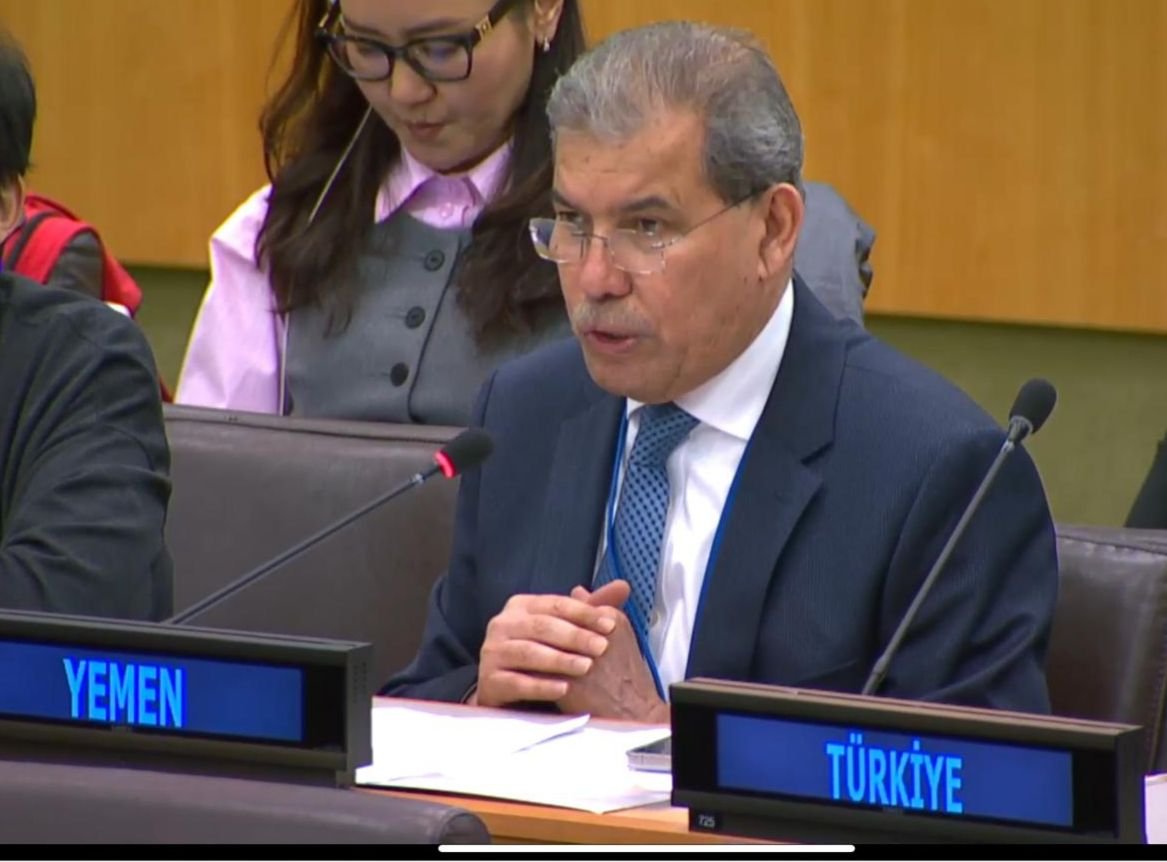
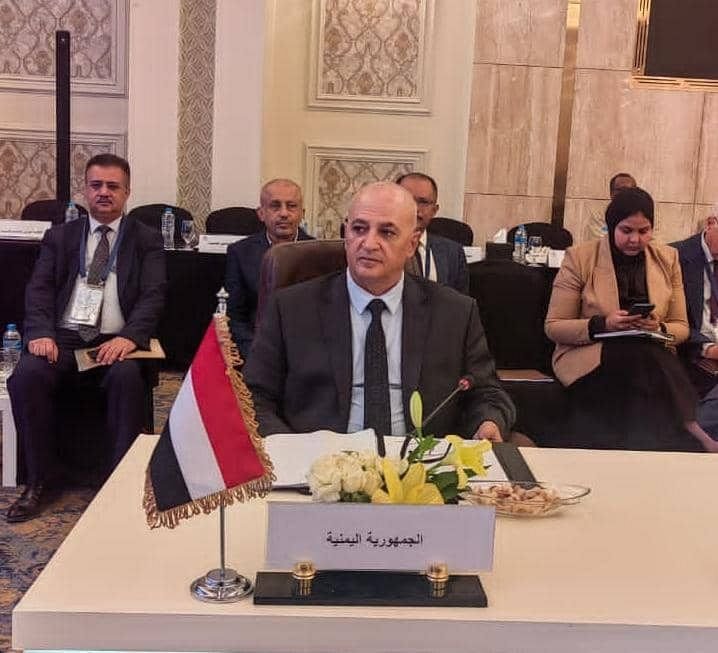
NEW YORK, United States — Yemen’s government told the U.N. Security Council on Friday that its Yemen Dawn offensive marks a new phase in a campaign to retake territory from the Houthis.
The briefing was delivered by Abdullah al-Saadi, Yemen’s permanent representative to the United Nations, Saba, the state news agency, reported from New York.
Al-Saadi said President Rashad al-Alimi, chairman of the Presidential Leadership Council, declared the operation under what the government called his constitutional and legal responsibility to protect citizens and safeguard sovereignty over Yemen’s airspace, land and territorial waters.
The government said the operation opens a phase aimed at restoring state institutions, ending what it calls the Houthi coup, and taking control of territory it does not hold, including the capital, Sanaa.
The Houthis have held Sanaa since September 2014. They reject the government’s legitimacy and describe it as a party backed by Saudi Arabia.
The account of the Yemeni statement rests on Saba. Yemen Herald found no independently published transcript of al-Saadi’s remarks.
The session was on the Council’s October programme as an open briefing on the situation in the Middle East, listed under Yemen, according to Security Council Report.
U.N. Special Envoy Hans Grundberg briefed the 15-member Council. He said Yemen had “slid back into full-scale war, with hostilities spreading across multiple front lines” in recent weeks.
Grundberg condemned Houthi attacks on Saudi civilian and energy sites, among them Abha and King Khalid International airports, The National reported. He warned that threats to Red Sea shipping could unsettle markets.
“Unless war is to become Yemen’s permanent reality, the time to consider political strategies is now,” he told the Council.
Assistant Secretary-General for Humanitarian Affairs Mohamed Yahya and a civil society representative working on child protection were also listed to brief.
Al-Saadi said the session came “amid a continuous escalation by the Houthi terrorist militias, which threatens the lives of Yemenis, the security of neighboring countries and the region, and one of the most important maritime passages in the world.”
The phrasing is the government’s. The Houthis describe their own operations as a response to Saudi and American intervention.
The government said the fighting is not directed at the residents of any region, governorate, sect or social group.
It said it had committed to international humanitarian law and international human rights law, to its rules of engagement, and to protecting civilians, property and civilian facilities.
It also said it would prevent acts of revenge and retaliation, treat prisoners and the wounded humanely, investigate any violations, and leave a route open for those it described as misled.
Yemen Herald could not independently verify how those commitments are being applied.
The government said a settlement must rest on the agreed references, foremost Security Council Resolution 2216. It renewed its support for the Secretary-General and for Grundberg’s office.
Resolution 2216 was adopted on April 14, 2015, with 14 votes in favour and one abstention, by Russia. It demanded that the Houthis withdraw from seized areas and hand back captured weapons. They have never accepted it.
Al-Alimi announced the start of operations to retake Houthi-held areas on Oct. 4.
The government says its forces have since taken Bab al-Mandab and Mocha on the Red Sea coast. The Houthis dispute the claim.
Security Council Report said the government’s recent gains included Mocha and nearby positions, and described a campaign to restore control across the country.
Mocha sits on Yemen’s Red Sea coast, north of the Bab al-Mandab strait at the southern entrance to the Red Sea.
The Foundation for Defense of Democracies, a Washington research group, described the offensive as a Saudi-backed counteroffensive in an analysis published Oct. 6.
Government forces said on Oct. 8 that they had put 1,860 Houthi fighters out of action, Al Jazeera reported. The Houthis have not confirmed the figure, and Yemen Herald has not verified it.
Al-Saadi also briefed the Council on Yemen in July. He said then that the armed forces had taken “the necessary defensive measures” over an unauthorised flight at Sanaa airport, and that the government “chose not to expand the scope of the confrontation.”
Sanaa airport is not administered by the government, he told the Council at the time.
Grundberg told the Council in February that 73 U.N. staff members were being held in Yemen, and asked for their release. He said a World Food Programme colleague had died in detention a year earlier.
Grundberg has been the U.N. special envoy for Yemen since 2021.
The U.N.-brokered truce took effect in April 2022. The World Health Organization has recorded 5,166 casualties in Yemen since fighting resumed in August.
The Presidential Leadership Council was formed in April 2022, when Abdu Rabbu Mansour Hadi transferred his powers to the eight-member body that al-Alimi chairs.
The U.N. humanitarian plan published in March put more than 22 million Yemenis in need of assistance, and 18.3 million as acutely food insecure.
It counted more than 2.2 million children under five as acutely malnourished, 516,157 of them severely, and 5.2 million people as internally displaced. The appeal sought $2.16 billion to reach 12 million people.
More than 200,000 people have been displaced across Yemen since early August, The National reported.
Nearly 4,000 of them have crossed to Djibouti and Somalia.
About the Author