Yemen asks Arab states for a joint water approach at Cairo council session
 Yemen Herald News
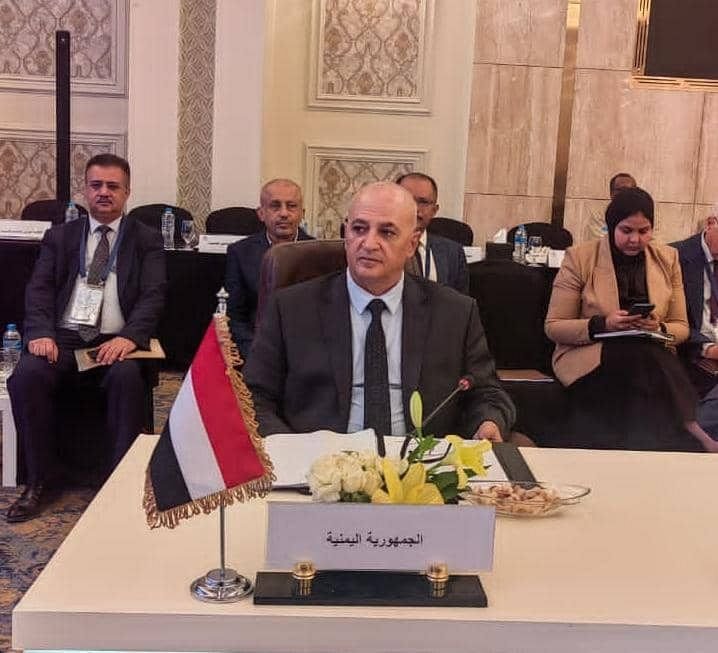
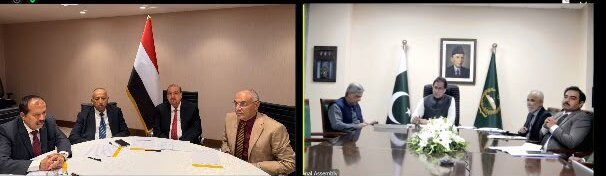
CAIRO, Egypt — Yemen’s water minister asked Arab governments on Monday to adopt a joint approach to water security, in an address to the Arab Ministerial Water Council.
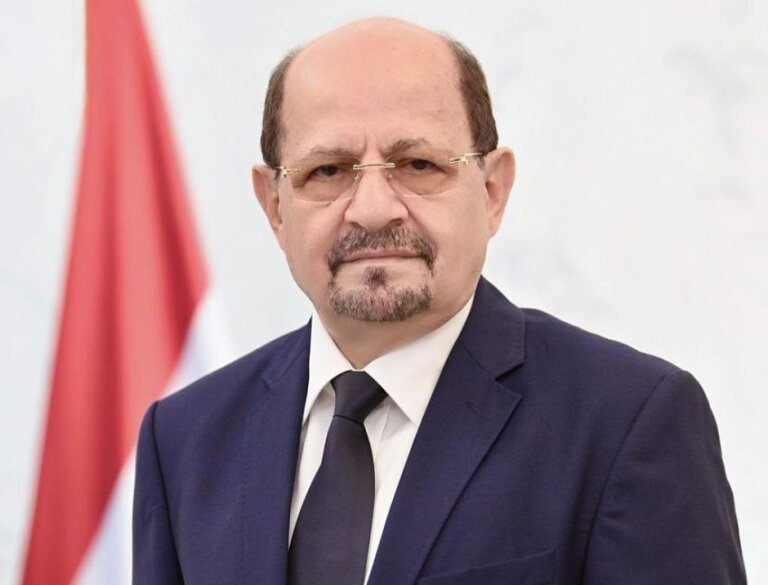
Tawfiq al-Sharjabi, the minister of water and environment, led Yemen’s delegation to the council’s 17th session in the Egyptian capital, Saba, the state news agency, reported.
He asked Arab states for funding to rehabilitate water and sanitation infrastructure and to rebuild national technical capacity, according to the agency.
The account of the session rests on reports by Saba and Yemen TV, both run by Yemen’s internationally recognised government. Yemen Herald found no independent confirmation of the proceedings.
Al-Sharjabi said conflict, economic pressure and climate pressure had together worsened the country’s water problems.
He named water scarcity, the depletion of groundwater and climate change as the areas where Arab cooperation was needed.
He asked the council to study creating an Arab observatory for water and agriculture.
He also asked for a joint Arab mechanism for sharing water and agricultural data. It would let governments plan from evidence, he said.
The minister called for integrated management of water resources. That takes in expanding desalination, treating and reusing wastewater, harvesting rainwater and using existing supplies more efficiently, he said.
He asked Arab states to raise their support for countries in conflict and to keep water and sanitation services running in them.
Water facilities and the people who staff them should be protected under international humanitarian law, he said.
Al-Sharjabi described Arab water security as a shared responsibility. He asked for decisions that could be monitored.
On the same visit he attended the opening of the 7th Arab Water Conference, held under the theme “Water in the Arab Region: Partnerships for Peace and Sustainable Development.”
Saba gave no figures from the address and named no other participant in the session.
The Arab Ministerial Water Council sits under the League of Arab States.
The Arab Economic and Social Development Summit, held in Kuwait, tasked the council with drafting a water security strategy under a resolution dated Jan. 20, 2009.
The resulting Arab Strategy for Water Security runs from 2010 to 2030. It does not bind member states.
The council oversees the strategy’s implementation with the Arab League secretariat and the Arab Economic and Social Council, and the text is reviewed every five years against performance indicators.
The council presented the draft at its first session, in Algeria in mid-2009. It approved the text in principle at its second session, in Cairo in July 2010, and gave final approval that September.
The strategy’s full title is the Arab Strategy for Water Security in the Arab Region to Meet the Challenges and Future Needs for Sustainable Development.
Yemen’s own water and sanitation services have been degraded through more than a decade of fighting.
UNICEF put the number of people in Yemen needing water, sanitation and hygiene assistance at 15.2 million in its 2026 humanitarian appeal for the country.
The same appeal said more than 17.8 million people lack access to health care and to water and sanitation services, and counted 10.8 million children in need.
UNICEF asked for $22.7 million for its water and sanitation work in Yemen over the year.
Its targets for that money included supplying 1 million people with enough water for drinking and domestic use, and 750,000 people with sanitation services.
UNICEF set a target of reaching 250,000 people in Yemen with hygiene messages this year, and of supplying the same number with water and sanitation items.
Suspected cholera cases in Yemen reached 93,496 by December 2025, the agency said. The caseload in 2024 was higher, at more than 253,000 suspected cases.
The cholera and acute watery diarrhoea outbreak that began in October 2016 had produced about 2.5 million reported cases by 2022, the International Committee of the Red Cross said.
The wider humanitarian plan for Yemen this year seeks $2.16 billion to reach 12 million people, the UN Office for the Coordination of Humanitarian Affairs said in March.
That plan put the number of people in need at more than 22 million and the number displaced inside the country at 5.2 million. It counted 18.3 million people as acutely food insecure.
It also put the number of children under five who are acutely malnourished at more than 2.2 million, 516,157 of them severely.
The piped water network reached under 30% of Yemen’s population, the International Committee of the Red Cross said in 2022.
Millions of people, among them women and children, walk long distances to collect water, the organisation said at the time.
Groundwater was then being drawn at about twice the rate at which it recharges, the organisation said, and the gap was widening.
Qat, grown as a cash crop, took more than 40% of the country’s renewable water and 32% of all groundwater withdrawals, according to the same assessment.
The ICRC said it had supported water network maintenance and supplied chlorine tablets, fuel, generators and tools to local water and sanitation corporations.
More than 5 million people in Yemen benefited from ICRC water and sanitation work in 2021, by the organisation’s own count.
It rehabilitated 39 facilities that year, including health, water and detention facilities, Yemen Red Crescent branches and a camp for displaced people.
It donated 1,228,577 chlorine tablets in 2021 and rehabilitated three boreholes.
About the Author