Yemen committee approves eight-month plan to update national disability strategy
 Yemen Herald News
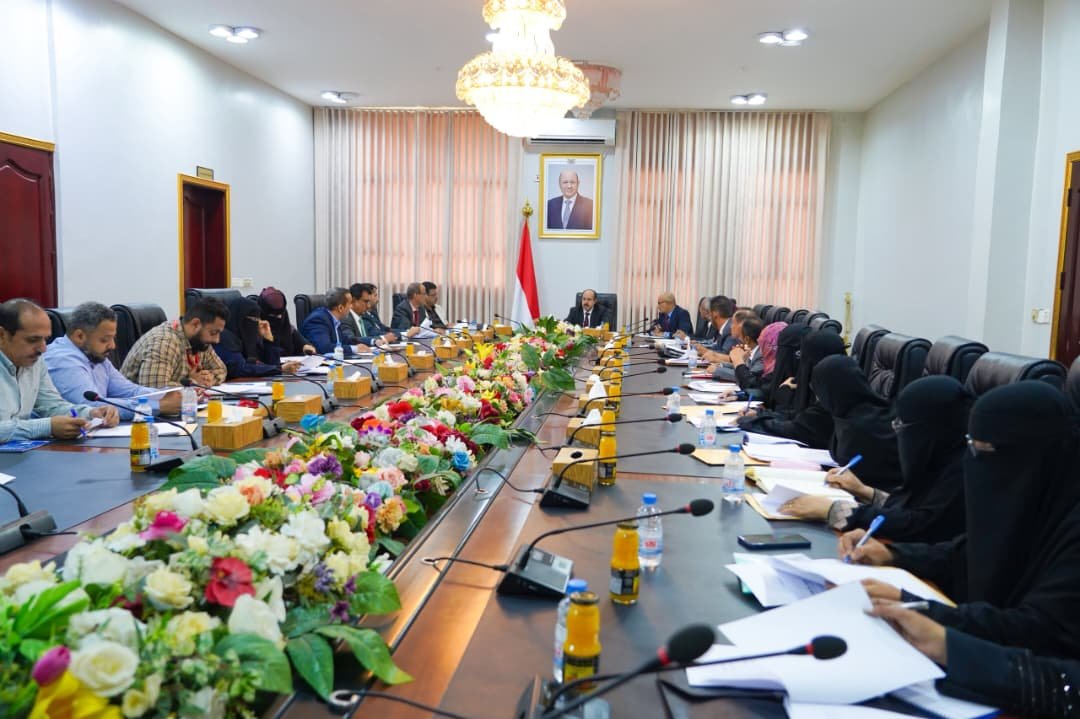
ADEN, Yemen — A Yemeni government committee approved on Tuesday the method it will use to rewrite the country’s national disability strategy, setting an eight-month timetable.
The High Committee for Updating and Developing the National Disability Strategy met for the first time in Aden, the temporary capital.
It approved the proposed methodology for updating and developing the strategy for the period 2027 to 2032.
The account rests on the committee’s own announcement, carried on Tuesday by Saba, the news agency run by the internationally recognised government. No independent confirmation of the meeting has been published.
Members of the committee attended, along with representatives of government agencies and of local and international organisations that work on disability, Saba said.
The agency named no officials and gave no figures.
The methodology sets out six stages.
The first is an evaluation of the previous strategy. The second is an analysis of the current situation.
The committee will then identify gaps and national priorities, and hold broad consultations with interested parties.
After that it will prepare the strategic framework, together with an implementation plan and a funding plan.
A final draft will be reviewed before approval procedures begin.
The proposed schedule runs over about eight months.
Yemen adopted its first national disability strategy in 2007, setting out a rights-based approach.
The principal legislation is Law No. 2 of 2002 on the welfare of disabled people. Public Law No. 61 of 1999 guarantees people with disabilities equal constitutional rights, and provisions covering children with disabilities sit in Child Law No. 45 of 2002.
Civil Service Law No. 19 of 1991 and Labour Law No. 5 of 1995 set employment quotas. Building Code No. 19 of 2002 requires infrastructure to be accessible.
The Ministry of Social Affairs and Labour is the lead government body and runs a disability fund. Yemen has ratified the United Nations Convention on the Rights of Persons with Disabilities.
Earlier counts varied widely. A 2004 estimate recorded about 380,000 disabled people. A 2009 United Nations paper put the figure at 3% to 5% of the population. The Yemeni Handicapped Forum reported more than two million in 2014.
A 2005 study found that 23.6% of people with disabilities had completed secondary school. People with disabilities make up less than 1% of the workforce.
Yemen’s previous effort in this area stalled. Work on implementing a national strategy for the rights of persons with disabilities stopped after hostilities began in 2015, the aid group Humanity & Inclusion said in a report published in May 2022.
The report, “Unshielded, Unseen”, examined how a 2019 United Nations Security Council resolution on protecting people with disabilities in armed conflict was being applied in Yemen. The resolution is numbered 2475.
The report put the number of people with disabilities in Yemen at more than 4.8 million.
Of those surveyed for it, 81% said they could not reach or use humanitarian services.
About 10 million Yemenis, roughly half of all those in need at the time, lived in areas affected by access constraints, the report said. Sixteen of the country’s 21 governorates were considered hard to reach.
The war had destroyed half of the country’s health facilities, according to the report.
Delays in reaching health care can themselves cause lifelong disability, the organisation said, particularly for people with complicated injuries from explosive weapons or untreated chronic illness.
A representative of one Yemeni disability organisation told the researchers that people with disabilities live in constant fear of injury because they cannot move away quickly when explosions or clashes begin. The same fear limits their ability to earn a living.
Another respondent said many people with hearing disabilities had been hurt in attacks because they could not hear or follow what was happening around them.
Most sites for displaced people lacked accessible shelter and latrines, and were not close to food distribution points, the report said.
Services for survivors of gender-based violence were generally inaccessible to women and girls with disabilities. Teachers in camps were often not equipped to teach children with disabilities.
People with disabilities were frequently absent from camp committees.
The organisation interviewed representatives of eight Yemeni organisations of persons with disabilities, along with affected people and international aid staff, between March and April 2022.
The United Nations humanitarian response plan for 2026 put the number of people needing assistance across Yemen at more than 22 million.
It recorded 18.3 million people as acutely food insecure and 5.2 million as displaced.
More than 2.2 million children under five were acutely malnourished, 516,157 of them severely.
The plan sought 2.16 billion dollars to reach 12 million people.
Aid operations have also been disrupted. The United Nations moved its main Yemen office to Aden in September 2025, after Houthi authorities detained United Nations and other aid staff, according to a House of Commons Library briefing published on 5 October.
Yemen’s war is generally dated to the Houthis’ capture of Sanaa in 2014, the briefing said. A Saudi-led coalition intervened the following year.
A six-month national ceasefire took hold in 2022 and front lines stayed largely stable afterwards.
That changed this year. The Houthis declared a sea and air blockade on Saudi Arabia in July and launched drone and missile attacks on Saudi sites, their first since 2023, the briefing said.
Saudi Arabia resumed air strikes in mid-2026, its first since 2022.
The committee gave no date for its next meeting.
About the Author