Yemen’s social affairs ministry appeals for urgent humanitarian aid to Taiz
 Yemen Herald News

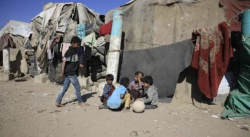
ADEN, Yemen — Yemen’s Ministry of Social Affairs and Labour appealed on Tuesday for immediate humanitarian help in Taiz, saying shortages of basic goods were worsening in the city.
The appeal was addressed to international and regional organisations, aid agencies, unions, local and foreign civil society groups and private sector partners, the state news agency Saba reported.
The account of the appeal rests on Saba, which the internationally recognised government runs. No independent confirmation of it has been published.
The ministry asked for food, shelter, healthcare, water and essential supplies, according to the agency.
It called for wider social protection programmes, naming children, women, older people, people with disabilities and the poorest families.
Aid should reach those most in need on the basis of needs assessments and local priorities, the ministry said.
It asked aid groups, government bodies, local authorities and the private sector to coordinate so that assistance is not duplicated.
The ministry attributed the deterioration to what it called a siege imposed on Taiz city by the Houthis, whom it described as a terrorist militia. No Houthi response to the appeal has been published.
Saba did not name the minister who issued the appeal. The ministry gave no figures for people affected, funding needed or shortages.
Taiz city has been divided for most of the war, with government forces holding the centre and Houthi forces positioned around it.
Houthi fighters took al-Turbah by 4 October, cutting what Al Jazeera described as the last main road between Taiz city and other government-held areas.
Security sources told the broadcaster that the eastern crossing, reopened in 2024, was closed after attempted Houthi incursions.
Houthi forces took Mokha and the Dhubab district in early September, the broadcaster reported.
Nabil Jamil, a planning official in Taiz, said the restrictions reach most of the secondary roads between rural districts.
Jamil put the population of government-held parts of the governorate at about 2.8 million, with a further 200,000 displaced by recent fighting on the coast and in rural Taiz.
A 20-litre container of petrol rose on the black market from 30,000 rials to 90,000 rials, about 19 dollars to 58 dollars, Al Jazeera reported on 10 October.
Wafiq Saleh, an economic journalist, told the broadcaster that wheat and flour prices had risen and that vegetable and fruit prices had doubled.
Saleh said traders held several months of stock, and that some raised prices once the fighting reached the city’s outskirts.
Some residents accused traders of hoarding goods and pointed to weak oversight of the market, Al Jazeera reported.
Nabil Sharyan, who heads a local rights organisation, said patients were finding it harder to reach hospitals and to obtain medicines.
Taiz local authorities wrote to the United Nations asking for help and were still waiting for a response on the ground as of 10 October, Jamil said.
Yemen’s health ministry said medicines, intravenous fluids, supplies and fuel at health facilities in Taiz were nearing depletion, Al Jazeera reported on Tuesday.
It had earlier said facilities in coastal, western and southern Taiz had closed or were barely functioning, Euronews reported.
The World Food Programme said on 2 October that 74 percent of households in accessible government-held areas could not meet their basic food needs, the highest share it had recorded this year.
Wheat flour prices rose 10 percent in two weeks in parts of Taiz, the agency said. Traders estimated that wheat stocks covered about two months of demand.
Yemen imports roughly 90 percent of its food. Fighting had cut access in parts of Taiz and Hodeidah, affecting about 350,000 people, the agency said.
It had reached more than 70,000 people in Taiz and Lahj since the fighting resumed, and planned to scale up to 1.5 million if the conflict intensified.
The agency has sought 109 million dollars for emergency food and nutrition aid and 158 million dollars for regular operations through March 2027.
In September the agency reached more people with ready-to-eat rations than in any other month of 2026.
It has moved resources away from November distributions and expects gaps in assistance within a month without new funding.
Houthi authorities are holding 73 United Nations personnel, 38 of them World Food Programme staff, the agency said.
The World Health Organization recorded more than 5,000 casualties, including 959 deaths, between 6 August and early October, The National reported.
Suspected cholera cases tripled over three weeks to 647 in the first week of October, from 217 three weeks earlier.
The International Organization for Migration counted more than 149,000 people displaced by the renewed fighting. More than 3,700 had crossed into Djibouti by late September.
The fighting followed the launch of an offensive in early October that Rashad al-Alimi, chairman of the Presidential Leadership Council, said was intended to restore state institutions and retake Sanaa.
The United Nations humanitarian plan for 2026 counted more than 22 million people in need and 18.3 million facing acute food insecurity. It recorded 2.2 million children under five acutely malnourished, 516,157 of them severely, and 5.2 million internally displaced people, and sought 2.16 billion dollars to reach 12 million of them.
Saba did not say whether the ministry had set a deadline for responses. It did not report any pledge from the organisations the appeal named.
About the Author