Masam says it cleared more than 4,000 explosive devices in Yemen since the start of October
 Yemen Herald News
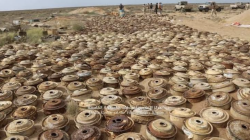
ADEN, Yemen — The Saudi-backed Masam demining project said it has removed more than 4,000 explosive devices and remnants of war across Yemen since the start of October.
The project said its field teams were continuing clearance operations in several Yemeni regions, targeting landmines, unexploded ordnance and other hazardous remnants left by years of conflict.
Masam said the work is intended to reduce the threat to civilians and to secure residential areas, farmland and main transport routes.
That account of the October total rests on Masam’s own statement. No independent confirmation of the figure has been published, and Yemen Herald found no second origin for it.
The project also publishes weekly clearance reports, which cover part of the same period and are counted differently.
In the week to Oct. 4, Masam reported removing 1,256 explosive devices. It listed 1,201 items of unexploded ordnance, 41 anti-tank mines and 14 anti-personnel mines.
The project put its cumulative total at 594,745 devices at that point.
In the week to Oct. 12, it reported 1,291 devices. That figure covered 1,253 items of unexploded ordnance, 26 anti-tank mines, 10 anti-personnel mines and two improvised explosive devices.
Its cumulative total rose to 596,036.
Masam put the same running total at 593,489 as of Sept. 25, which places the increase recorded in its weekly reports through Oct. 12 at 2,547 devices.
The project describes its October figure as covering explosive devices and remnants of war. Its weekly reports count mines and explosive devices. Masam did not say how the two measures relate.
The weekly reports named 11 governorates where teams were working. They were Marib, Aden, Jouf, Shabwa, Taiz, Hodeidah, Lahj, Sanaa, Al-Bayda, Al-Dhale and Saada.
Masam began work in June 2018. Its managing director is Ousama Algosaibi.
The project is run as a Saudi initiative and is funded through KSrelief, the kingdom’s humanitarian agency.
Masam said in early October that it had 45 engineering teams deployed in areas held by Yemen’s internationally recognised government. It said special task and rapid-response teams were on standby.
The cumulative total it reported as of Sept. 25 broke down as 7,735 anti-personnel mines, 153,107 anti-tank mines, 423,960 items of unexploded ordnance and 8,687 improvised explosive devices.
The project said it had cleared 85.8 million square metres of land since 2018.
Unexploded ordnance accounts for roughly seven of every 10 devices Masam records. Anti-personnel mines account for about 1.3 percent.
Anti-personnel mines are banned under the 1997 Mine Ban Treaty. Yemen acceded to the treaty in 1998.
Masam works alongside Yemeni state bodies. The National Mine Action Committee is led by Maj. Gen. Amin al-Aqili.
Brig. Gen. Qaed Haitham heads the Aden branch of the Yemen Executive Mine Action Centre.
The project said in early October that clearance was continuing as military operations intensified.
It described a rise in landmine and explosive casualties as a serious concern, particularly in heavily contaminated areas. It did not give casualty figures.
Yemen Herald could not independently verify the casualty trend the project described.
Masam employs 580 staff inside and outside Yemen.
It fields 32 Yemeni national teams of 10 people each. Each team has a leader, a deputy leader, six deminers, a medic and an ambulance driver.
Thirty technical mentors support those teams, alongside rapid-response units and specialists in improvised explosive device threat mitigation.
The project also deploys eight explosive detection dogs in Marib.
Masam is registered as a not-for-profit and works in coordination with the Yemen Executive Mine Action Centre.
The project has reported 30 of its demining personnel killed since 2018, five of them foreign explosive ordnance disposal specialists. It has reported 47 injured.
Yemen Herald could not independently verify those figures.
A UN Security Council meeting in July 2022 commended the removal of nearly 350,000 explosive remnants of war through the project.
Masam reported clearing 48,705 items in 2024. It put its running total at 518,633 landmines and explosive threats in October 2025.
Earlier project reports put the running total at 422,342 landmines and explosive threats in January 2020, and recorded 3,015 mines and explosive devices removed in December 2023.
The difference between that October 2025 figure and the total it reported as of Sept. 25 this year is 74,856 devices.
The project expanded into Midi district in Hajjah province in September 2025, after a survey lasting about a month.
Mine contamination in Yemen dates from fighting that began in 2014 and later spread across much of the country.
The United Nations said in its humanitarian plan for Yemen for 2026, published in March, that more than 22 million people in the country needed assistance.
The plan put the number of people displaced inside Yemen at 5.2 million. It sought 2.16 billion dollars to reach 12 million of those in need.
It also recorded 18.3 million people as acutely food insecure and more than 2.2 million children under five as acutely malnourished, 516,157 of them severely.
Masam has said clearance of farmland and routes is meant to let communities resume normal activities in areas previously fought over.
The project did not say how many teams were working in each of the 11 governorates during October.
Its weekly reports do not identify where individual devices were found within each governorate.
About the Author