Al-Alimi says Dawn of Yemen operation will continue, in October 14 anniversary speech
 Yemen Herald News
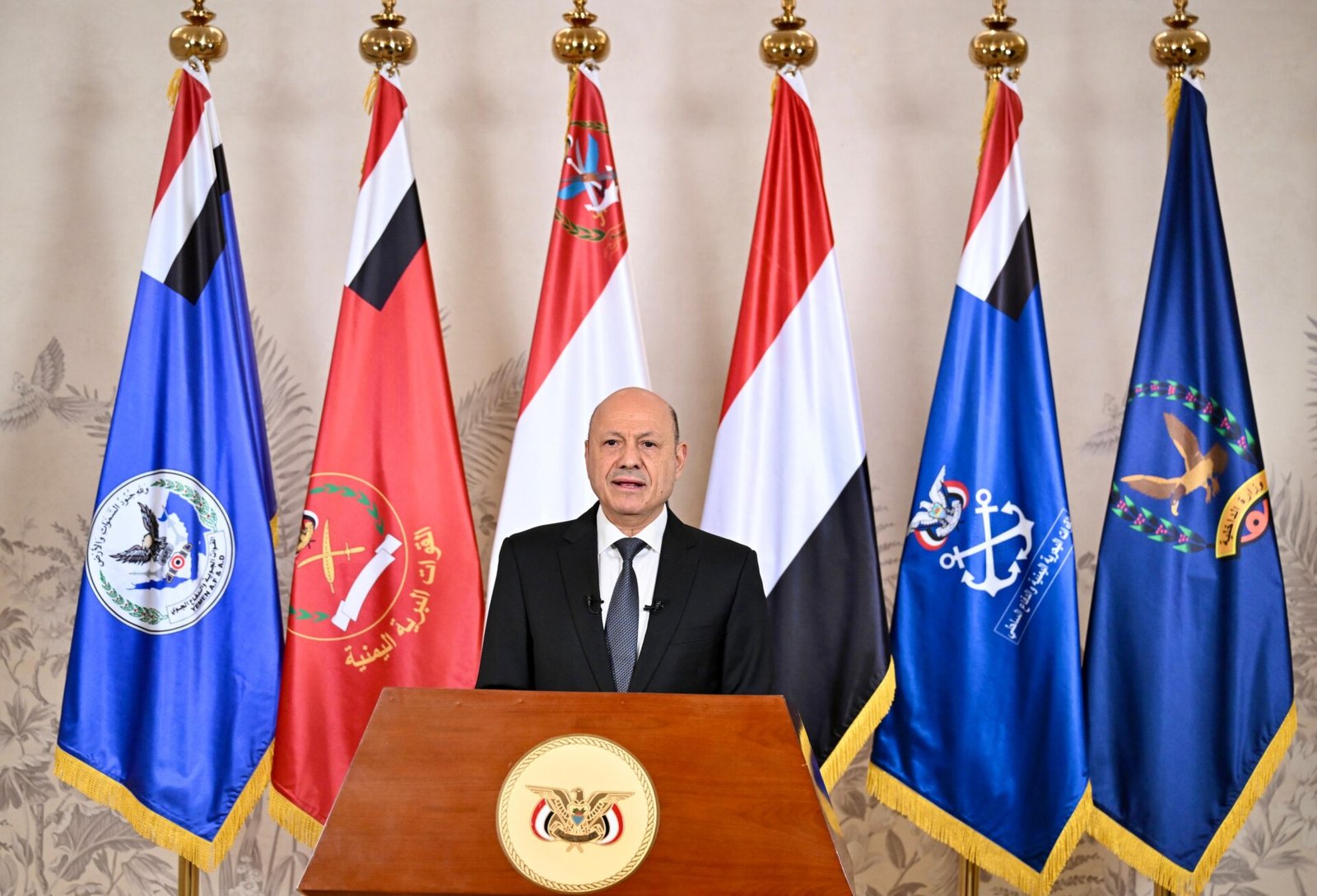
ADEN, Yemen — Yemen’s Presidential Leadership Council chairman said a military offensive against the Houthis will continue until the group’s takeover ends, in a speech marking a national anniversary.
Rashad al-Alimi said the Dawn of Yemen operation would run until state institutions were restored and decisions on war, peace and the control of weapons rested only with constitutional bodies.
“This decision is now in effect, and there is no turning back,” he said, according to Anadolu Agency.
He spoke on Tuesday, marking the 63rd anniversary of the October 14, 1963 revolution against British rule in the south.
Al-Alimi said the operation had been launched after opportunities for de-escalation were exhausted, Anadolu reported.
He accused the Houthis of insisting on war and of widening attacks on cities, villages, neighbouring countries and international waterways.
The Houthis dispute government accounts of the fighting. The group did not respond to the speech.
Al-Alimi said developments on the ground that he described as temporary would not stop the state from acting against the group, Yemen Monitor reported.
He said the armed forces had performed well since the operation began.
On Taiz, he said the state would work with all its capabilities to protect the governorate, reopen its roads and ease residents’ suffering.
He instructed the government and local authorities to mobilise resources for food and medicine, aid displaced families and secure supply routes, according to Anadolu.
Al-Alimi said the security of Taiz and Marib was tied to that of Aden, Hadramout and the other governorates, Yemen Monitor reported.
Yemen’s state news agency, Saba, said he commended the Giants Brigades, the Nation’s Shield Forces and other military and security units for supporting Taiz.
He praised what he called the role of the southern governorates in pushing back Houthi forces, Saba reported.
Al-Alimi reaffirmed the council’s commitment to what he described as the justness of the southern cause.
He backed the outcome of dialogue among southern parties held under Saudi sponsorship, which Yemen Monitor said aims at a settlement of the southern issue.
He addressed residents of Houthi-held areas, saying they were not a target of the operation.
He urged them to keep children away from recruitment and from combat zones, and to use announced safe-return and amnesty measures, Anadolu reported.
Al-Alimi said ending the war required addressing its causes and preventing armed groups from imposing outcomes by force.
He said the September and October revolutions reflected an aspiration for a state drawing its legitimacy from its people, according to Yemen Monitor.
Al-Alimi condemned Houthi attacks on Saudi Arabia, including a strike on King Khalid International Airport in Riyadh.
Saudi authorities said that attack, on Oct. 10, killed 12 people and wounded about 300, Al Jazeera reported. Umrah pilgrims were among the casualties.
Saudi forces intercepted three missiles and the airport was closed, CNN reported at the time.
He thanked King Salman and Crown Prince Mohammed bin Salman for Saudi support for the government, the economy and public services, Anadolu reported.
He also noted Saudi directives to regularise the status of Yemenis living in the kingdom without legal papers.
The operation began in the first week of October, Al Arabiya reported. Government forces said at the time that they controlled the Bab al-Mandab area.
Government forces said last week they had taken high ground near the Maas camp in Medghal district and positions north of Harib, in Marib governorate, Al Jazeera reported.
A military spokesman, Colonel Majid al-Nuzaili, put the operation’s tally at 1,879 strikes and 380 destroyed vehicles, according to the same report.
Yemen Herald could not verify those figures. The Houthis have not published their own account of the fighting in Marib.
Houthi-affiliated media reported air strikes on areas the group controls, according to Al Jazeera.
Taiz has been under renewed siege. An Al Jazeera correspondent reported mortar fire on residential areas of the city this week.
Yemen’s health ministry said medicines and fuel at health facilities in the governorate were close to exhausted.
Food and fuel prices in Taiz rose as access routes tightened, Al Jazeera reported on Oct. 10.
The current escalation began in July, Anadolu reported. A UN-brokered truce took effect in 2022.
The United Nations said in its March humanitarian plan that more than 22 million people in Yemen need assistance.
It put the number of acutely food insecure at 18.3 million and the number of internally displaced at 5.2 million.
The plan said more than 2.2 million children under five were acutely malnourished, 516,157 of them severely.
It sought 2.16 billion dollars to reach 12 million people.
Yemen’s civil service ministry declared Wednesday a public holiday for the anniversary.
The Presidential Leadership Council was formed in April 2022, when Abd Rabbu Mansour Hadi transferred his powers to it. Al-Alimi has chaired it since.
The council governs from Aden. The Houthis have held Sanaa since 2014.
Taiz sits between the two. Its governor appealed this month for action to lift the siege of the governorate.
Southern Yemen became independent in 1967, four years after the October 14 uprising began. It united with the north in 1990.
The October 14 revolution began an armed campaign against British rule in Aden and the surrounding protectorates.
About the Author