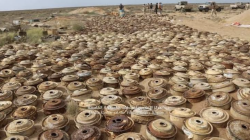
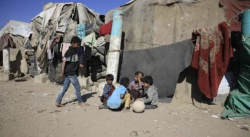
Iran offers to help arrange Saudi-Houthi talks after attacks on Riyadh airport
 Yemen Herald News
TEHRAN, Iran — Iran offered on Sunday to help arrange talks between Saudi Arabia and Yemen’s Houthis, after a week of Houthi attacks on Saudi cities.
Foreign Minister Abbas Araghchi made the offer in a telephone call with his Saudi counterpart, Prince Faisal bin Farhan Al Saud.
“Insisting on a military approach and disregarding a political solution would only further complicate the situation,” Araghchi said.
He said regional crises had no military answers, and that Tehran was ready to help facilitate dialogue between Saudi Arabia and Yemen.
Saudi state media said the two ministers discussed the escalation and ways to reduce tensions, according to Al Jazeera.
It was the first publicly reported contact between the two governments since the Houthis stepped up their attacks on Saudi Arabia, the broadcaster said.
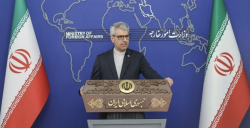
Iran’s foreign ministry repeated the offer a day later. Spokesman Esmaeil Baghaei told a news conference in Tehran that his government was deeply concerned about developments on the Arabian Peninsula.
“We absolutely do not want hostilities and war to continue between two Islamic countries,” Baghaei said.
He said Yemenis had a right to live with dignity, free of pressure, sanctions and blockade. He said the fighting served Israeli interests.
Iran is the Houthis’ main foreign backer. It restored diplomatic relations with Saudi Arabia in 2023 under an agreement brokered by China, ending a seven-year rupture.
Two analysts questioned how much Tehran could deliver.
Negar Mortazavi, a senior fellow at the Center for International Policy, said Iran was an ally of the Houthis with influence over them, but did not control the group’s decisions. She said the offer positioned Iran as necessary to any wider regional settlement.
Mortazavi said Tehran was seeking an informal non-aggression understanding that would cover Yemen and Lebanon, rather than the Iranian dispute with Washington alone.
Andreas Krieg of King’s College London said Iran was trying to turn Yemen from a military liability into a diplomatic asset. He said Tehran had also helped sustain the war, and could facilitate talks without being able to order the Houthis to give up their gains.
Krieg said Saudi Arabia was uneasy about its dependence on Washington and frustrated by what he described as limited American willingness to intervene in Yemen. He said Riyadh was also reluctant to rely again on the United Arab Emirates.
He said Iran was under pressure from a United States blockade, while Gulf states restored energy exports toward pre-war levels. Helping Saudi Arabia leave the war could give Tehran leverage in talks on the Strait of Hormuz, sanctions relief and regional security, he said.
The offer followed two attacks on King Khalid International Airport in Riyadh.
The first, on Saturday, killed 12 people and injured 309, Saudi Arabia’s General Authority of Civil Aviation said. Reuters reported that the toll rose to 13 after an injured Indian national died.
A second attack on the airport the following day killed a Pakistani resident and injured 11 others, according to Saudi authorities.
Al Jazeera put the combined toll at 14 dead and more than 300 wounded. It said the dead included nationals of Bangladesh, Pakistan and Palestine.
The Houthis, who call themselves Ansar Allah, claimed the Riyadh attacks along with strikes on Dammam airport and Saudi Aramco facilities, Reuters reported.
The Saudi-led coalition called the first Riyadh attack a “full-fledged war crime.”
Houthi military spokesman Yahya Saree renewed a warning to airlines, shipping companies, airport staff and travellers against using Saudi airports and airspace. The statement, posted on X on Sunday, excluded the airports at Mecca and Medina.
“The airports and airspace are exposed to targeting and constitute a theatre of operations for our forces,” Saree said.
Airlines have pulled back. Lufthansa cancelled flights to Riyadh until Oct. 16, and Air France-KLM extended its suspension to the end of the month, Reuters reported.
Flights, businesses and schools in the Saudi capital were disrupted, according to Al Jazeera.
The Saudi-led coalition struck a fuel depot on the outskirts of Sanaa on Tuesday, the coalition said, describing the operation as an effort to blunt Houthi capabilities. The Associated Press, citing witnesses, reported several explosions across the city.
The exchanges came after Yemen’s internationally recognised government opened an offensive against the Houthis. It announced the campaign, which it calls Operation Dawn of Yemen, on Oct. 4, and said the aim was to reverse Houthi territorial gains, including in Sanaa.
Government forces, backed by Riyadh, have reported advances near the Bab al-Mandab strait. Competing battlefield claims from the two sides are difficult to verify independently.
The Houthis hold Sanaa and other parts of northern Yemen. A Saudi-led coalition has supported the government against them since 2015.
Hans Grundberg, the UN special envoy for Yemen, told the Security Council on Friday that the country had slid back into full-scale war, with civilians bearing the brunt.
The United Nations humanitarian response plan for Yemen, issued in March, said more than 22 million people needed assistance. It recorded 18.3 million people as acutely food insecure.
The plan counted more than 2.2 million children under five as acutely malnourished, including 516,157 with severe acute malnutrition. It listed 5.2 million internally displaced people and sought 2.16 billion dollars to reach 12 million of them.
Baghaei did not say whether Iran had contacted the Houthi leadership about the offer. He gave no timetable for any talks.
About the Author