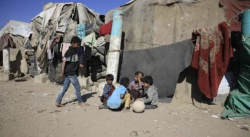
IOM says more than 217,000 displaced in Yemen since August as west coast fighting widens
 Yemen Herald News
ADEN, Yemen — More than 217,000 people have been displaced inside Yemen since the start of August, the International Organization for Migration said.
The agency put the total at 217,303 people, or 36,216 families, displaced between Aug. 1 and Oct. 12.
The figures come from the Displacement Tracking Matrix, IOM’s own field monitoring system.
The UN Office for the Coordination of Humanitarian Affairs reported a similar scale on Oct. 12, citing IOM. It put the number displaced since early August at about 216,000, including more than 172,000 from Taiz governorate.
Both counts originate with IOM’s monitoring. No independent confirmation of the totals has been published, and Yemen Herald could not verify them.
IOM attributed the movement to intensified fighting along Yemen’s western coast. It warned that continued hostilities could displace more people and deepen humanitarian need.
Taiz governorate accounts for 55 percent of the recorded displacement, the agency said. It is the worst affected area in the country.
Lahj governorate is second, with 45,390 displaced people, according to the matrix. Aden is third, with 26,112.
Three districts of Taiz carry much of that caseload. Jabal Habashi recorded 32,346 displaced people, al-Ma’afer 31,230 and al-Shamayatain 24,942, IOM said.
The agency said fighting had limited humanitarian access to most displacement sites in Taiz.
The totals have climbed steeply through the autumn. The matrix recorded about 76,000 displaced people by mid-September, and more than 145,000 by the end of that month.
By Oct. 7 the figure stood at 201,217 people, or 33,776 households, IOM reported at the time. Taiz then accounted for 114,708 of them.
The latest count adds about 16,000 people in five days.
Aid agencies have reached about 143,000 people with emergency assistance, including food, hygiene kits and cash, OCHA said.
The office said road closures were disrupting civilian movement, commercial supplies and aid deliveries. It named the Taiz-Aden road among the routes affected.
Local authorities reported sharp price rises and fuel shortages that threatened health and water services, according to OCHA.
The UN human rights office recorded at least 54 civilians killed and 171 injured in Yemen since August, OCHA said. It said half the dead were children, and that the injured included 107 women and children.
Funding cuts have closed 72 percent of safe spaces for women and girls, the office said. It put the immediate need at 73,000 dignity kits.
The United Nations called on all parties to allow safe, rapid and unimpeded humanitarian access.
The Norwegian Refugee Council said at the end of September that nearly 15,000 newly displaced people had reached the sites it supports in Taiz, Lahj and Abyan. It put the rise at 78 percent over the numbers held at those sites before the escalation.
Five of the council’s ten sites in Taiz emptied as the fighting drew closer, the organisation said. Families moved on to other sites and villages.
“New families are arriving by the hour, many moving from one displacement site to another,” said Alison Bottomley, the council’s advocacy adviser in Yemen. She said families were arriving with nothing.
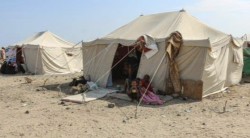
Nearly three in four newly displaced households lack adequate shelter, according to OCHA figures cited by the council. It said Yemen’s humanitarian response for 2026 was just over 20 percent funded as of September.
Yemen’s internationally recognised government opened an offensive against the Houthis this month. It announced the campaign, which it calls Operation Dawn of Yemen, on Oct. 4.
The government said the aim was to reverse Houthi territorial gains, including in Sanaa. Government forces, backed by Saudi Arabia, have reported advances near the Bab al-Mandab strait.
Competing battlefield claims from the two sides are difficult to verify independently. The Houthis dispute government accounts of the fighting.
Hans Grundberg, the UN special envoy for Yemen, told the Security Council on Friday that the country had slid back into full-scale war, with civilians bearing the brunt.
Taiz has been a focus of the fighting. The governor, Nabil Shamsan, appealed on Sunday for national and international action to lift what he described as a Houthi siege of the governorate.
Shamsan said the siege had lasted 12 years. He asked for food, medicine and fuel to be brought in, and for help for hospitals and other facilities.
Displacement from Yemen has also reached neighbouring states. Djibouti’s interior minister, Omar Abdi Said, said in September that more than 2,500 Yemenis had arrived in his country within about a week, Al Jazeera reported.
He said at the time that he expected arrivals to reach about 10,000 in the following weeks, according to the same report. He said the influx had already exceeded Djibouti’s capacity as international funding fell.
The United Nations humanitarian response plan for Yemen, issued in March, said more than 22 million people needed assistance.
The plan recorded 18.3 million people as acutely food insecure. It counted more than 2.2 million children under five as acutely malnourished, including 516,157 with severe acute malnutrition.
It listed 5.2 million internally displaced people before the current escalation, and sought 2.16 billion dollars to reach 12 million of them.
IOM has run the Displacement Tracking Matrix in Yemen for years, recording movements through field teams and community reporting.
The agency did not say how many of those displaced since August had returned home. It gave no breakdown of the displaced by age or sex.
About the Author