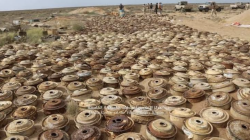
Saudi-led coalition says it destroyed Houthi missile tunnels and launchers
 Yemen Herald News
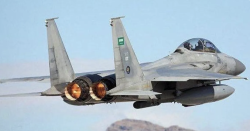
RIYADH, Saudi Arabia — The Saudi-led coalition said on Monday it had destroyed five tunnels used to store Houthi ballistic missiles, four launchers and a missile storage facility.
Maj. Gen. Turki al-Malki, the coalition’s spokesman, set out the claim in a post on X.
He said the operation was aimed at neutralising sources of threat.
The account of what was destroyed rests on the coalition’s statement. No independent confirmation has been published, and Yemen Herald found no second origin for it.
The Houthis did not directly address the claim.
Al-Malki said the operation sought to cut Houthi supply lines between areas the group controls.
He said it targeted Houthi fortifications, gatherings of fighters and military equipment along front lines inside Yemen.
He said it was carried out in response to repeated attacks using ballistic missiles and drones.
Al-Malki said the coalition would continue what he called deterrent operational measures against Houthi attacks.
The coalition placed the targets in Houthi-controlled territory but did not name a location.
It reported no casualties.
The announcement did not give a date for the strikes themselves.
The coalition describes its operations as self-defence and as protection of Saudi territory, its citizens and residents.
Houthi military spokesman Yahya Saree said the group had fired ballistic missiles at government military gatherings and weapons depots in Aden and Lahj governorates.
He said the strikes inflicted losses. The claim could not be independently verified.
Saree said Houthi forces had struck King Khalid International Airport in Riyadh with a ballistic missile.
He warned travellers to avoid the airport, which he described as a military target.
He also said the group had carried out drone strikes on Saudi oil pumping stations.
Yemen’s government accused the Houthis late on Sunday of targeting displacement camps on the outskirts of Aden. It gave no evidence.
Yemen Herald could not independently verify any of those accounts.
The Houthi-run al-Masirah channel reported strikes in Saada and Taiz governorates.
Houthi forces and government forces have been fighting in Taiz for weeks.
The exchanges follow the collapse of a truce agreed in 2022. The Houthis declared it over in July, after a strike on the runway at Sanaa airport.
That truce was brokered by the United Nations and was renewed several times before it lapsed.
The Houthis declared a maritime blockade on Saudi Arabia in the summer.
They have since taken much of Yemen’s Red Sea coast and have attacked Saudi energy facilities and airports.
Yemen’s government launched a counteroffensive this month.
Rashad al-Alimi, chairman of the Presidential Leadership Council, announced that offensive. The government says it is intended to restore state institutions and retake Sanaa.
The government launched it on Oct. 4 and began what it called a strategic offensive on Sanaa the following day.
Al-Malki said on Oct. 5 that 100 fighter jets were taking part, providing round-the-clock air support and cover for the Bab al-Mandab strait.
He said at that point that 324 high-value Houthi targets had been destroyed. That figure was a coalition claim and was not independently confirmed.
He said strikes on moving targets were continuing.
Government forces said on Oct. 5 that they had secured the Bab al-Mandab strait and the Dhubab area, and had taken Mokha. Col. Majed al-Nuzaili, the armed forces spokesman, described a flanking manoeuvre.
Forces taking part in the Mokha advance included the Nation’s Shield Forces, the Giants Brigades and the Tihama Resistance, according to the state news agency Saba.
Government forces also said they had cut the road between Dhubab and Mokha.
The Houthis captured Perim Island in Bab al-Mandab in September.
The Houthis did not confirm those battlefield claims. They had held Mokha since early September.
The Houthi-run al-Masirah channel confirmed attacks on Sanaa at the time.
A Houthi-run maritime body warned airlines in early October that flying in Saudi airspace would not be safe while what it called Saudi aggression continued.
The World Health Organization recorded more than 5,000 casualties in Yemen between Aug. 6 and early October, including 959 deaths.
Saudi Arabia backs Yemen’s internationally recognised government, which the Houthis ousted from Sanaa in 2014.
Saudi Arabia began military operations in Yemen in March 2015 at the request of that government.
Aden has served as the seat of the internationally recognised government since 2015. Lahj governorate lies on the northern approach to the city.
An attack on King Khalid International Airport earlier in October killed 13 people and wounded more than 300, according to reports at the time.
The airport closed after that attack and reopened on Sunday.
Saudi Arabia postponed its flagship investment conference until 2027.
Saudi air defences intercepted at least 10 ballistic missiles on Sunday.
Greek Prime Minister Kyriakos Mitsotakis met Crown Prince Mohammed bin Salman and agreed to keep a Greek-deployed Patriot air defence battery in Saudi Arabia.
The battery protects energy infrastructure at Yanbu on the Red Sea.
The coalition has not published imagery of the tunnels or launchers it said were destroyed.
It did not say how many aircraft took part in the operation it announced.
It did not say over how long a period the strikes were carried out.
Al-Malki did not say how the coalition assessed the damage it described.
About the Author