Ministry of Agriculture and FAO say World Bank-funded food security project is about 70% complete
 Yemen Herald News
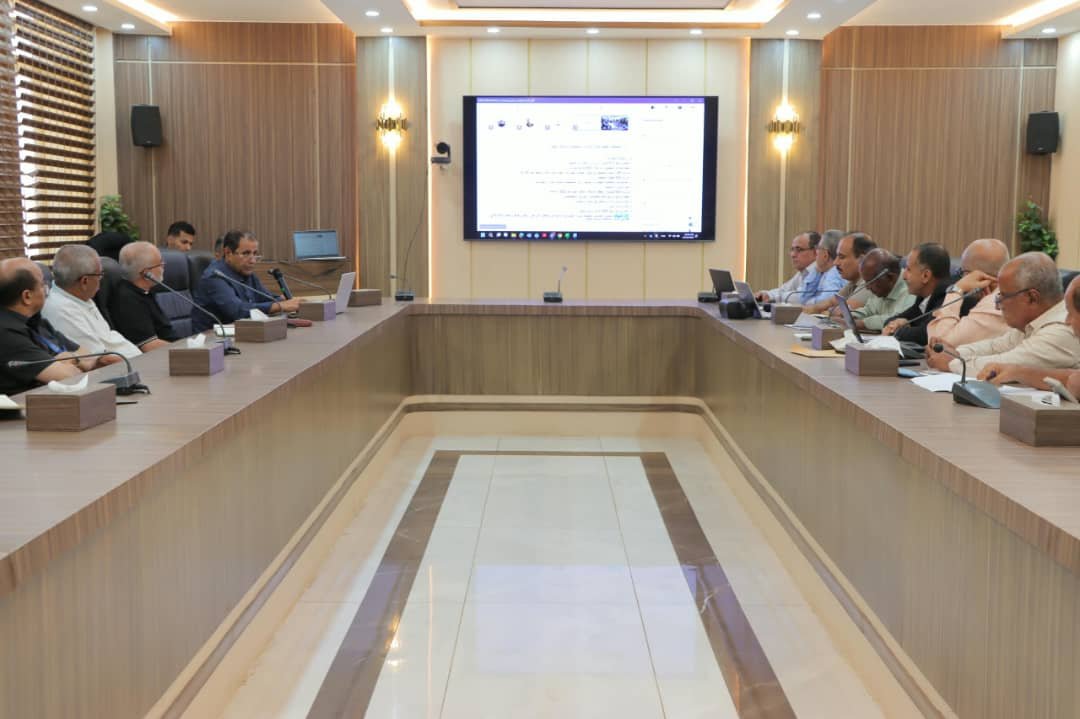
ADEN, Yemen — Yemen’s Ministry of Agriculture, Irrigation and Fisheries and the U.N. Food and Agriculture Organization said a World Bank-funded food security project is about 70% complete.
The two bodies reviewed progress on the Food Security Response and Resilience Project, according to the state news agency Saba, which carried the report on Wednesday.
The project began in August 2021 and is scheduled to run until March 2028, Saba said.
It covers nine governorates: Lahj, Dhale, Taiz, Abyan, Shabwa, Dhamar, Hudaydah, Hajjah and Al-Jawf.
The ministry and FAO said the work aims to raise crop, livestock and fisheries output and to help rural households absorb economic and climate shocks.
Saba reported a set of figures for what has been delivered so far.
Some 518 tonnes of improved seed have reached more than 20,000 farmers, the agency said.
Seventy seed production groups and 12 community seed banks have been established, according to the same report.
More than 5.6 million head of livestock have been vaccinated or treated.
About 1,000 beekeepers and 8,500 vegetable growers received inputs and training, Saba said.
Seven fruit tree nurseries have been set up. Forty women’s groups working in food processing have been supported.
Other activity has targeted dairy and fisheries value chains, fishermen and fish quality laboratories, the report said.
It also listed home gardens, drip irrigation, hydroponics, greenhouses and livestock-owning households.
Yemen Herald could not independently confirm the completion rate or the output figures. The account of the review rests on Saba’s report of what the ministry and FAO said, and no second source has published those figures.
Saba did not name the officials who attended, and did not say where the review was held.
The financing behind the project is documented separately. The World Bank approved US$127 million for it, the United Nations in Yemen said in July 2021.
That package combined US$100 million from the International Development Association with US$27 million from the Global Agriculture and Food Security Program.
Three agencies shared the original allocation. FAO received about US$61 million, the World Food Program US$42.2 million and the U.N. Development Program US$23.8 million.
FAO’s share was directed at crop, livestock and fish production, including backyard plots, and at climate-smart farming and agrifood value chains, the U.N. said.
UNDP’s portion covered climate adaptation, temporary cash-for-work jobs and repairs to public productive assets, including some damaged by flooding in 2020.
WFP’s allocation funded nutrition products for women and children, and training and start-up grants for women in agriculture and food production.
FAO, WFP and UNDP were the original grant recipients and implementers, the ICRC said.
WFP directed its nutrition work to areas with the highest rates of food insecurity, and UNDP worked in rural Yemen, the U.N. said in 2021.
The project’s immediate support at launch comprised cash-for-work opportunities and nutrition support for mothers and children.
The World Bank board approved the project on 11 May 2021, according to the International Committee of the Red Cross.
The ICRC joined the partnership under additional financing made available in 2022, it said in March 2023. Its role covers animal vaccination, beekeeping and capacity building.
The ICRC described the project as having four components: cash-for-work for agricultural production; production and sale of nutritious crop, livestock and fish products; nutrition for vulnerable rural households; and capacity building for food security management and climate resilience.
UNDP reported separately on the component it runs. In a fact sheet dated June 2026 it put that component at US$64 million from the International Development Association, across 50 districts.
UNDP said 43,883 people had benefited from work opportunities, 4,069 of them women.
It recorded 1,362,158 workdays created, of which 132,269 went to women.
The agency said 23,043 farmers had gained improved access to water and 17,755 improved access to land.
Of those with improved water access, 5,351 were women. Among farmers with improved land access, 4,105 were women.
It listed 207,503 cubic metres of rainwater harvesting tanks built or improved, and 118,805 metres of irrigation canals constructed or improved.
UNDP also counted 205.1 kilometres of agricultural roads improved, 8,896 hectares of land improved and protected, and 13,785 hectares of irrigated farmland.
The fact sheet gave Al-Makha, in Taiz governorate, as one example site. That component is due to end in December 2026.
The project was approved when 16.2 million Yemenis faced crisis-level or worse acute food insecurity, the U.N. said in July 2021.
Need has not eased. The U.N. Office for the Coordination of Humanitarian Affairs put the number of Yemenis requiring assistance at more than 22 million in its humanitarian plan published in March 2026.
That plan recorded 18.3 million people as acutely food insecure.
It counted more than 2.2 million children under five as acutely malnourished, of whom 516,157 were classed as severely malnourished.
OCHA listed 5.2 million people as internally displaced, and sought US$2.16 billion to reach 12 million people.
The nine governorates named in the project span territory held by the internationally recognised government and areas outside its control.
Saba is the state news agency of that government, which is seated in Aden.
The agency’s report did not say whether the review set a date for the next assessment.
About the Author