Yemen’s water ministry signs two agreements for projects in Shabwa and Abyan
 Yemen Herald News
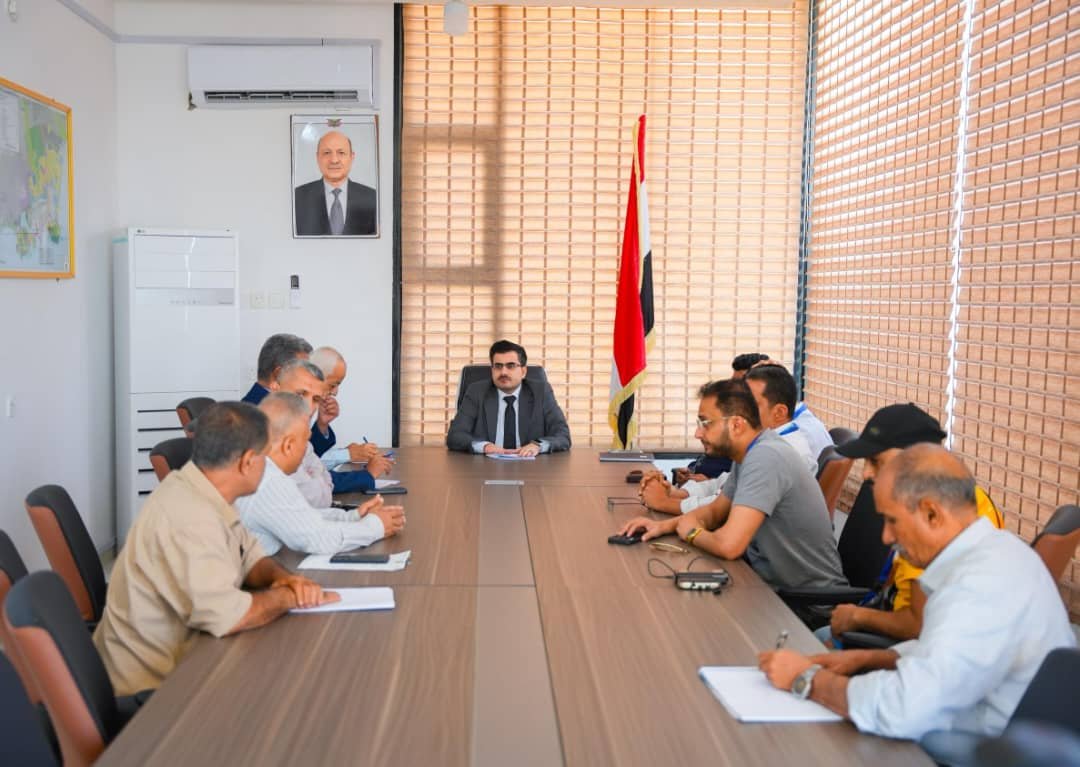
ADEN, Yemen — Yemen’s Ministry of Water and Environment signed two agreements in Aden to repair water systems in Shabwa and Abyan governorates at a combined cost of $440,000.
Deputy Minister of Water and Environment Mujahid bin Afarar signed both documents, the state news agency Saba reported on Monday.
The first was signed with the Kuwait Relief Society. It covers the second phase of a project to strengthen water supplies in Ataq, the administrative centre of Shabwa governorate.
That phase includes installing pumps, motors and pipelines, according to the agency. The work is scheduled to take six months.
The second agreement was signed with Muslim Hands. It covers the rehabilitation of a water project in the Abr Othman area of Khanfar district, in Abyan.
That work includes rehabilitating a well, installing a solar power system and restoring a water tank, Saba said. It is scheduled to run for eight months.
The ministry expects the Abyan project to benefit about 6,000 people. It gave no beneficiary estimate for the Shabwa phase.
Saba did not divide the $440,000 between the two agreements.
Bin Afarar praised both organisations for their support, the agency said. He said cooperation with donors would continue in order to improve water services and widen access to safe water for local communities.
The account of the signing rests on Saba, which is controlled by the internationally recognised government. No independent confirmation of the agreements or their value has been published, and Yemen Herald could not verify the figures.
The agreements follow two larger commitments to Yemen’s water sector in the past two months.
On Sept. 9 the minister of water and environment, Tawfiq al-Sharjabi, signed an agreement in Aden with Solidarités International worth about 1.2 million euros.
That project is funded by the European Commission’s humanitarian aid department and runs for 12 months. It covers the districts of Hays, Mawza, al-Mokha and al-Khokha.
It involves rehabilitating four water supply systems and nine health facilities, building latrines, distributing hygiene supplies and training water and sanitation committees. It also includes nutrition activities and two hygiene and health awareness campaigns.
About 55,634 people are expected to benefit, including displaced people, according to the ministry’s account of that signing.
A larger programme was initiated the following month. On Oct. 18 the World Bank Group’s International Development Association and the government of the Netherlands began a $150 million project to manage Yemen’s water resources.
It is called the Yemen Improved Water Management and Irrigation for Sustainability and Efficiency Project, and is financed through the Yemen Resilience, Recovery and Reconstruction Umbrella Trust Fund.
The project is the first phase of a 10-year programme. The United Nations Development Programme and the United Nations Office for Project Services are among the bodies implementing it.
The first phase concentrates on the Aden-Tuban and Wadi Hajir basins. The World Bank said it would reach more than 850,000 people, including 375,000 through what it described as resilient infrastructure.
Water and sanitation remain among the largest recorded gaps in the aid response in Yemen.
UNICEF’s 2026 humanitarian appeal puts the number of people in Yemen needing water, sanitation and hygiene assistance at 15.2 million. It says 17.8 million people lack access to health care and to water and sanitation services.
The agency has requested $22.7 million for its water and sanitation work in the country this year, about 15.5 percent of its total appeal for Yemen.
It aims to give one million people access to sufficient water for drinking and domestic use, and 750,000 people access to sanitation services.
It also aims to reach 250,000 people with hygiene messages and to provide 250,000 people with water and sanitation supplies.
UNICEF has warned that without timely funding one million people may lack safe drinking water. It describes its 2026 figures as provisional and drawn from the previous year’s needs assessment.
The agency puts the number of people in need in Yemen at 19.7 million, of whom 10.8 million are children.
The United Nations humanitarian needs and response plan published in March gave a higher figure, putting the number of people requiring assistance at more than 22 million.
Aid agencies appealed for $2.16 billion under that plan to reach 12 million people.
That plan put the number of people needing water, sanitation and hygiene assistance at 14.4 million.
It recorded 5.2 million internally displaced people across the country.
Of the 12 million people the plan aims to reach, it prioritises 9.4 million living in areas ranked at the highest severity of need.
The appeal includes $1.6 billion for what the plan calls prioritised life-saving work across all sectors.
The plan lists damaged infrastructure and water scarcity among the drivers of need in the sector.
It describes Yemen as carrying a high burden of epidemic-prone diseases, without giving case numbers.
The plan was published in March.
Bin Afarar did not say when work on either project would begin.
Neither the Kuwait Relief Society nor Muslim Hands has published its own account of the agreements.
Saba filed its account of the signing on Nov. 2.
Shabwa and Abyan both lie in territory held by the internationally recognised government. Ataq has served as Shabwa’s administrative centre throughout the conflict.
About the Author


 Adel Haddad