UAE’s Strategic Stance on Strait of Hormuz: A Crucial Geopolitical Flashpoint
The recent participation of the UAE in the foreign ministers’ meeting concerning the Strait of Hormuz underscores a pivotal moment in Middle Eastern geopolitics. As tensions escalate, the UAE’s proactive stance reveals the intricate balance of power and the urgent need for international cooperation to safeguard vital trade routes.
Context and Background
The Strait of Hormuz, a narrow passage connecting the Persian Gulf to the Arabian Sea, is not merely a geographical feature; it is the lifeblood of global energy supplies. Approximately 25% of the world’s oil and 20% of natural gas transit through this strategic chokepoint. The UAE, while not directly involved in the ongoing conflicts in the region, finds itself increasingly vulnerable to Iranian aggression, which has escalated dramatically since February 2023. The UAE’s Minister of State for International Cooperation, Reem bint Ibrahim Al Hashimy, highlighted that the nation has faced over 2,500 Iranian attacks, predominantly targeting civilian infrastructure. This situation is emblematic of a broader regional instability that threatens not only the UAE but also global economic stability.
Key Developments
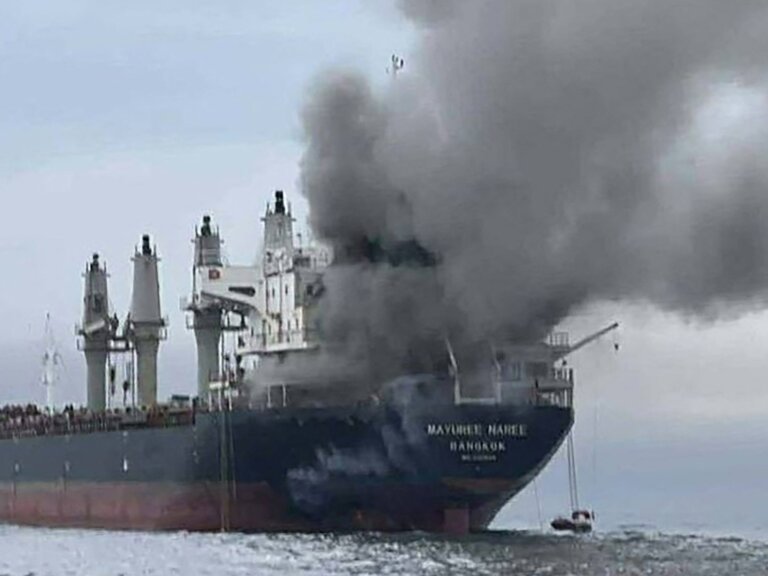
The implications of the UAE’s situation are profound. Disruptions in the Strait of Hormuz have immediate and far-reaching consequences for global energy prices and supply chains. The reduction in vessel traffic not only threatens the UAE’s economic stability but also endangers global food security, given that 33% of fertilizer exports from the Gulf pass through this strait. The potential for increased shipping costs and delays could ripple through economies worldwide, exacerbating inflation and economic uncertainty. Furthermore, the UAE’s position as a non-combatant in regional conflicts complicates its response strategy, as it must navigate the delicate balance of asserting its sovereignty while avoiding escalation into broader military confrontations.
Strategic Insight
From a strategic perspective, the UAE’s proactive engagement in international forums reflects a calculated approach to countering Iranian influence. By framing Iranian actions as violations of international law, the UAE seeks to rally global support and legitimize its defensive posture. However, the risks are substantial. Iran’s capabilities, including its ballistic missiles and drone technology, pose a significant threat not only to the UAE but to the entire Gulf region. The UAE’s emphasis on addressing all Iranian threats comprehensively, including its nuclear ambitions and proxy militias, indicates a recognition that the current crisis is multifaceted and requires a holistic response. The potential for miscalculation or escalation remains high, particularly if Iran perceives the UAE’s actions as a direct challenge to its regional ambitions.
What Happens Next
Looking ahead, several scenarios could unfold. The UAE may continue to strengthen its alliances with Western powers and regional partners, seeking to establish a robust coalition to deter Iranian aggression. This could involve increased military cooperation and intelligence sharing, as well as joint maritime security initiatives. Alternatively, if diplomatic efforts fail and Iranian provocations persist, the UAE might be compelled to adopt a more aggressive military posture, potentially leading to a broader regional conflict. The international community, particularly the United States and European nations, will play a crucial role in shaping the outcomes of these developments. Their responses to Iranian actions will significantly influence the strategic calculus of both the UAE and Iran.
The UAE’s participation in the foreign ministers’ meeting on the Strait of Hormuz is a clarion call for international action against Iranian aggression. As the stakes rise, the need for a unified response to safeguard vital trade routes and regional stability becomes increasingly urgent. The UAE’s strategic positioning reflects not only its immediate concerns but also the broader geopolitical dynamics at play in the Middle East. The outcomes of this situation will reverberate far beyond the Gulf, impacting global energy markets and international relations for years to come.
About the Author