Trump Suggests Seizing Iran’s Kharg Island Oil Hub as Regional Powers Meet in Islamabad
 Yemen Herald News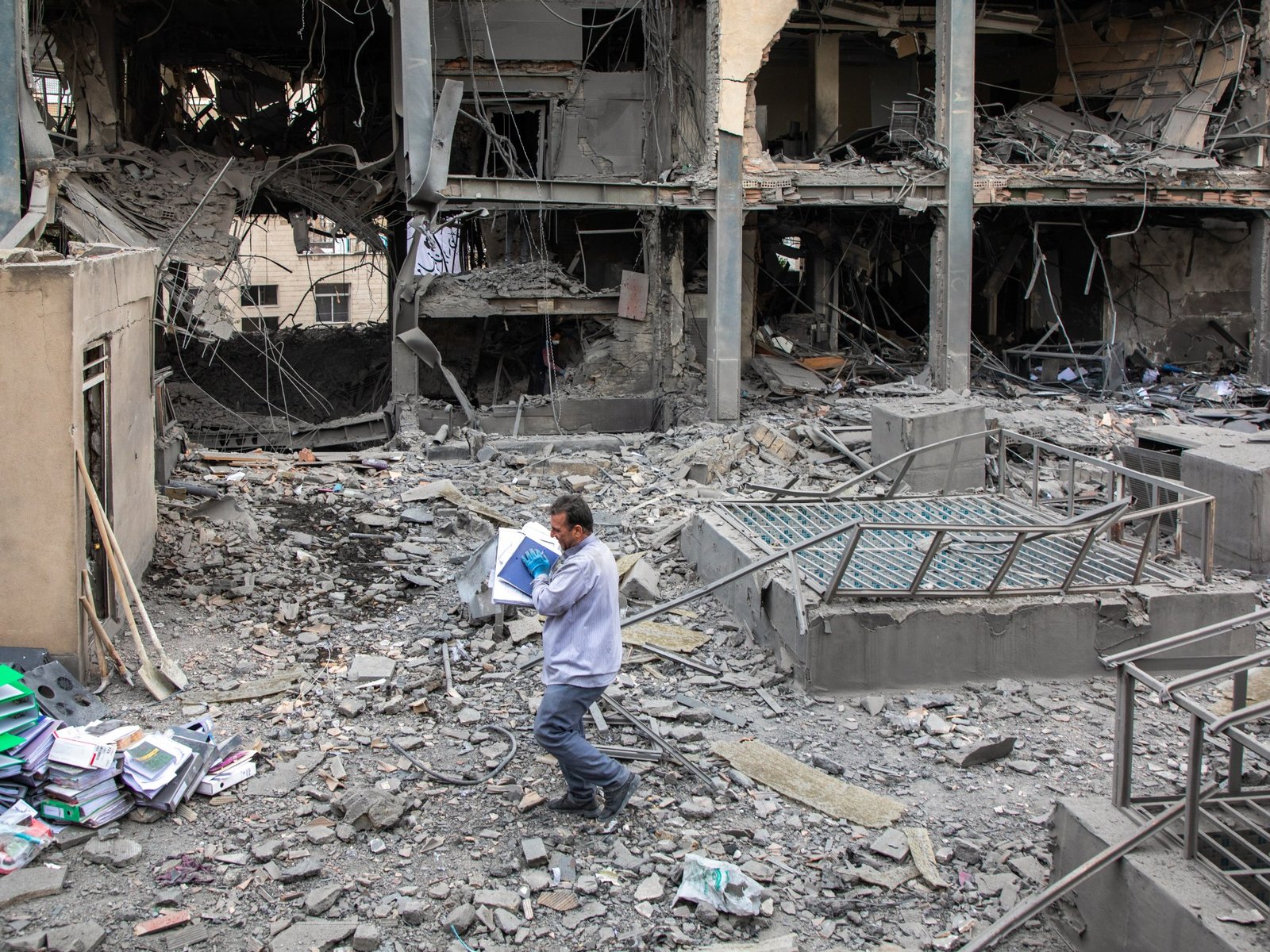
The conflict between Iran on one side and the United States and Israel on the other entered its fifth week at the end of March 2026 with intensified strikes on Iranian cities, an American president openly discussing the seizure of Iran’s principal oil export terminal, and a parallel diplomatic effort taking shape in Islamabad. Overnight strikes hit targets across Tehran, and the Israeli military said it was attacking Iranian government infrastructure throughout the capital, with heavy explosions reported in the city and its outskirts.
In an interview on 30 March, President Donald Trump raised the possibility of taking Iranian oil, suggesting that the United States could seize Kharg Island, the terminal in the northern Gulf through which the overwhelming majority of Iran’s crude exports pass. He coupled the remark with a warning that Iranian power plants, oil wells and Kharg Island itself would be destroyed if no agreement were reached to reopen the Strait of Hormuz immediately.
The suggestion was significant beyond its immediate effect on markets. Kharg Island is not merely a military target but the single point of failure in Iran’s export economy, and seizing rather than striking it would imply a ground operation and an occupation of Iranian territory. Legal specialists noted that appropriating another state’s natural resources by force sits outside any recognised justification for the use of force, and the remark was read in several capitals as a departure from the stated objectives of the campaign.
Tehran responded in kind. Iranian officials accused Washington of preparing a ground invasion while simultaneously professing an interest in negotiations. Parliament speaker Mohammad Bagher Ghalibaf wrote that the enemy publicly signals talks while secretly planning an invasion, and warned that any ground intervention would be met with force. Iran’s military had already said it would strike United States energy infrastructure across the region if Iranian energy facilities were attacked, a threat that placed installations in the Gulf states within the declared target set.
Attacks on Gulf infrastructure were already under way. Reports on 30 March described Iranian strikes on water and power facilities in Kuwait, extending a campaign that had previously focused on air defence sites and military installations to utilities serving civilian populations. Gulf air defences continued to report high interception rates, but the pattern of targeting marked a further widening of the war beyond the original belligerents.
Inside Iran the picture was mixed. Government supporters continued nightly demonstrations in several cities despite the risk from air raids, an expression of rally-round-the-flag sentiment that has accompanied external attack in Iran before. At the same time the authorities executed two people for alleged collaboration with the Mojahedin-e-Khalq, the exiled opposition group historically supported by parts of the American political establishment. Human rights organisations have consistently warned that wartime espionage prosecutions in Iran proceed with minimal due process and that confessions are frequently obtained under duress.
The diplomatic track ran through Islamabad. Ministers from Pakistan, Saudi Arabia, Turkey and Egypt met on 29 and 30 March in an attempt to assemble a de-escalation plan. Pakistani Foreign Minister Ishaq Dar said afterwards that Pakistan would be honoured to host and facilitate substantive talks between the two sides in the coming days, aiming at a comprehensive settlement. Pakistan’s position as a Muslim-majority nuclear state with working relations in Washington, Riyadh and Tehran made it an unusual but plausible venue.
Israel showed no interest in pausing. An Israeli official, speaking without attribution, said there was no intention of scaling back operations against Iran ahead of any negotiations, and that strikes on military targets would continue. That stance limited what the Islamabad meeting could achieve, since a mediation effort conducted while one party escalates offers the other little reason to enter it from a position of weakness.
Reports through the period described strikes in multiple Iranian cities beyond the capital, with residential districts damaged and civilians among the casualties. Independent verification remained difficult: foreign reporting from inside Iran was heavily restricted, internet access was intermittent, and both governments issued casualty and damage assessments that could not be checked against each other or against independent sources on the ground.
Markets absorbed all of this at once. Brent crude rose by close to three per cent to $115.93 a barrel, a substantial increase on levels before the fighting began in late February and early March. Asian equity markets fell as investors weighed the combination of supply disruption and the prospect of a longer war. In a measure that indicated how tight global supply had become, the United States suspended sanctions on Russian oil for thirty days, allowing buyers in Southeast Asia to purchase Russian barrels during the crunch, a decision that sat awkwardly with the sanctions architecture built up over the preceding four years.
That suspension was perhaps the clearest indicator of where the conflict had reached. A government prepared to relax restrictions on an adversary’s energy exports in order to manage the consequences of a war against another adversary’s energy exports was signalling that the disruption had exceeded what the market could absorb through ordinary means. For importing economies across Asia, Africa and Europe, the war’s effects were arriving through fuel prices and shipping costs rather than through anything visible on a map.
About the Author