Yemen joins UNCTAD trade board session in Geneva as state accounts differ from UN listings
 Adel Haddad
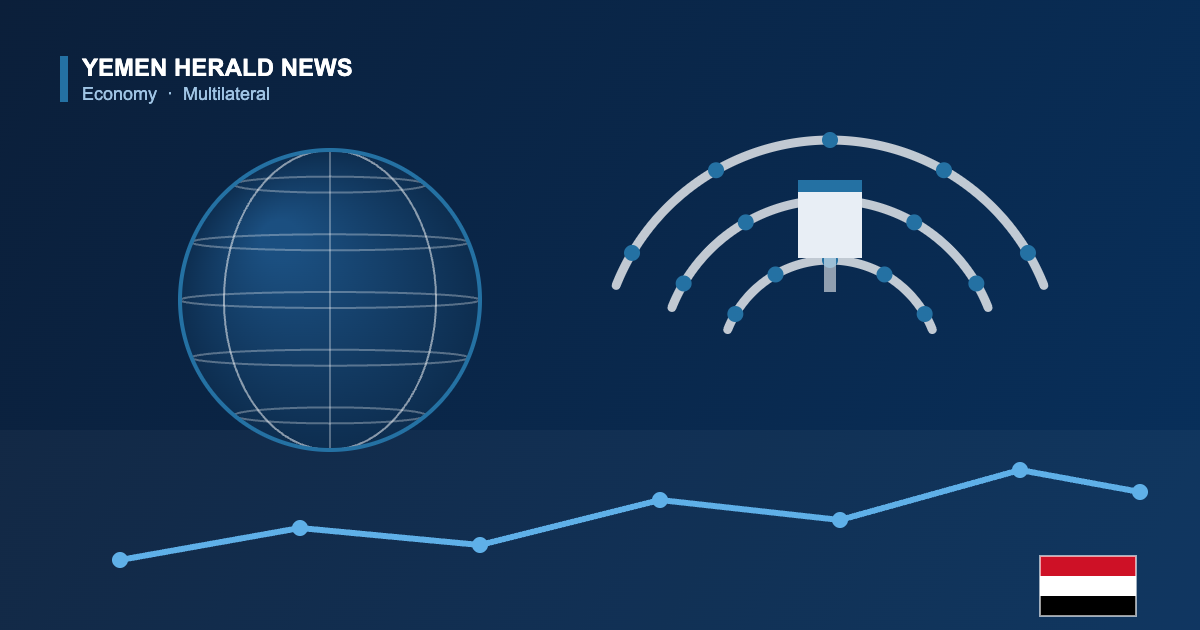
GENEVA, Switzerland — Yemen joined the 79th executive session of UNCTAD’s Trade and Development Board on Monday, the country’s state news agency said.
Saba, the Yemeni government’s news agency, reported the delegation’s attendance on Monday afternoon. Yemen TV, also state-run, published its own account about half an hour earlier.
UN Trade and Development lists the session as running from 23 to 24 November 2026 in the Council Chamber at the Palais des Nations in Geneva.
The UN’s Indico registration system gives the same two days, opening at 10 a.m. on Monday and closing at 6 p.m. on Tuesday. Yemen TV also described it as a two-day session.
The Board oversees the organisation’s activities and meets in Geneva up to three times a year in executive sessions, according to UNCTAD. Those sessions deal with urgent policy issues and with management and institutional matters.
The substantive agenda item is listed as interdependence and development strategies in a globalized world.
Deliberations draw on the Trade and Development Report 2026, which UNCTAD published on 9 October under the title “The geoeconomics of development”. An overview was issued the same day.
Yemen TV gave the report’s title as “The Economic Geography of Development”. UNCTAD’s own listing does not use that wording.
The broadcaster also called the body the Trade and Development Council. UNCTAD calls it the Trade and Development Board.
On one figure the state account matches the source. Yemen TV put global growth at 2.6 per cent for the current year, and UNCTAD’s summary of the 2026 report gives the same number.
UNCTAD’s meeting page says global growth declined in 2026 from its 2.9 per cent level in 2025, without naming the 2026 figure.
The report argues that industrial, financial, trade and technological policies serve as instruments of geoeconomic competition, according to UNCTAD’s description of it.
It records that official development assistance fell for a third consecutive year. Yemen TV reported the same finding.
UNCTAD also states that Africa retains under 1 per cent of the value in green supply chains.
Yemen TV said the delegation was led by Dr. Ali Majour, described as Yemen’s permanent representative to the United Nations in Geneva, and that First Secretary Yahya Al-Rafiq attended.
The UN Office at Geneva’s directory of permanent missions gives different spellings. It lists Yemen’s permanent representative as Ali Mohamed Saeed Majawar, with the rank of ambassador, appointed on 6 December 2012.
The same directory lists Yahya Ahmed Yahya Arrafiq as a first secretary at the mission, and Hamid Mohamed Ali Omar as deputy permanent representative.
Yemen Herald could not establish which rendering the delegation itself uses. Saba’s English service has previously published transliterations of names that differ from those used by the institutions concerned.
Yemen TV reported remarks to the session by Pedro Moreno. UNCTAD lists Pedro Manuel Moreno as its deputy secretary-general and acting secretary-general, and Rebeca Grynspan as secretary-general.
The broadcaster said participants would consider a resolution on implementing what it called the Geneva Consensus, and would review reports from committees and working groups. UNCTAD’s published agenda for the session does not list that item.
Neither state outlet attributed a statement or a negotiating position to the Yemeni delegation.
Attendance is open to Board member states, UNCTAD said. Other members, specialised agencies, non-governmental organisations and intergovernmental bodies may attend as observers after registering online.
The organisation said registration closed on 16 November, and that only notes verbales submitted through Indico would be accepted.
Delegates attend in person in the Council Chamber, UNCTAD said. A live audio stream was provided in the six UN languages for those following remotely.
Documents filed for the session include the provisional agenda and annotations, issued on 18 September, and a programme timetable dated 11 November. A notification to members was circulated on 28 October.
The session also received the report of the Joint Advisory Group on the International Trade Centre, from its sixtieth session in July.
Five non-governmental bodies applied for observer status under a single agenda item. They are the Mumbai Consumer Forum, the M Visvesvaraya Industrial Research and Development Centre, the Moroccan Consumer Protection Association, the Saudi Green Building Forum and the Elizka Relief Foundation.
Yemen is classified as a least developed country, the group UNCTAD covers in a separate annual report. Its most recent edition examined whether services offer a path to structural transformation.
Yemen’s economy has contracted through more than a decade of conflict.
The UN Office for the Coordination of Humanitarian Affairs reported that Yemen’s 2026 humanitarian response was about 20 per cent funded as of September, a figure cited by the Norwegian Refugee Council the same month.
Humanitarian planning figures for 2026 put the number of people facing severe food insecurity in Yemen at 18.3 million.
Yemen’s participation in multilateral forums has continued through the war. Its delegation presented a third update to the country’s national climate plan at the COP31 talks earlier this month.
The country keeps a permanent mission at Grand-Saconnex, outside Geneva, and marks its national day on 22 May.
Executive sessions of the Board do not negotiate trade agreements. They review the organisation’s work and forward conclusions to the full Board, which meets separately.
About the Author