
Armed Response Deterrent: Boat Near Yemen Retreats After UK Maritime Agency Deploys Security Team
 Yemen Herald News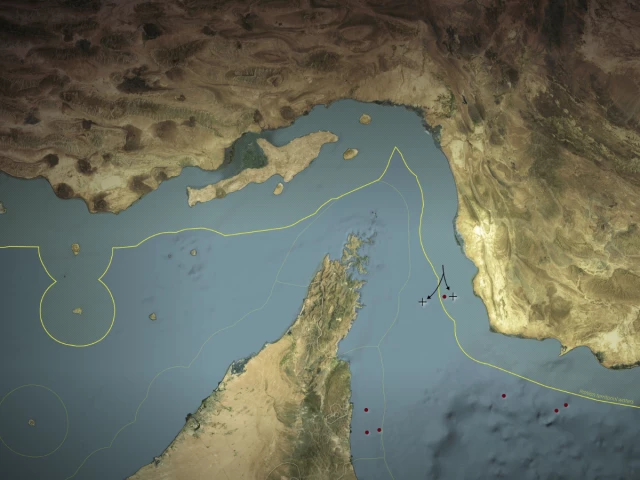
The maritime landscape surrounding Yemen has been fraught with tension and conflict, particularly due to the ongoing civil war that has engulfed the country since 2014. The war has not only devastated Yemen’s infrastructure and economy but has also turned the region into a hotspot for international maritime security concerns. Yemen’s strategic location near the Bab el-Mandeb Strait, a crucial chokepoint for global shipping, has made it a focal point for various military and commercial interests. The Strait of Hormuz, located to the north, is another vital passage for oil shipments, further complicating the security dynamics in the region.
In recent years, incidents involving attacks on commercial vessels have raised alarms among maritime agencies and governments worldwide. The involvement of armed groups, including Houthi rebels and other factions, has heightened the risks for shipping in the Arabian Sea and surrounding waters. As a result, the presence of armed security teams on commercial vessels has become increasingly common, reflecting the growing need for protection against potential threats.
On a recent occasion, a product tanker operating approximately 200 nautical miles west of Socotra Island was approached by a small craft carrying five individuals. The incident occurred when the vessel’s armed security team was deployed, prompting the small craft to alter its course and retreat. According to the UK Maritime Trade Operations (UKMTO), the closest point of approach between the small craft and the tanker was reported to be just 100 meters.
This incident follows another report from the UKMTO regarding an attack on a cargo vessel near Sirik, Iran, which occurred on May 3. The cargo ship was targeted by small boats approximately 11 nautical miles west of Sirik, a city that overlooks the critical Strait of Hormuz. Fortunately, all crew members on board were reported safe, and there were no environmental impacts or details released about the vessel’s cargo or the attackers’ identities.
The UKMTO has indicated that the threat levels in major West Asian waterways remain high, with maritime traffic significantly reduced due to ongoing concerns over safety. The agency’s assessments highlight that the risks in the Strait of Hormuz and the Arabian Sea are still critical, underscoring the precarious nature of maritime operations in the region.
Several key stakeholders are involved in the ongoing maritime security situation in the Arabian Sea and surrounding areas. The UK Maritime Trade Operations (UKMTO) plays a crucial role in monitoring and reporting incidents affecting commercial shipping in the region. Their assessments provide vital information for shipping companies and governments regarding potential threats.
The UKMTO’s recent reports reflect a growing concern among maritime agencies about the safety of vessels operating in these waters. The deployment of armed security teams on commercial ships has become a standard practice, indicating a proactive approach to mitigating risks associated with piracy and armed attacks.
Additionally, the geopolitical landscape in the region involves various state and non-state actors, including Iran, Saudi Arabia, and Houthi rebels. Each of these entities has vested interests in the maritime routes, which complicates the security dynamics. The Iranian government has been accused of supporting Houthi rebels, further exacerbating tensions and leading to increased military presence in the region.
The implications of maritime security incidents extend beyond individual vessels and their crews; they resonate throughout the Arabian Peninsula and the broader Middle East. The approach of a small craft to a tanker near Socotra highlights the vulnerabilities faced by commercial shipping in a region marked by conflict and instability. Such incidents can lead to increased insurance costs for shipping companies, which may subsequently affect global trade routes and commodity prices.
Moreover, the heightened security concerns in the Arabian Sea and the Strait of Hormuz can lead to a reduction in maritime traffic, impacting economies that rely heavily on shipping for trade. The potential for disruptions in oil shipments, in particular, poses a significant risk to global energy markets, as the Strait of Hormuz is a critical passage for oil exports from the Gulf states.
Furthermore, the ongoing conflict in Yemen and the involvement of various armed groups create an environment of uncertainty that can deter foreign investment and economic development in the region. As maritime security continues to be a pressing issue, the potential for escalation in hostilities remains a concern for regional stability.
The recent incident involving the approach of a small craft to a tanker near Socotra underscores the precarious nature of maritime security in the Arabian Sea. The swift response by the vessel’s armed security team demonstrates the importance of preparedness in mitigating potential threats. However, the fact that such incidents are occurring with increasing frequency raises questions about the effectiveness of current security measures and the broader implications for maritime operations in the region.
The presence of armed security teams on commercial vessels has become a necessary precaution, but it also reflects the ongoing risks that shipping companies face. The potential for miscalculations or misunderstandings during such encounters could lead to escalations, further complicating an already volatile situation.
Moreover, the interconnectedness of regional conflicts means that maritime security is not solely a matter of protecting individual vessels; it is also about addressing the underlying political and military tensions that fuel these incidents. The involvement of state and non-state actors in the region complicates efforts to establish a stable maritime environment, as competing interests often clash.
As the situation continues to evolve, several key factors will shape the future of maritime security in the Arabian Sea and surrounding waters. The likelihood of further incidents involving small crafts approaching commercial vessels remains high, particularly given the ongoing conflicts in Yemen and the broader geopolitical tensions in the region.
Shipping companies will need to remain vigilant and may consider increasing their security measures in response to the heightened risks. The deployment of armed security teams is likely to become even more common as companies seek to protect their assets and crews from potential threats.
Additionally, regional governments and international maritime organizations may need to collaborate more closely to address the underlying issues contributing to maritime insecurity. Diplomatic efforts aimed at de-escalating tensions between rival factions in the region could play a crucial role in improving the overall security landscape.
Monitoring the situation will be essential, as any significant developments could have far-reaching implications for maritime operations and regional stability. Stakeholders will need to stay informed about ongoing risks and adapt their strategies accordingly to navigate the complexities of maritime security in this critical area.
About the Author




