
Leadership Council Members and Prime Minister Join Worshippers for Eid Al Adha
 Yemen Herald News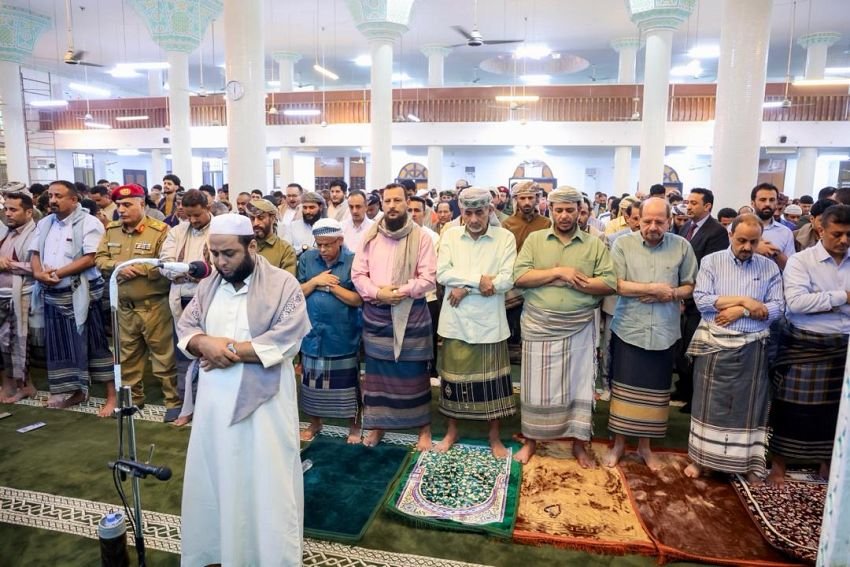
The ongoing conflict in Yemen, which began in 2014, has resulted in a devastating humanitarian crisis. The war, primarily between the internationally recognized government supported by a Saudi-led coalition and the Houthis, has left millions in need of assistance and displaced families throughout the country. The conflict has drastically altered the socio-political landscape of Yemen, leading to severe economic challenges and weakening of local governance structures.
Aden, once the capital of the People’s Democratic Republic of Yemen before the unification with the Yemeni Arab Republic in 1990, has emerged as the temporary capital of Yemen’s government amidst this civil strife. This city has witnessed considerable turmoil, yet it retains its strategic importance. The Presidential Leadership Council (PLC), formed in early 2022 to unify Yemen’s fragmented political factions, aims to stabilize governance in the region and steer the country towards peace.
Temporary Capital of Yemen
Eid al-Adha, or the “Festival of Sacrifice,” holds a special significance for Muslims around the world, marking the culmination of the Hajj pilgrimage and commemorating the willingness of Ibrahim (Abraham) to sacrifice his son as an act of obedience to God. This festival is characterized by communal prayers, sacrifices, and charitable giving, which serve to strengthen community bonds and alleviate the plight of the impoverished. The celebration in Aden reflects a semblance of normalcy amid a situation of conflict, underscoring a faith-filled aspiration for unity among the citizens.
On Wednesday, August 28, 2023, Eid al-Adha prayers took place at Al-Khair Mosque located in the Khormaksar district of Aden, attended by members of the Presidential Leadership Council, along with thousands of worshippers from diverse backgrounds. Dr. Abdullah al-Alimi, a member of the PLC, was present alongside Major General Mahmoud al-Subaihi and Prime Minister Dr. Shaya Zindani, emphasizing the governmental stature of the leaders amidst the celebrations.
Eid Prayers in Aden
The prayers attracted a large turnout of citizens, including prominent figures like Minister of Information Moammar al-Eryani and Aden’s Governor Abdulrahman Sheikh, showcasing government efforts to project stability and unity during significant Islamic celebrations. Attendees arrived as early as dawn, reflecting a shared dedication to faith and community.
The sermon delivered during the Eid prayers highlighted the core values of the occasion, such as sacrifice, generosity, and social cohesion within the community. It addressed the importance of assisting the less fortunate and cultivating a spirit of sharing among the populace. The preacher also emphasized the spiritual dimensions of the Hajj rituals, fostering a collective identity among Muslims engaged in worship.
Key stakeholders in this event included members of the Presidential Leadership Council, who have taken on increased responsibility in managing Yemen’s governance amid ongoing conflict. Dr. Abdullah al-Alimi, alongside his colleagues, represents the government’s attempt to reconnect with the populace during a pivotal moment of celebration and faith.
Government Stakeholders Present
Prime Minister Dr. Shaya Zindani’s presence symbolizes a collective governmental stance emphasizing resilience and hope within the greater context of adversity. Additionally, Minister of Information Moammar al-Eryani’s role indicates the government’s commitment to communicating a sense of normalcy in governance while reinforcing religious and cultural cohesiveness.
Moreover, local citizens, community leaders, and social figures played a crucial role in the gathering, contributing to a display of unity irrespective of class or political affiliations. Their collective participation in the prayers underlines the desire for peace and restoration in a region known for its socio-political fractures.
The celebration of Eid al-Adha in the temporary capital of Yemen, Aden, serves not only local interests but also holds implications for the broader Arabian Peninsula and the Middle East. In a time where the region grapples with political instability and sectarian divides, the communal prayers signal a shared identity and cultural heritage among Muslims that transcends national divisions.
Broader Regional Implications
Moreover, the attendance of high-ranking officials from various factions of the Yemeni government reflects concerted efforts to promote unity and collaboration, a necessary prerequisite for any potential political resolution. Such displays of solidarity could foster an environment conducive to dialogue and negotiations, not just within Yemen but also involving regional powers that have vested interests in the conflict resolution process.
The ideals of sacrifice and social justice articulated during the Eid sermons resonate with the overarching themes within the Arab world, especially as many countries face their own socio-economic challenges. The promotion of support for vulnerable populations may inspire similar initiatives in neighboring nations grappling with poverty and displacement due to their own conflicts.
The active participation of the government in religious observances like Eid al-Adha showcases a strategic maneuver to bolster legitimacy among Yemenis while aiming to heal divisions exacerbated by years of war. By demonstrating unity and commitment to Islamic values, officials strive to galvanize public support and restore faith in the capability of the leadership to govern amid arduous conditions.
Unity and Legitimacy Efforts
The themes of the sermon, emphasizing patience, giving, and compassion, resonate deeply within the context of Yemen’s ongoing crises, highlighting the necessity for collective efforts towards rebuilding communities and lives devastated by conflict. Such emphasis reflects the need for community-driven initiatives that uplift the impoverished, providing a moral compass for many citizens in need of social support.
Drawing lessons from the Eid observance can be essential for fostering a culture of diplomacy and collective responsibility, which is paramount in creating an agreement that works for all factions involved in the conflict. By focusing on shared religious values and community cohesion, the government might build a narrative able to transcend political divides and inspire hope for peace.
Following the Eid prayers, the hope may swell among citizens for tangible actions aligned with the values espoused during the celebrations. It will be crucial for government officials to translate the messages of generosity and support voiced during the Eid sermon into concrete policies aimed at improving the lives of the vulnerable. Practical initiatives would include welfare programs, food assistance, and efforts to rebuild community infrastructure, which can respond to the urgent needs of war-impacted families.
Continued governmental engagement in communal and cultural activities, such as Eid, can contribute to strengthening social cohesion and fostering an environment conducive to dialogue in conflict resolution. Observers will be watching to see if the PLC can capitalize on this momentum to jumpstart negotiations with various factions to lay the groundwork for a more comprehensive peace process.
Nevertheless, the situation in Yemen remains fluid, with persistent challenges surrounding security, humanitarian access, and the entrenched positions of various armed groups. Stakeholders’ ability to navigate these complexities while maintaining public trust is paramount for advancing the political landscape beyond mere celebrations, leading towards a lasting peace agreement.
About the Author




