Presidential Leadership Council Member Al-Arada Joins Worshippers for Eid Al Adha
 Yemen Herald News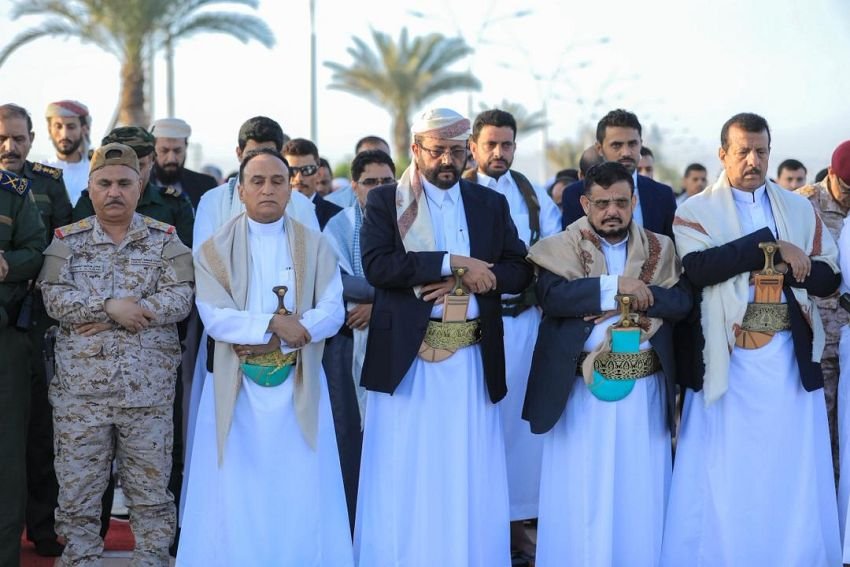
The observance of Eid al-Adha in Yemen holds historical and cultural significance, particularly in the context of ongoing conflict and sociopolitical instability that has gripped the nation since 2015. Historically, Marib is a city that has played a crucial role in Yemen’s political landscape, serving as a key administrative and military hub. It is often recognized for its strategic position as it relates to both the government forces and the Houthis. Despite the protracted war, Eid al-Adha has remained a celebrated occasion among Yemenis, symbolizing resilience and spiritual strength amidst adversity.
Eid al-Adha, known as the “Festival of Sacrifice,” commemorates the willingness of Prophet Ibrahim to sacrifice his son in obedience to God. It showcases themes of faith, unity, and sacrifice and is marked by communal prayers, the act of sacrifice, and generosity towards those less fortunate. In a country like Yemen, facing daily challenges from war, famine, and economic downturns, the significance of such rituals is amplified as they provide a moment for unity and shared reflection on faith and community values.
Significance of Eid al-Adha
On Wednesday morning, Major General Sultan al-Arada, who serves as both a member of the Presidential Leadership Council and the Governor of Marib, led the Eid al-Adha prayers attended by a substantial number of worshippers in Marib city. Among the attendees were prominent political figures such as Deputy Speaker of the Shura Council Abdullah Abu al-Ghaith and Major General Mohammed al-Houri, Governor of Raymah. The gathering included members from various government sectors and military officials, illustrating the communal aspect of this sacred day.
The event commenced with communal prayers followed by an Eid sermon. The sermon articulated the virtues of Eid al-Adha and elaborated on the significance of the Hajj pilgrimage—one of the five pillars of Islam. Key themes of the sermon were the importance of unity, equality, and devotion, underscoring the values that Hajj embodies and reflects on both personal and societal levels.
Al-Arada’s remarks during the sermon emphasized the need for social cohesion, encouraging citizens to incorporate the lessons from Hajj into their daily lives by promoting national unity, combating division, and working collectively towards achieving stability. He interpreted these duties as essential components for rebuilding the nation, where shared responsibility among all citizens and government entities plays a critical role.
Calls for Unity
The event witnessed a significant presence of political and military figures, highlighting the interconnectedness of governance, security, and religious observance in Yemen. Major General Sultan al-Arada’s role is pivotal as he embodies the current government’s leadership in a region that has seen a mixture of resistance and cooperation. His emphasis on communal values during a celebration of faith aims to resonate with the citizens of Marib and encourage a unified front against the challenges the country faces.
Deputy Speaker of the Shura Council Abdullah Abu al-Ghaith echoed sentiments of solidarity and collective responsibility during his attendance at the event. His participation is indicative of a continued alliance between various branches of government and local leaders, which is vital for fostering peace in a fragmented society. The presence of military and security commanders further underscores the importance of maintaining law and order in a region that has experienced escalated conflict.
Political Solidarity
In contrast, the ongoing war between the Houthis and the internationally recognized Yemeni government complicates the socio-political dynamics in the region. The prevailing uncertainty and conflict contribute to the challenges facing the engagement of citizens in communal activities, yet observances like Eid al-Adha are instrumental in maintaining the social fabric and resilience in the face of adversity.
The implications of Eid al-Adha celebrations in Marib extend beyond local communities, resonating throughout the Arabian Peninsula and the greater Middle Eastern region. Yemen’s ongoing conflict has had a significant impact on regional stability, with neighboring countries monitoring its developments closely. The events surrounding Eid al-Adha, therefore, become symbolic, representing not only religious dedication but also a call for peace and collective healing in a war-torn nation.
Regional Implications
This year’s celebrations come amidst an atmosphere where national identity and cohesion are increasingly necessary. Sectors of the Middle East have been entangled in similar existential struggles characterized by sectarianism and internal conflicts. The shared Islamic rituals of Eid are a source of hope that transcends such divisions, and as such, Marib’s observance may act as a microcosm reflecting the greater yearning for unity across the region.
Amidst various peace efforts, regional actors’ responses to Yemen’s sectarian and political complexities remain critical. Observations made during significant cultural and religious festivities can influence perceptions and policies regarding conflict resolution across the Arabian Peninsula. Celebrations like Eid al-Adha demonstrate that despite profound divisions, the yearning for unity and stability resonates within and beyond Yemen’s borders.
Celebrating Eid al-Adha in Marib symbolizes more than religious observance; it represents an affirmation of resilience and community amidst adversity. Major General al-Arada’s presence as a leader during the prayers reinforces the role of faith in confronting the multitude of challenges facing Yemen. The sermon served not only to commemorate traditional practices but also as a platform to galvanize the community towards collective responsibility and social stability.
Resilience and Community
Promoting values like cooperation and solidarity through such religious observances can inspire hope and motivate citizens to actively engage in the peace-building process. The laments of everyday people echo the aspirations articulated during the sermon; citizens are seeking a semblance of normalcy and a future where national unity can flourish beyond sectarian and political divides.
Moreover, the involvement of various political and military leaders signifies a potential shift towards reconciliation, emphasizing that effective governance is intertwined with religious and cultural practices. Henceforth, communal gatherings might serve as touchpoints for intergroup dialogue, fostering understanding and respect among diverse factions within Yemen, making these rituals of significance not only for religious adherence but for sociopolitical unity as well.
As Yemen continues to observe significant cultural moments like Eid al-Adha, the nation’s path forward will likely hinge on how well leaders leverage communal sentiments towards building peace. In the coming months, the impact of collective acts of faith may depend on the ongoing dialogues among political and military leaders regarding strategies for reconciliation and unity.
Moreover, it will be essential to monitor the evolving role of religious and community leaders in promoting peace. Their ability to foster connections between citizens and the government will play a crucial role in the attempt to bridge gaps exacerbated by years of conflict. The lessons derived from the Eid celebrations, particularly in terms of national solidarity and public morality, could inspire grassroots initiatives aimed at supporting peaceful coexistence.
Lastly, citizens and leaders alike should remain vigilant against negative phenomena that hinder social cohesion. Encouraging dialogues to combat division and hatred will be critical, as will the need for a cohesive strategy to improve security and welfare in the region. The lessons from Eid al-Adha must not only echo in religious practices but must translate into actionable steps toward a more stable Yemen where national unity flourishes.
About the Author