The Prime Minister and the Indian Ambassador emphasize the need for convening a joint committee.
 Yemen Herald News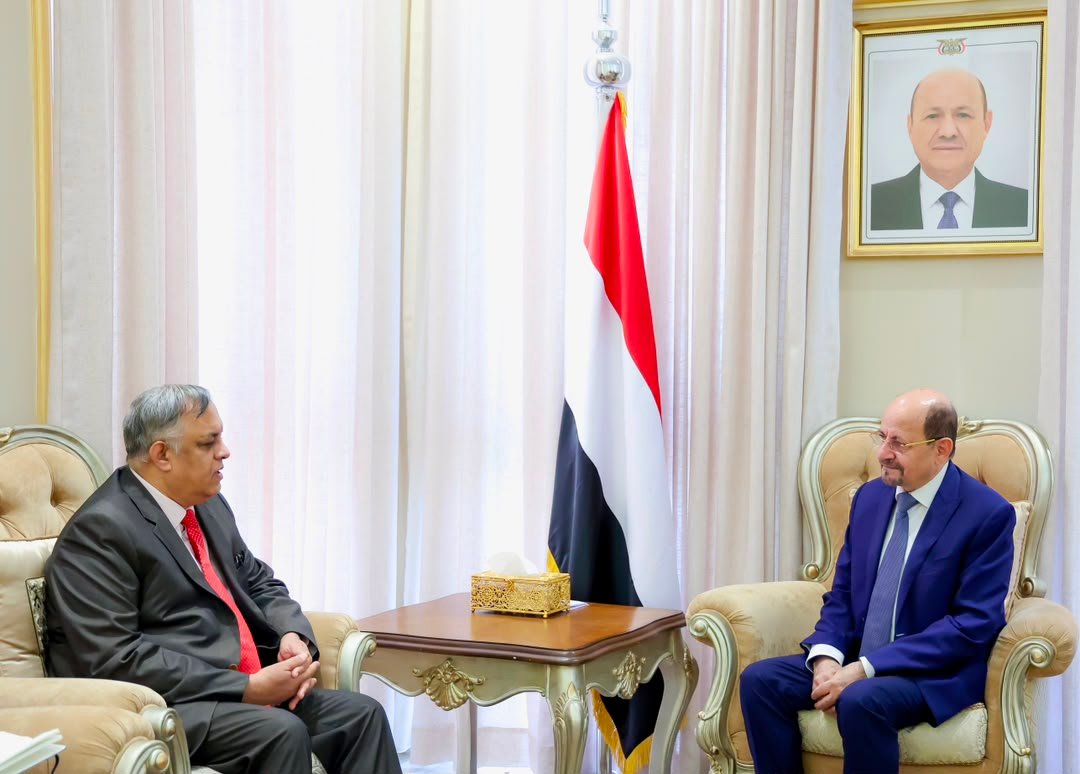
The Republic of Yemen, located at the southern tip of the Arabian Peninsula, has faced an ongoing civil war since 2015, leading to one of the world’s most severe humanitarian crises. The conflict began when the Houthi movement, an armed group originating from the northern parts of the country, seized control of the capital, Sana’a. This insurgency provoked a military response from a Saudi-led coalition, which aimed to restore the internationally recognized government headed by President Abdrabbuh Mansur Hadi. As a result, Yemen has witnessed unprecedented violence, economic turmoil, and widespread displacement, with over 18 million people in need of humanitarian assistance and approximately 4.5 million individuals forced to flee their homes.
During this tumultuous period, the country has also been deeply affected by health crises, including recurrent outbreaks of cholera, measles, and other diseases. The pervasive instability not only threatens the well-being of Yemenis but also poses significant challenges to the region’s security dynamics. The Red Sea and Bab al-Mandab Strait are crucial waterways for global trade, and the ongoing conflict has implications for neighboring countries, leading to heightened tensions between regional powers, such as Iran and Saudi Arabia, each backing different factions within Yemen.
Amidst these challenges, Yemen has sought to bolster its international relationships to aid recovery and stability. This includes engaging with nations like India, which has expressed a commitment to support Yemen amidst its struggles. The growing partnership could serve as a vital lifeline, providing economic opportunities and formal collaborations at a time when the country is navigating the tumultuous waters of war and uncertainty.
Recently, Dr. Shaya Zindani, who holds dual roles as Yemen’s Prime Minister and Foreign Minister, met with the Indian Ambassador to Yemen, Dr. Suhel Ajaz Khan, in Riyadh. The discussion primarily focused on enhancing bilateral relations between Yemen and India, delineating strategies to strengthen partnerships across multiple sectors, including economic, cultural, and investment fields. This meeting aligns with Yemen’s broader goal of fostering international collaborations to stabilize and develop its economy, which has been significantly impacted by years of conflict.
One of the central themes of their discussion was the necessity to reconvene the Yemeni-Indian Joint Committee, which would facilitate the activation of existing agreements and promote further economic exchanges. Both leaders underscored the importance of exploring new avenues for cooperation, indicating a mutual interest in enhancing trade and investment opportunities. Dr. Zindani highlighted the Yemeni government’s commitment to advancing its relationship with India, which dates back to a time before the civil war unfolded.
Ambassador Khan reciprocated the sentiment, signaling India’s determination to nurture the friendship and economic ties with Yemen. India’s role in Yemen has been marked by a supportive stance, with potential investments across various sectors being highly beneficial for the Yemeni economy. The discussions also factored in regional and international developments that could intersect with Yemen’s internal dynamics, showcasing a nuanced understanding of the geopolitical landscape.
The primary stakeholders in the Yemeni-Indian meeting were Dr. Shaya Zindani and Dr. Suhel Ajaz Khan, representing their respective governments. Dr. Zindani, overseeing both foreign and domestic policies, is vital in steering Yemen’s foreign relations, especially during this challenging period. His emphasis on strengthening ties with India suggests a strategic move toward diversifying Yemen’s international partnerships and reducing dependency on traditional allies.
On the Indian side, Ambassador Khan plays a crucial role in representing India’s interests and fostering bilateral relations with Yemen. His reaffirmation of India’s commitment to further cooperation indicates New Delhi’s interest in not only humanitarian support but also economic engagement that can unfold in various sectors, particularly given India’s historical ties and diaspora presence in Yemen.
Additionally, other stakeholders include local Yemeni businesses that could benefit from increased trade with India, as well as international investors looking at Yemen as a potential market post-stabilization. Concurrently, regional powers like Saudi Arabia, which leads the coalition against the Houthis, may also be watching these developments closely as they could impact the geopolitical landscape in the Arabian Peninsula.
Lastly, the Yemeni populace, which has faced the brunt of the ongoing conflict, represents the ultimate stakeholder. Their access to resources, stability, and economic opportunities hinges on the effectiveness of such international partnerships. Thus, the outcomes of these discussions hold significant implications for the everyday lives of Yemenis.
The revitalization of relations between Yemen and India has broader implications for the region’s geopolitical dynamics. Historically, India has maintained a neutral stance in the Yemeni conflict, avoiding taking sides while focusing on humanitarian aid and developmental support. This approach positions India as a potential mediator, fostering peace and stability in the war-torn nation. Strengthening Yemeni-Indian relations could lead to a more diversified international support network for Yemen, reducing the country’s heavy reliance on immediate regional powers like Saudi Arabia.
The Bab al-Mandab Strait holds strategic importance not just for Yemen but for global maritime trade routes. Enhanced cooperation between Yemen and India could lead to joint initiatives that protect maritime security, especially against piracy and other threats that could arise from the chaos of civil unrest. With India expanding its naval presence in the Indian Ocean and the Red Sea, this partnership may open avenues for collaborative security measures aimed at ensuring safe passage for commercial vessels traversing these waters.
Moreover, India’s investment in Yemen could encourage other nations to participate in rebuilding efforts, potentially fostering a cooperative environment that balances the influence of regional adversaries, particularly Iran. Given India’s growing presence in the Middle East, this partnership could serve as a counterbalance to Iranian influence, particularly in light of its support for the Houthis.
The potential economic ties between the two nations might also contribute to the stabilization of Yemen’s economy, which is vital for restoring peace. By promoting trade and investments, both countries can work together to generate employment, address food security, and improve overall living conditions for Yemenis, contributing to a more stable and harmonious regional environment.
The meeting between Dr. Zindani and Ambassador Khan signals a positive shift in Yemen’s foreign policy approach amidst a backdrop of chaos. By actively seeking to deepen its relations with India, Yemen is attempting to leverage its historical ties in a contemporary context, navigating the complexities of international diplomacy while seeking avenues for recovery and growth.
Restoring economic ties with India could have significant benefits for Yemen, especially if investments materialize in critical sectors. This collaboration could revitalize Yemen’s agricultural, fisheries, and service industries, providing newfound opportunities for gainful employment and setting the stage for longer-term economic recovery. Historical ties between the two nations may facilitate smoother negotiations and collaborations, allowing Yemen to capitalize on Indian expertise in technology and infrastructure development.
However, the challenges that persist due to the civil war, including the fragmented political landscape and ongoing violence, cannot be overlooked. The Yemeni government’s ability to effectively engage in cooperative ventures will depend significantly on achieving a degree of stability and a cessation of hostilities, which remains an ongoing concern. Without addressing the root causes of the conflict and making strides toward peace, economic initiatives may yield limited results.
Furthermore, while India’s positioning in the Yemeni context appears supportive, the geopolitical complexities, including relations with Iran and other regional stakeholders, may impact the effectiveness of collaboration. A balanced approach that respects regional dynamics while fostering Yemeni sovereignty will be crucial to ensuring that this partnership is beneficial and sustainable.
In the immediate term, the priority will be to reconvene the Yemeni-Indian Joint Committee to outline a roadmap for the proposed initiatives and partnerships. Both nations will likely work on scheduling meetings that involve various stakeholders, including businesses and ministries from both sides that can contribute to the agenda of mutual interest. Establishing a timeline and clear objectives will be essential for maximizing the outcomes of these discussions.
Additionally, the Yemeni government must continue its efforts to secure internal stability. This may involve engaging with various factions within Yemen to ensure that they are on board with the proposed collaborative frameworks. A unified political front will be critical to attract international investments and partnerships, as potential investors often look for a stable and predictable environment before committing resources.
As dialogues between Yemen and India progress, monitoring how these partnerships develop will be crucial. Future discussions may encompass cultural exchanges, educational programs, and technology transfers, potentially expanding beyond economic ties into other areas of collaboration. Both nations have much to gain from these relationships, but strategic diplomacy and sustained efforts will be essential for success.
Ultimately, the future trajectory will depend on a convergence of conducive internal dynamics within Yemen, a supportive international community, and sustained efforts to maintain regional peace. This nuanced approach may pave the way for an era of recovery and prosperity for Yemen, leveraging its historical ties with India in the face of ongoing challenges.
About the Author