Under armed guard and political tension, Iran’s World Cup camp unfolds in Tijuana.
 Yemen Herald News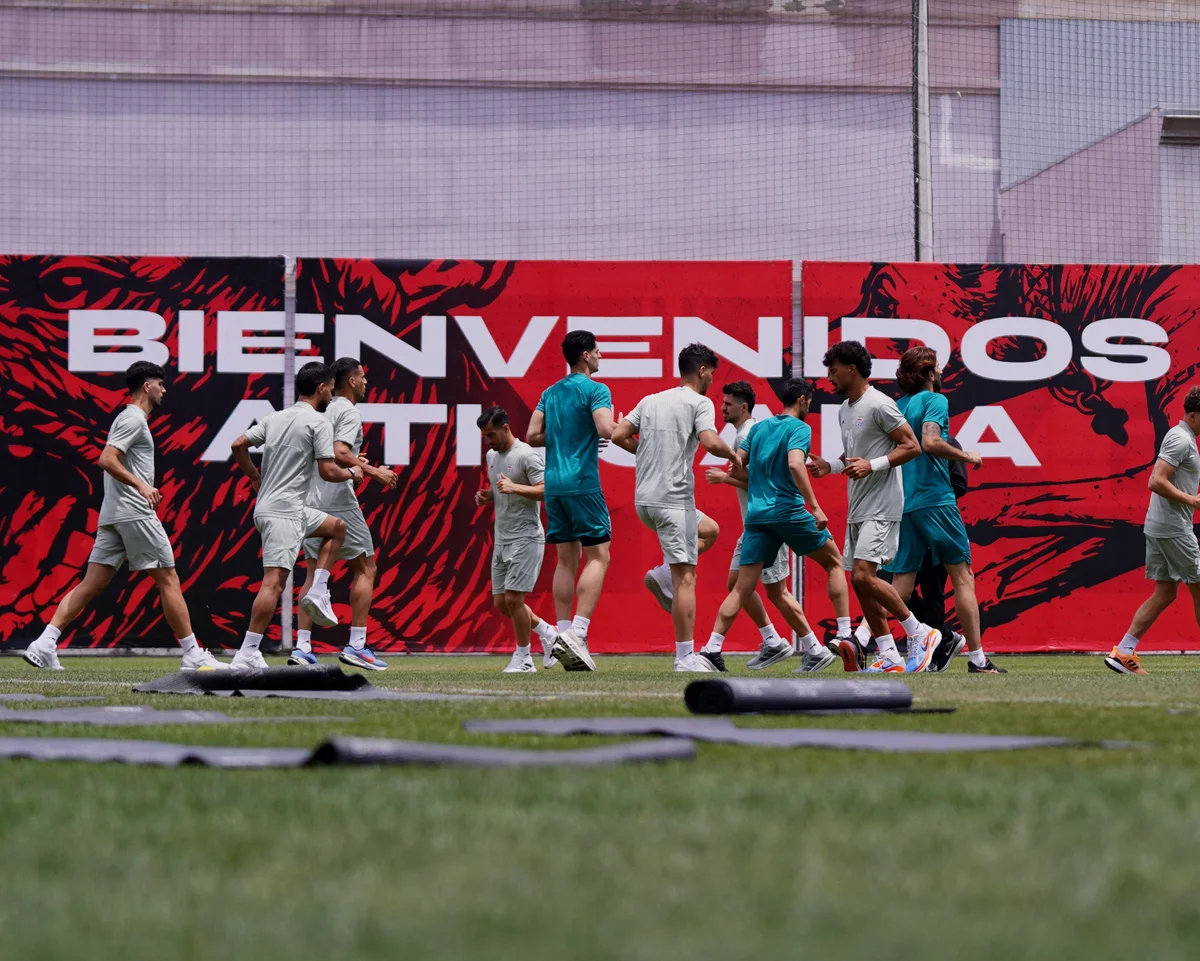
The Iranian national football team finds itself in a complex and challenging situation as they prepare for its participation in the World Cup. Initially slated to base themselves in Tucson, Arizona, the team had to rapidly change plans due to the escalating political tensions following a series of attacks on Iran. The shift to Tijuana, Mexico, has led to a significant adjustment for the players and staff, as they navigate not only the rigors of preparation for the tournament but also the heightened security concerns stemming from the political climate back home.
Upon their arrival in Tijuana, the team was met with an extensive security presence. Open-top trucks outfitted with heavily armed guards patrol the vicinity of the Estadio Caliente, ensuring the safety of the players and staff amid a volatile backdrop. The training facilities, which are less than ideal due to a single pitch with natural grass, have been hastily prepared by Club Tijuana staff, who have had to adapt to the sudden change of plans with minimal notice. The urgency of this situation is evident as the staff works long hours to ensure that the training environment is suitable for one of Asia’s top football teams.
Despite the challenges posed by the political unrest and logistical hurdles, the Iranian team has received a warm welcome from the local Mexican community. Fans have gathered outside their hotel to offer support, creating an encouraging atmosphere for the players. The contrasting reactions from fans highlight the complexities of the Iranian team’s position, caught between political tensions at home and a supportive host nation eager to cheer them on as they compete on the world stage.
The Iranian national team, also known as Team Melli, is making its fourth consecutive appearance in the World Cup, signifying a notable achievement for the squad. However, their journey to this tournament has not been without its complications. The team is currently positioned as a pariah on the international stage, primarily due to the political situation in Iran. The ramifications of this status are felt in their preparations, including the difficulty in arranging competitive matches against other teams, evidenced by the abrupt cancellation of a friendly against Grenada.
As the team gears up for their opening match against New Zealand, they are in a delicate situation, facing immense pressure not only from their fans but also from the political landscape that surrounds them. Their training sessions have been closely monitored, and access to the players has been restricted, further complicating their ability to engage with the media and fans. The federation has opted for a cautious approach, limiting exposure for the players amidst fears of backlash from various factions within Iranian society.
Additionally, the team’s recent performance against the Under-21 squad of Club Tijuana, which resulted in a 3-0 victory, serves as a positive sign as they prepare for the World Cup. However, the lack of strong competition leading up to the tournament raises questions about their readiness to face more formidable opponents. The team’s preparations, while marred by external pressures, are focused on ensuring they are physically and mentally prepared to make an impact in the competition.
The Iranian national squad features a mix of seasoned professionals and emerging talents, with players who have experience in various leagues around the world. Notable figures include forwards like Mehdi Taremi, who plays for a prominent European club and has consistently been one of the standout performers for the national team. This blend of experience and youth is crucial for a team that aims to advance beyond the group stages of the tournament, a feat that has eluded them in previous World Cup appearances.
The cultural and political backdrop significantly influences the players, many of whom are aware of their dual role as athletes and ambassadors for their country. They face the challenge of representing a nation that is deeply divided in its support for the team, with contrasting sentiments emerging from different segments of the population. While some fans express pride and enthusiasm for the team’s achievements, others criticize the players for representing a regime they oppose, creating an environment of heightened scrutiny surrounding the team’s performance and actions.
Additionally, the logistical issues surrounding their training and accommodations have not gone unnoticed. The abrupt relocation to Tijuana has led to challenges in accessing quality training facilities, which are essential for a team preparing for the rigors of the World Cup. The reliance on a single natural grass pitch, coupled with tight security measures, has forced the team to adapt quickly, showcasing their resilience in the face of adversity.
The Iranian team’s tactical approach will be critical as they look to maximize their potential in the tournament. Under the guidance of their coaching staff, the players are expected to employ a strategy that leverages their strengths while mitigating weaknesses exposed in previous competitive outings. The emphasis will likely be on solid defensive organization and quick transitions, as the team aims to capitalize on counter-attacking opportunities against more dominant opponents.
In terms of competitive readiness, the lack of high-level friendlies leading up to the tournament raises concerns about their ability to perform against teams with more robust preparation. The recent victory against the Club Tijuana Under-21 side, while positive, does not provide a comprehensive measure of their readiness to face teams like New Zealand. The coaching staff must find ways to instill confidence in the players and ensure that they are tactically sound and mentally prepared for the challenges ahead.
Moreover, the political climate surrounding the team could impact their performance on the pitch. Players may feel the weight of expectations from fans who view their success as a form of resistance against oppression. Conversely, the pressure of navigating the political implications of their participation in the World Cup could lead to performance anxiety. Successfully managing this mental strain will be crucial for the team as they strive for success in the tournament.
The Iranian national team’s journey to the World Cup is emblematic of the broader struggles faced by athletes from politically charged nations. The juxtaposition of their welcome in Tijuana against the backdrop of international isolation highlights the complexities athletes face when representing their countries on the global stage. While they aim to showcase their footballing talents, the political ramifications of their presence loom large, creating a challenging environment for the players.
As the team prepares to take the field, the societal divisions within Iran regarding the regime and its policies are likely to amplify the scrutiny they face. This duality complicates the players’ experiences, as they navigate the expectations of fans who have differing views on what their participation signifies. For some, the team represents hope and national pride, while for others, they are a symbol of the regime’s oppression. Balancing these expectations while focusing on football will be a significant hurdle for the players.
Additionally, the logistical challenges presented by their training environment and security protocol further complicate their preparations. The need for heightened security amidst political tensions can detract from the focus required for peak performance. Players must find ways to concentrate on their training and maintain a positive atmosphere despite the external pressures that threaten to derail their focus.
Looking ahead, the Iranian national team must quickly adapt to its new environment and the pressures that come with competing on a global stage. Their opening match against New Zealand will serve as a crucial test of their readiness, not just in terms of tactics but also in their ability to cope with the myriad challenges that have defined their lead-up to the tournament. A strong performance could provide much-needed momentum and boost morale amid a challenging backdrop.
As they prepare for their press engagements and subsequent matches, the team will need to establish a clear communication strategy that allows them to engage with fans and media without compromising their safety or the political sensitivities surrounding their participation. The federation must navigate this delicate balance to foster a supportive environment that enables the players to perform at their best.
Ultimately, the Iranian team’s success in the World Cup will depend on their ability to harness the support they have received from the local community while managing the pressures stemming from their political context. If they can channel their experiences into a cohesive team performance, they may not only achieve their sporting goals but also provide a moment of unity and pride for a nation grappling with division and strife.
About the Author