Shura Council Speaker Bin Daghr Represents Yemen at Arab Parliament Conference in Cairo
 Yemen Herald News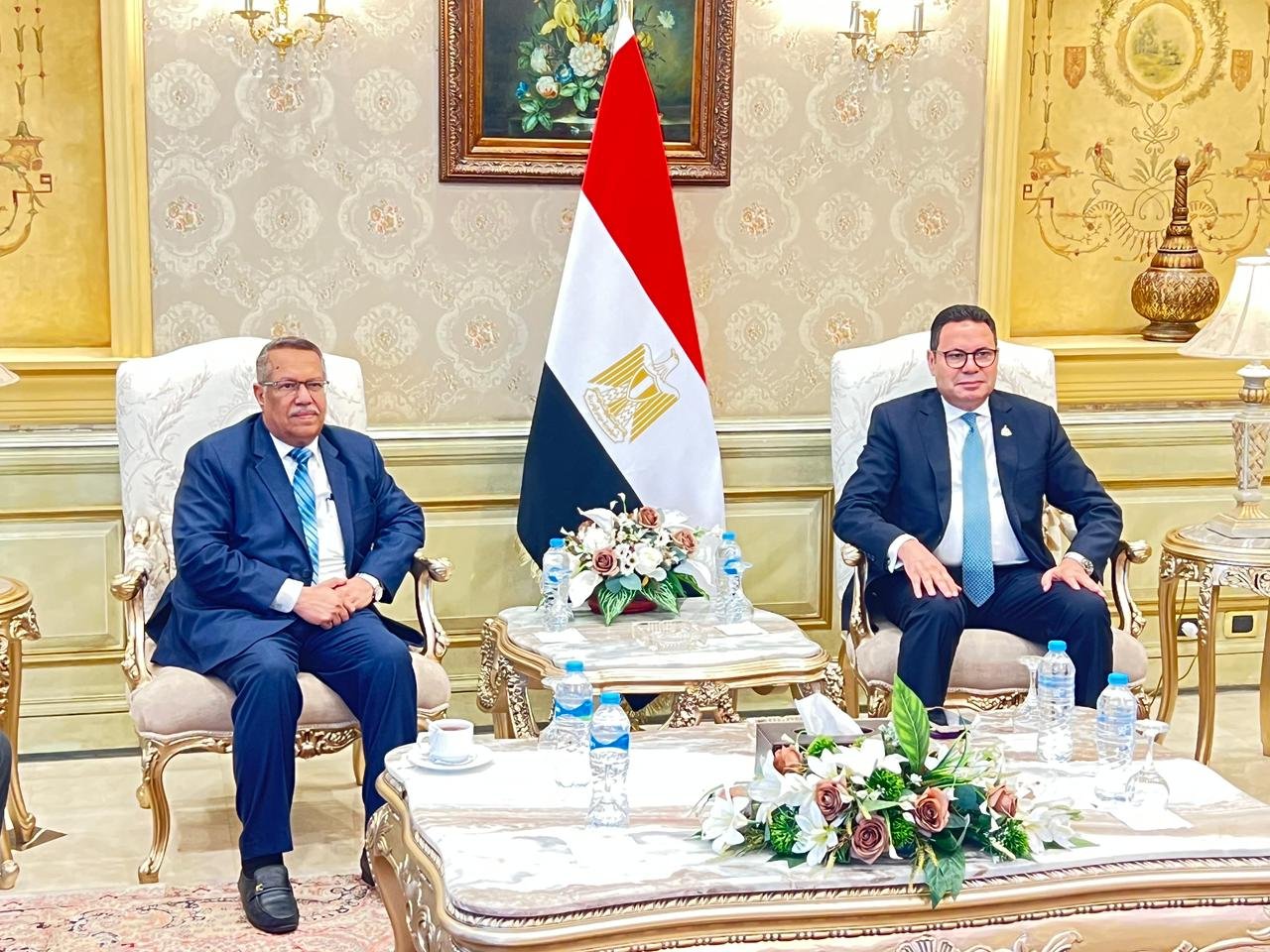
Yemen’s Shura Council Speaker, Dr. Ahmed Obaid bin Daghr, has arrived in Cairo to represent his country at the eighth conference of the Arab Parliament and the Speakers of Arab Councils and Parliaments, a gathering that brings together senior legislative figures from across the Arab world. He was accompanied by his deputy, Dr. Abdullah Abu al-Ghaith, and the delegation was received at Cairo International Airport by the Deputy Speaker of the Arab Parliament, Major General Hisham al-Hosary, a member of Egypt’s House of Representatives, alongside officials from the Arab Parliament’s General Secretariat.
The conference convened on Saturday at the headquarters of the League of Arab States in Cairo, the institutional home of pan-Arab diplomacy since the organisation was founded in 1945. By assembling the speakers of national parliaments and consultative councils, the meeting is intended to coordinate legislative positions on the questions Arab governments regard as most pressing and to project a sense of shared purpose at what organisers described as a critical and exceptional stage for the region.
Organisers built the agenda around three principal strategic concerns. The first was the formulation of a unified Arab stance to preserve the security, stability and sovereignty of Arab states in the face of external aggression, a theme that has gained urgency amid recent attacks on countries in the region. The second centred on developments in the occupied Palestinian territories, the issue most consistently capable of uniting Arab legislators and one that continues to dominate regional diplomacy. The third addressed the strengthening of Arab digital sovereignty and the protection of national privacy in an era of rapid technological change.
The inclusion of digital sovereignty marks a comparatively new priority for a forum of this kind, reflecting growing concern across the region about data, communications networks and critical electronic infrastructure. Placing the issue alongside long-standing questions of security and the Palestinian cause suggests that Arab legislative bodies increasingly view control over technology and information as a matter of national sovereignty, not merely a technical or commercial concern.
For Yemen, attendance at such a gathering is more than a diplomatic formality. The country has endured years of conflict since 2015, when the Houthi movement advanced on the capital, Sanaa, and forced the internationally recognised government to relocate, prompting a Saudi-led coalition to intervene in support of the recognised authorities, which subsequently based their operations in the southern port city of Aden. The war has produced one of the world’s most severe humanitarian crises, leaving much of the population dependent on aid and many displaced from their homes.
Against that backdrop, the presence of senior Yemeni legislators at a pan-Arab conference signals an effort by the internationally recognised authorities to maintain Yemen’s standing within Arab institutions, to keep the country’s case before regional partners, and to seek continued political and economic backing. Yemeni officials have repeatedly used such platforms to argue that stability in Yemen is bound up with the security of the wider region, including the strategic waterways of the Red Sea and the Bab al-Mandab strait, through which a large share of global shipping passes.
Bin Daghr himself is a familiar figure in Yemeni public life, having served in senior government roles, including as prime minister, before taking up the leadership of the Shura Council. His appearance in Cairo places a prominent member of the recognised government’s institutions at the centre of a high-profile regional event, reinforcing the message that Yemen’s representative bodies continue to function and to participate in collective Arab decision-making despite the pressures at home.
The Shura Council, the consultative upper chamber of Yemen’s legislature, has historically advised on legislation and national policy and reviewed the work of government. Its continued representation at regional events helps the recognised authorities assert the continuity of the country’s constitutional institutions at a time when governance has been fragmented by years of war and competing centres of power.
The choice of Cairo as host underlines Egypt’s enduring role as a hub of Arab diplomacy. As the seat of the League of Arab States, the city has hosted countless summits and ministerial meetings over the decades, and its selection for the speakers’ conference reflects the continued centrality of Egyptian institutions to pan-Arab coordination. For visiting delegations, the setting offers both symbolic weight and practical access to the networks where collective Arab positions are shaped.
Gatherings of parliamentary speakers do not, on their own, produce binding decisions in the way that executive summits or ministerial councils can. Their value lies instead in coordination: aligning legislative agendas, issuing joint statements and building consensus that national parliaments can later translate into law or policy. For a body such as the Arab Parliament, which functions as a consultative institution, the conference is an opportunity to articulate shared priorities and to press member states toward common positions on the issues before them.
What concrete resolutions emerge from the eighth conference will become clearer once the speakers conclude their deliberations. For Yemen, the immediate value of attendance lies in visibility and engagement, a demonstration that, despite the pressures at home, its representative institutions continue to take part in collective Arab decision-making and to advocate for the country’s interests alongside its regional peers. Sustained participation in such forums forms part of the government’s broader strategy of keeping Yemen’s plight, and its claims to legitimacy, firmly on the regional agenda.
About the Author