Yemeni Parliamentary Leaders Press for Joint Arab Defense at Cairo Speakers’ Conference
 Yemen Herald News
Yemen’s senior legislators took a prominent role at the eighth Conference of the Arab Parliament and the Speakers of Arab Councils and Parliaments, a gathering convened in Cairo to confront a widening set of security and political crises facing the region. Representing Yemen were Sheikh Sultan al-Barakani, Speaker of the House of Representatives, and Dr. Ahmed Obaid bin Daghr, Chairman of the Shura Council. Both used the platform to argue that the Arab world is passing through one of its most precarious periods in years, and both pushed for legislative bodies to move beyond declarations of solidarity toward practical, coordinated action on shared threats.
In his address, al-Barakani described the condition of the Arab nation as critical and called for a unified approach to challenges that he said threaten the stability and sovereignty of member states. He pointed to the rise in armed conflict across the region and to what he characterized as the lengthening shadow of foreign interference. Recalling warnings he had voiced in earlier years about the consequences of external intervention, he argued that those concerns had only grown more relevant as hostilities spread and as attacks attributed to hostile actors continued to unsettle several Arab capitals.
A central element of al-Barakani’s remarks was a proposal for stronger collective security arrangements. He suggested the establishment of a joint Arab defense mechanism and a rapid intervention capability dedicated to protecting the territorial integrity and internal security of member states. The idea reflected a recurring theme of the conference, where speakers repeatedly stressed that individual national responses were no longer adequate to address cross-border threats. He framed coordinated defense not as an abstract aspiration but as a structure that parliaments could help legislate and fund, giving political weight to security cooperation among governments.
Dr. Ahmed Obaid bin Daghr echoed the urgency, focusing on what he described as the existential dangers confronting the Arab world. He placed the Palestinian question at the center of his intervention, reaffirming that durable peace must begin with an end to occupation and recognition of Palestinian rights to sovereignty and statehood. For bin Daghr, the Palestinian cause remained the clearest test of whether Arab solidarity could translate into a unified position, and he urged fellow parliamentarians to keep it at the forefront of regional diplomacy rather than allowing it to be eclipsed by other crises.
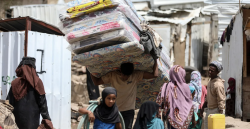
The Yemeni speakers also drew attention to the conflict in their own country, which has endured years of war and a severe humanitarian emergency. Bin Daghr highlighted the role that regional partners and coalition support have played in preventing the collapse of Yemeni state institutions, and he expressed gratitude for assistance extended by other Arab nations during the crisis. He acknowledged that millions of Yemenis remain in acute need of humanitarian support amid continued instability, and he tied the country’s plight to the broader pattern of interference and proxy conflict that participants said was destabilizing multiple states across the region.
Beyond traditional security concerns, the conference gave notable attention to the idea of digital sovereignty. Speakers argued that protecting national information systems, communications networks and data has become as important to sovereignty as defending physical borders. The theme reflected a growing recognition among Arab legislative bodies that modern threats are not confined to the battlefield, and that coordinated policy on technology and cybersecurity should sit alongside conventional defense planning. Participants framed this as an area where parliaments, through legislation and oversight, could make a tangible contribution to regional resilience.
Delegations from across the Arab world reinforced these messages. Representatives associated with the Arab Inter-Parliamentary Union called for solidarity that goes beyond rhetoric and is expressed through workable frameworks capable of countering aggressive policies by both state and non-state actors. Saudi participants stressed the importance of stronger parliamentary coordination, while other speakers emphasized that a cohesive Arab response to external pressure would require sustained institutional cooperation rather than one-off summits. The repeated insistence on actionable mechanisms underscored a shared frustration with declarations that are not followed by implementation.
The Cairo gathering closed with participants underlining that the timing of the conference was significant given the turbulence affecting the region, from military confrontations to political upheaval. Speakers presented the unresolved Palestinian issue and the spread of conflict, including in Yemen, as intertwined challenges that could perpetuate cycles of violence if left unaddressed. The proposals for joint defense, rapid intervention and digital sovereignty offered a possible roadmap, though their impact will depend on follow-through by governments. For Yemen’s delegation, the conference was an opportunity to keep the country’s humanitarian and security concerns visible within a wider Arab debate about unity, reform and collective protection.
The Arab Parliament, the legislative body affiliated with the League of Arab States, has convened its speakers’ conferences as a recurring forum intended to harmonize the positions of national assemblies across the region. Earlier sessions in the series have similarly grappled with the war in Yemen, the Palestinian question and the security of the Gulf, and the body has repeatedly voiced support for a comprehensive political settlement in Yemen. By returning to these themes, the Cairo meeting placed the latest Yemeni interventions within a longer institutional effort to coordinate parliamentary diplomacy rather than treating them as isolated appeals.
The humanitarian backdrop lent additional weight to the Yemeni delegation’s message. Years of conflict have left the country facing one of the world’s most severe humanitarian emergencies, with large portions of the population dependent on aid for food, health care and basic services. Against that reality, the speakers’ emphasis on collective Arab action carried a practical dimension: continued regional support, stable institutions and a negotiated end to the fighting are widely seen as prerequisites for any meaningful recovery. The conference thus served both as a diplomatic stage and as a reminder of the stakes for ordinary Yemenis.
About the Author