Donors Add Nearly $38 Million to Yemen’s 2026 Aid Plan, but a Vast Funding Gap Remains
 Yemen Herald News
International donors have increased their financial support for Yemen in recent weeks, contributing close to $38 million toward the country’s Humanitarian Needs and Response Plan for 2026. The new money lifted the total received for the plan to roughly $240.5 million, up from about $202.6 million reported at the end of March. The additional contributions reflect continuing global concern for the severe conditions endured by millions of Yemenis affected by years of conflict and its long aftermath, even as the resources fall well short of what is required.
Looking at the wider funding picture, overall support directed at Yemen also rose during the same period, climbing from approximately $221.2 million to around $259.1 million. Yet not all the indicators were encouraging. Funding channeled outside the formal response plan remained flat at about $18.6 million, a figure that sits far below the $86.9 million that had been pledged. That shortfall between promises and delivered assistance points to a persistent challenge that can undermine the ability of humanitarian organizations to plan and respond effectively.
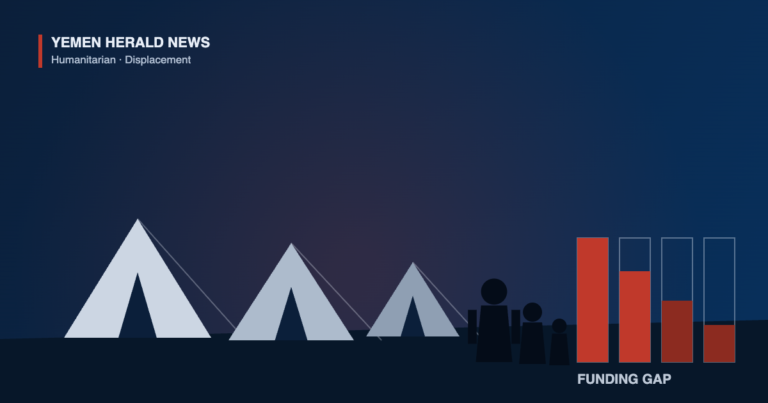
These sums, while significant in isolation, appear modest against the true scale of the need. The 2026 response plan calls for around $2.16 billion to reach roughly 12 million people across the country, including some 9.4 million prioritized for targeted assistance based on the severity of their circumstances. By that measure, the funding received so far covers only a small fraction of the requirement, a little over a tenth, leaving a vast gap that aid agencies must somehow bridge if they are to sustain their operations through the year.
The stakes of that gap are measured in human terms. Nearly a decade of war has left Yemen contending with widespread hunger, recurrent disease outbreaks and mass displacement, with around 4.8 million people forced from their homes. Essential services have been battered, and many families struggle to obtain food, clean water and medical care. As the crisis grinds on, humanitarian agencies are repeatedly forced to do more with less, stretching diminishing resources across a population whose needs continue to mount rather than recede.
The difficulties are compounded by the complex dynamics of the conflict itself. Yemen’s war has pitted the Houthi movement against the internationally recognized government based in Aden, which has been backed by a Saudi-led coalition, and the fighting has fragmented authority across the country. Beyond displacing populations, it has disrupted the delivery of basic services and complicated humanitarian access, leaving aid organizations to navigate shifting front lines, bureaucratic obstacles and security risks as they attempt to reach those most in need.
Regional geopolitics adds a further layer of complexity to Yemen’s situation. The country sits beside the Red Sea and the strategically vital Bab al-Mandab Strait, one of the world’s most important maritime chokepoints for global trade and energy shipments. Instability in and around Yemen therefore carries implications far beyond its borders, drawing the attention of outside powers whose interests are not always aligned with the humanitarian priorities of the population, and at times entangling relief efforts with broader strategic calculations.
Against this backdrop, the recent increase in contributions, though genuinely welcome, remains insufficient to meet the breadth of the need. Aid officials have stressed that continuous advocacy is essential to keep the plight of ordinary Yemenis in view, particularly as competing emergencies around the world draw donor attention elsewhere. Without a sustained collective effort to close the substantial funding gap, the situation is likely to deteriorate, confronting humanitarian organizations with increasingly painful decisions about which communities to prioritize and which programs to cut.
There is, accordingly, a pressing case for a more concerted global response. Donors and governments are being urged not merely to pledge funds but to ensure that those commitments are converted into tangible support that reaches people on the ground promptly. The persistent gap between amounts promised and amounts delivered has been a recurring frustration, and closing it would do much to stabilize the relief operation and to reassure agencies that they can plan beyond the immediate horizon.
Ultimately, lasting improvement in Yemen will require more than emergency relief, however vital that assistance remains in the short term. Addressing the underlying drivers of the conflict, supporting economic recovery and rebuilding essential services are all seen as necessary steps toward a more durable stability. The recent surge in contributions offers a measure of hope, but it also serves as a reminder of how far the international community still has to go to match its resources to the depth of Yemen’s enduring humanitarian emergency.
There are, nonetheless, some signs of relative improvement compared with the previous year. Tracking by United Nations agencies indicated that by this point in 2026 the share of the response plan that had been funded stood modestly higher than at the equivalent stage in 2025, suggesting that donor engagement had not collapsed entirely despite mounting pressures on aid budgets worldwide.
The risks of allowing the shortfall to persist are not hypothetical. In the closing months of the previous year, substantial reductions in funding compelled aid organizations to scale back some life-saving programs, a pattern that humanitarian leaders are anxious not to repeat. Each cut tends to fall hardest on the most vulnerable, including displaced families, malnourished children and those cut off from health care, underscoring why advocates argue that early and predictable funding is so important to preventing avoidable suffering as the year unfolds.
About the Author