Yemen’s Prime Minister Reviews the Plight of Ibb’s Residents Under Houthi Control
 Yemen Herald News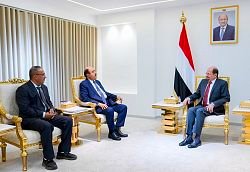
Yemen’s Prime Minister, Dr. Shaya Mohsin al-Zindani, has met the governor of Ibb, Abdulwahab al-Waeli, in the interim capital, Aden, to review the conditions facing residents of one of the country’s most populous governorates. According to the government, the talks focused on the difficulties confronting civilians in Ibb, a densely populated province in the central highlands that has been under the control of the Houthi movement since 2014. The meeting formed part of the internationally recognised government’s continued engagement with officials whose provinces lie beyond its practical authority.
During the discussion, the governor briefed the prime minister on what the government describes as continued violations against civilians in areas under Houthi administration. Officials aligned with the Aden-based authorities say residents of Ibb face restrictions on their freedoms and periodic reports of intimidation, accounts that are difficult to verify independently given the limited access of journalists and monitors to Houthi-held territory. The Houthis, for their part, reject such characterisations and present themselves as the effective authority across much of northern and central Yemen.
Al-Zindani used the meeting to reaffirm the government’s stated commitment to the population of Ibb, pledging that it would remain attentive to their needs despite its inability to deliver services directly in the province. That message reflects a recurring theme for the recognised government, which seeks to maintain a political presence and a sense of connection with communities in territory it does not control, even as its capacity to influence daily life there remains limited.
Ibb’s strategic and demographic weight lends the exchange significance. With well over three million inhabitants, it is among the most densely populated governorates in the country, and it sits along the shifting boundary between Houthi-held areas and those administered from Aden. Houthi forces moved into Ibb in 2014 during their rapid expansion across the north, entering the provincial capital with little resistance, and they have retained control ever since.
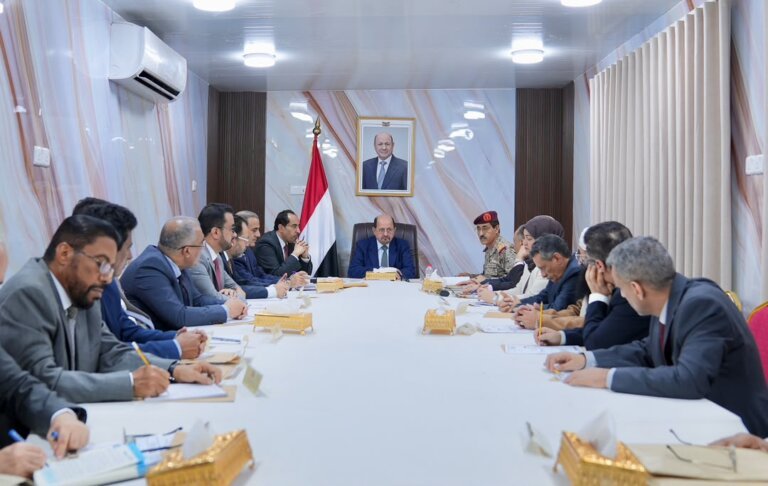
The meeting unfolded against the backdrop of a broader stalemate. The Presidential Leadership Council and the government it oversees have struggled to translate international recognition into decisive gains on the ground, while a Saudi-led coalition that intervened in 2015 has been unable to dislodge the Houthis from the populous highlands. A United Nations-brokered truce agreed in 2022 has reduced large-scale fighting, but it has not produced a political settlement, leaving the country effectively partitioned between rival administrations.
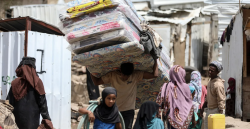
The humanitarian dimension looms over every such discussion. Aid agencies estimate that roughly 19.5 million people in Yemen need some form of assistance in 2025, an increase on the previous year, as years of conflict have shattered infrastructure and hollowed out public services. In many areas, restrictions on humanitarian access have complicated efforts to deliver food, clean water and medical care, deepening hardship for families already living on the margins. Roughly 4.8 million people remain displaced by the war, and aid officials have warned that severe funding shortfalls forced deep cuts to relief programmes during 2025, leaving millions with less support even as needs climbed.
Public health remains a persistent concern. The collapse of water and sanitation systems has repeatedly created conditions for outbreaks of cholera and measles, diseases that spread quickly where clean water is scarce and health facilities are damaged or overwhelmed. Aid workers warn that the risk of fresh outbreaks rises whenever access is disrupted, and that children bear the heaviest burden when preventable illnesses take hold.
The conflict also carries implications well beyond Yemen’s borders. The country sits alongside the Red Sea and the Bab al-Mandab Strait, a narrow waterway through which a significant share of global trade passes. Instability there has unsettled shipping and drawn the attention of governments with commercial and strategic interests in the region, particularly after attacks on vessels in recent years disrupted traffic through one of the world’s busiest maritime corridors.
Regional rivalries add a further layer of complexity. The government and its backers accuse Iran of arming and financing the Houthis, positioning the war within the wider contest for influence between Tehran and a bloc of Gulf states led by Saudi Arabia. Iran denies direct military involvement, though it openly expresses political support for the movement, and the dispute over its role has long shaped international perceptions of the conflict.
For the residents of Ibb and other contested areas, however, the geopolitics can feel remote against the immediacy of daily survival. Ordinary people navigate rising prices, interrupted salaries and the strain of living under an administration that the internationally recognised government considers illegitimate but that exercises real control over their lives. Meetings such as the one in Aden offer little immediate relief, functioning instead as a way for the recognised government to signal that it has not abandoned populations it cannot currently reach.
Whether such gestures translate into tangible improvements will depend on progress toward a durable political agreement, something that has remained elusive despite repeated diplomatic efforts. In the meantime, officials in Aden continue to frame their outreach as both a moral obligation and a strategic necessity, arguing that keeping faith with communities in Houthi-held areas is essential to any future reunification of a country fractured by more than a decade of war.
About the Author